Early September is the annual moment where the fruit-bomb light roasts start to feel wrong. The mornings in Portland turn gray and damp, the kettle runs more often, and what you want out of a pour-over shifts from “interesting” to “comforting.” It’s also the practical moment to think about the pantry: the bags you buy now are what you’ll be grinding through October, and a couple of them should be workhorses that hold up to daily use without demanding attention.
This is a restock list, not a tasting-competition list. The criteria: readily available on Amazon so you don’t have to hunt, medium-to-dark roast profiles that suit cooler weather, and blends rather than single origins, because blends are built for consistency across a whole bag. Prices are all in the $10–$17 range for a 10–18 oz bag as of this writing. We earn a commission on purchases through the links below, at no extra cost to you.
1. Stumptown Holler Mountain — the everyday bag
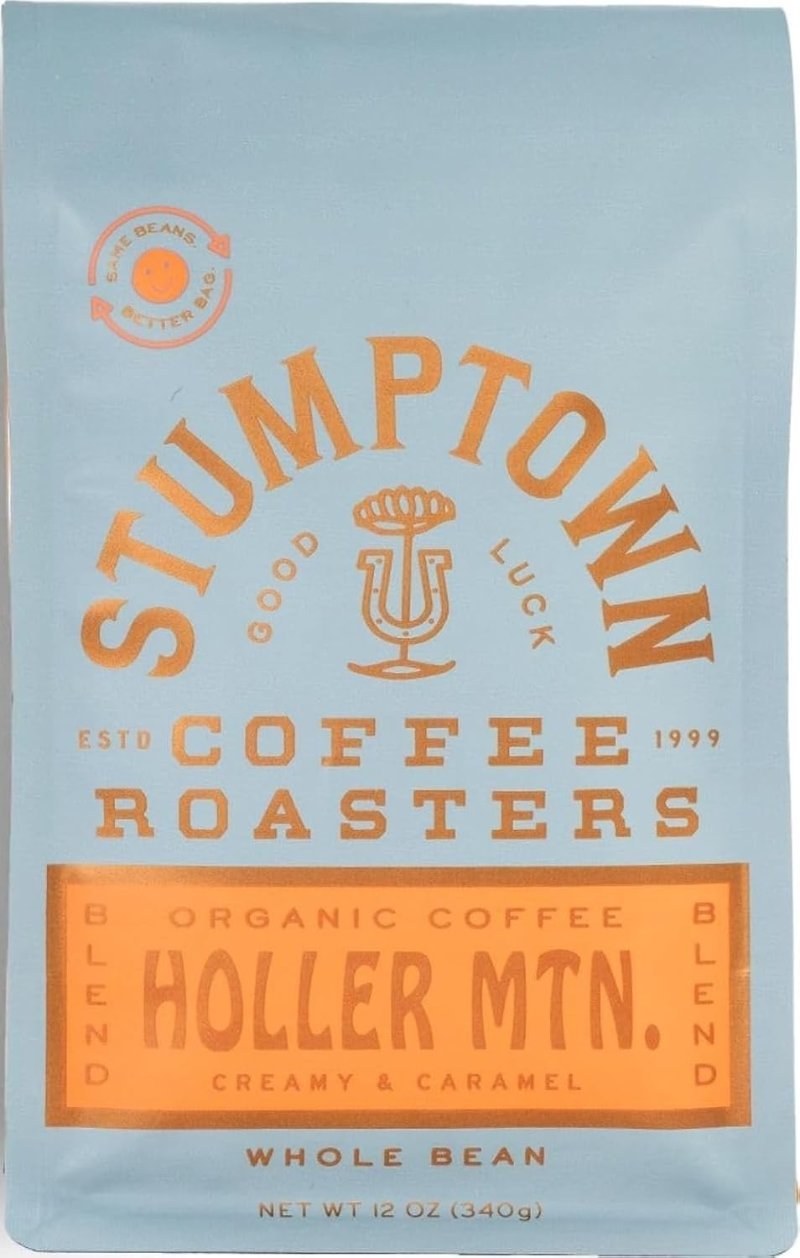
Holler Mountain has been in Stumptown’s lineup since the early Portland days, and it’s the one we’d point a friend to if they asked for a coffee they could drink every morning for a month. It’s certified organic, roasted to a true medium, and built from Central and South American coffees for body and chocolate, with a little East African coffee mixed in for lift. Stumptown lists it as citrus zest, caramel, and hazelnut, and that’s about right: the citrus shows up in the first sip and then the caramel takes over as the cup cools. On a V60 at a 1:16 ratio it comes out sweet and round without ever going flat. If you buy one bag from this list, buy this one.
Stumptown Holler Mountain (12 oz, whole bean)
Organic medium roast blend from Portland. Citrus up front, caramel and hazelnut on the finish, and a body that suits gray mornings.
2. Counter Culture Big Trouble — for the people who think they don’t like “fancy” coffee
Counter Culture, out of Durham, North Carolina, is a specialty roaster that mostly sells bright, transparent single origins, which makes Big Trouble the odd bag in their catalog. It’s their medium-dark blend, and Counter Culture describes it as caramel, nutty, and round. The point of it is comfort: low acidity, a heavy, syrupy body, and a nutty sweetness that reads like the smell of a bakery. It’s the bag we hand to relatives who take cream and sugar and expect coffee to taste like coffee. It also happens to make a very forgiving pour-over. Grind it a touch coarser than you would a light roast and the bitterness stays out of the cup.
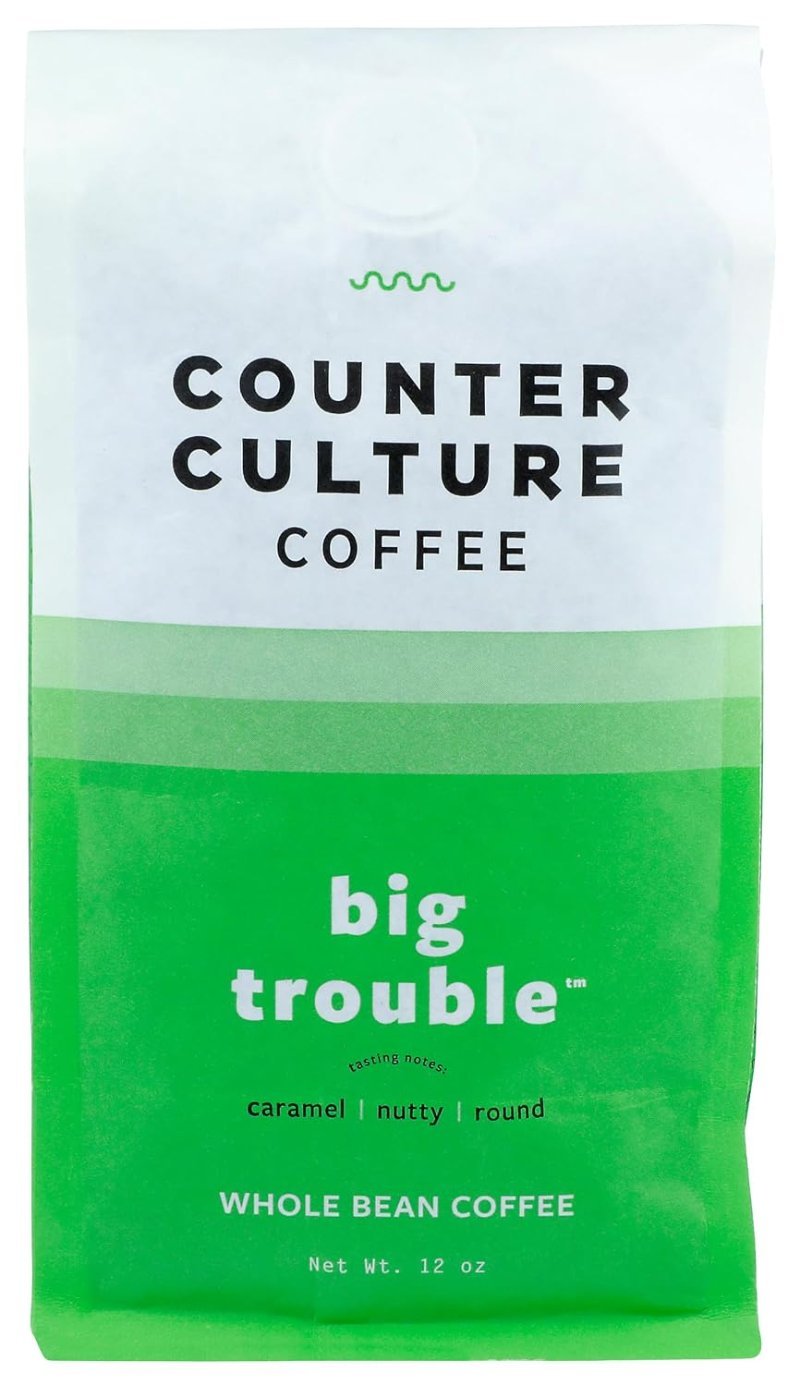
Counter Culture Big Trouble (12 oz, whole bean)
Medium-dark, caramel-and-nut blend from a roaster that normally sells light roasts. Low acid, heavy body, forgiving to brew.
3. Peet’s Major Dickason’s Blend — the dark roast with a story
Major Dickason’s dates to 1969, when Key Dickason, a retired Army sergeant and a regular at Alfred Peet’s original Berkeley shop, brought Peet an idea for a blend. The two of them worked it out together, and Peet gave Dickason a promotion in the name for his trouble. It has been Peet’s bestseller ever since. This is a dark roast in the West Coast tradition that Peet basically invented: heavy, smoky, a little bittersweet, with none of the burnt-rubber quality that cheap dark roasts get. On pour-over it wants a coarser grind and slightly cooler water, around 195°F, or the roasty notes take over. Brewed that way, it’s the coffee equivalent of a wool sweater. The 18 oz bag is a real value.
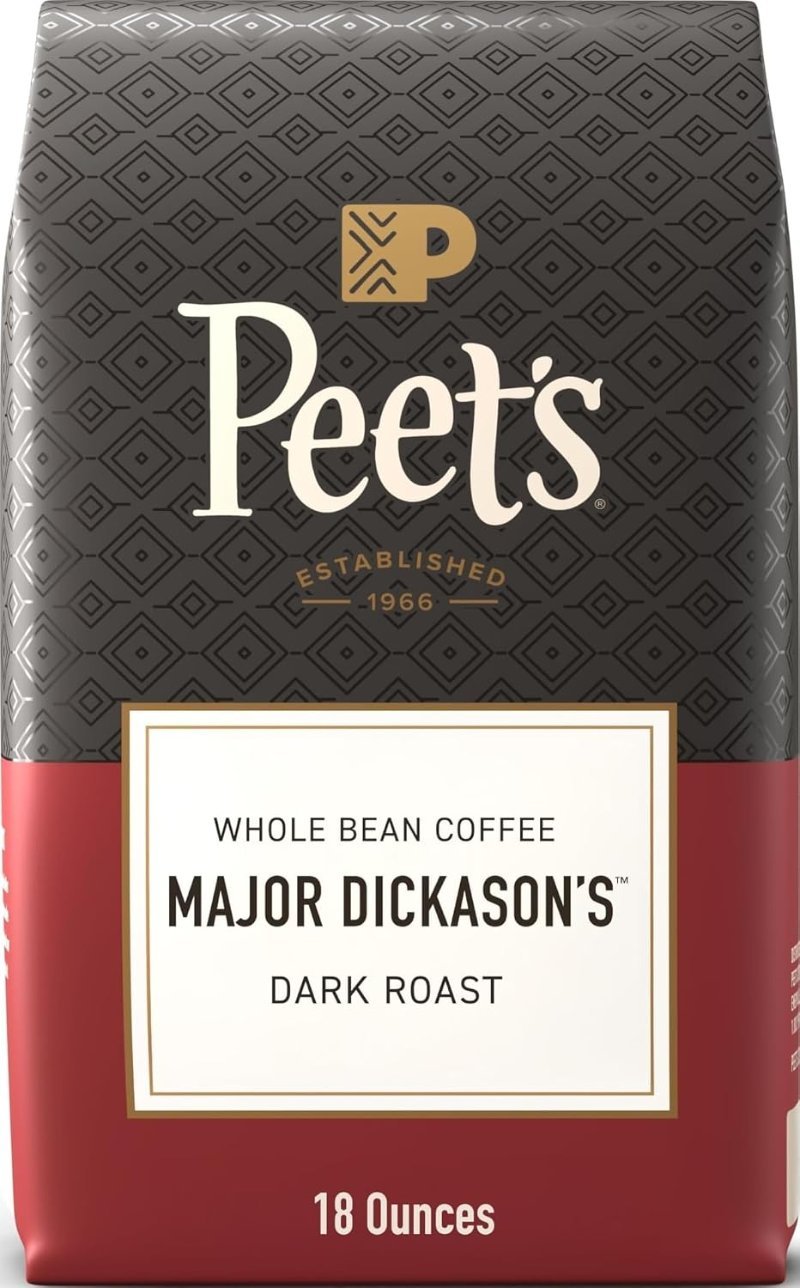
Peet’s Major Dickason’s Blend (18 oz, whole bean)
Peet’s flagship since 1969. Deep, smoky, and bittersweet without tasting burnt. Use a coarse grind and cooler water for pour-over.
4. Kicking Horse Kick Ass — the budget dark roast
Kicking Horse started in a garage in Invermere, British Columbia, in the Canadian Rockies, and has grown into one of the biggest organic coffee brands in Canada (Lavazza bought a majority stake in 2017). Kick Ass is their flagship dark roast, organic and Fairtrade certified, and it’s frequently the cheapest bag on this list per ounce. It’s a straightforward coffee: chocolate, a little molasses, smoky finish, not a lot of nuance. That is exactly what you want from the second bag in the pantry, the one you reach for on a Tuesday when you’re half awake and not going to notice tasting notes anyway. It also makes a surprisingly good cold brew if the weather swings back to warm.
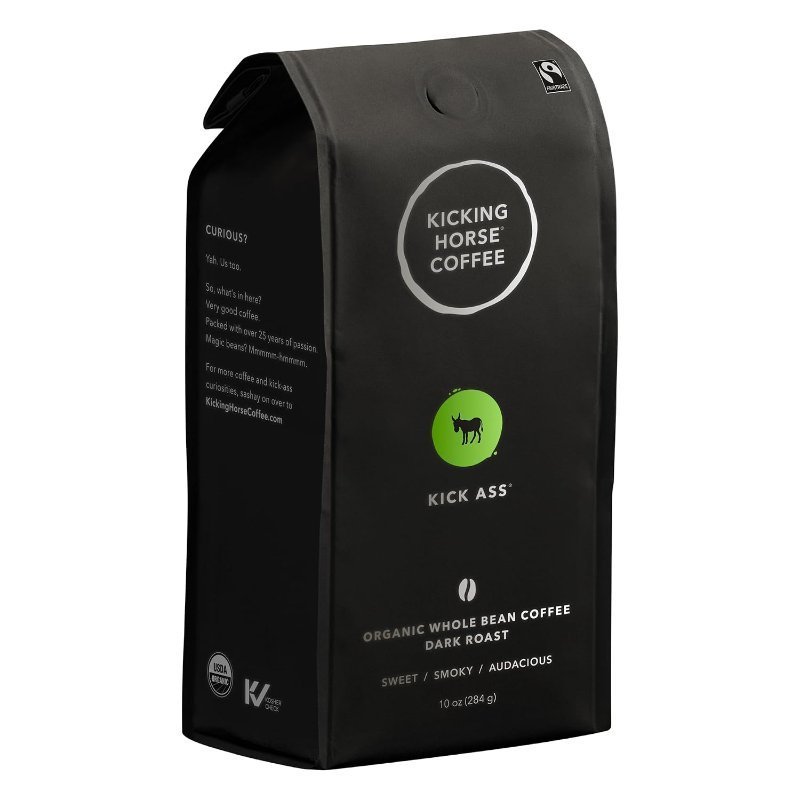
Kicking Horse Kick Ass (10 oz, whole bean)
Organic, Fairtrade dark roast from the Canadian Rockies. Chocolate and molasses, no fuss, usually the cheapest per ounce here.
5. Intelligentsia Black Cat — for the mornings you want an actual espresso-style cup
Intelligentsia opened in Chicago in 1995 and was one of the roasters that defined American third-wave coffee. Black Cat is their long-running espresso blend, and unlike the other bags here, it’s roasted lighter than you’d expect from something labeled espresso. Amazon lists it as a light roast, though in the cup it drinks more like a medium: dark chocolate, dried fruit, a thick body, and a sweetness that gets more pronounced with a little milk. You don’t need an espresso machine to enjoy it. Pulled through a pour-over at a slightly tighter ratio, 1:14 or so, it makes a rich, dense cup that’s a nice change of pace from the more washed-out end of light roasts. If you own an AeroPress, this is the bag for it.
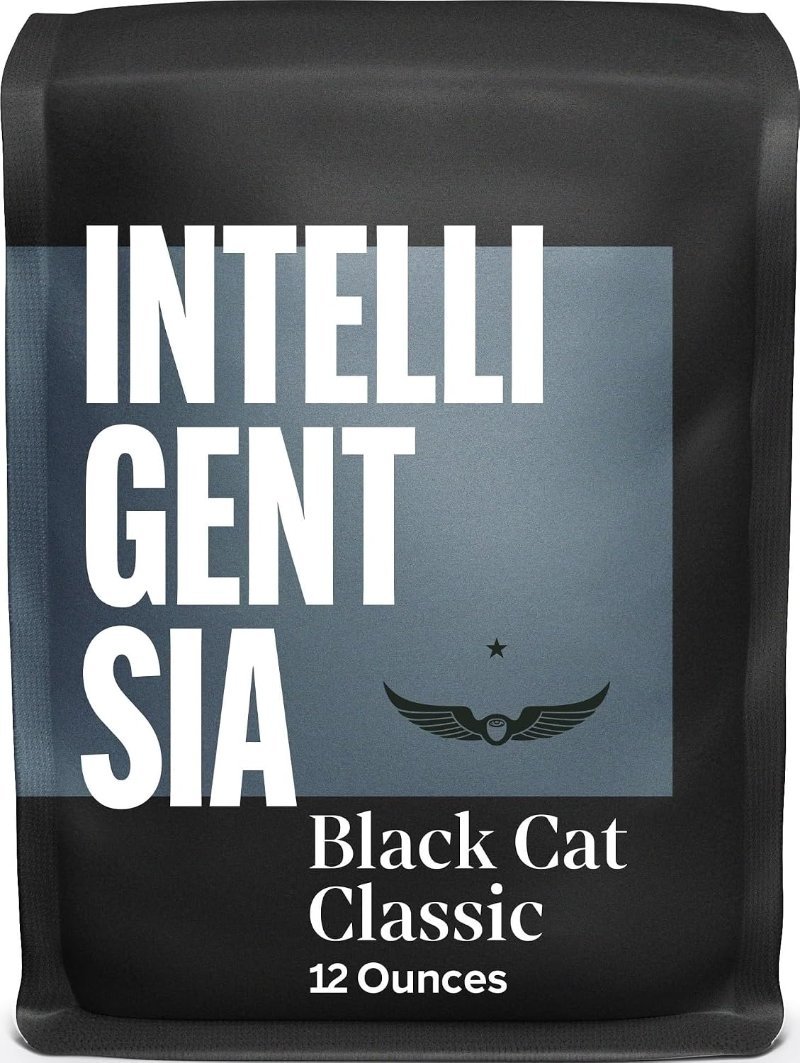
Intelligentsia Black Cat Classic Espresso (12 oz, whole bean)
Chicago’s defining espresso blend. Dark chocolate and dried fruit, thick body, and excellent brewed tight on an AeroPress or pour-over.
How to actually stock the pantry
Don’t buy all five at once. Whole bean coffee is at its best for roughly two to four weeks after the roast date, and even in a sealed bag it starts fading noticeably after about six. Two bags open at a time is the right number for most households: one everyday coffee (Holler Mountain or Big Trouble) and one darker or richer option for the days you want it (Major Dickason’s, Kick Ass, or Black Cat). Store them in the bags they came in, folded and clipped, or in an opaque canister, away from the stove. And check the roast date on the bag when it arrives. Amazon’s coffee inventory turns over fast for these brands, but if you get a bag that’s already three months old, send it back.
Restock once, drink through it, then come back in October. By then the pumpkin spice bags will be everywhere and we’ll have opinions about those too.