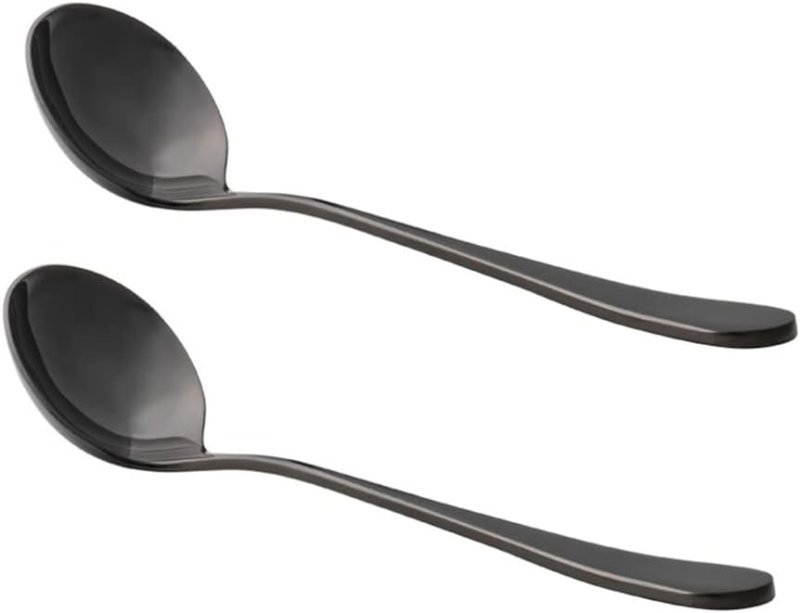
Cupping spoons look like a joke the first time you see them. They’re small, deep-bowled, and cost more per ounce of steel than almost any other kitchen utensil you own. Then you actually use one to taste four coffees side by side and understand why every roaster on earth has a drawer full of them. We bought a set to see if the ritual holds up outside a roastery, or if it’s just theater for a home setup.
What Cupping Actually Solves
Cupping is the standardized method the specialty coffee industry uses to evaluate and compare coffees: hot water poured directly over grounds in a cup, no filter, no dripper, nothing between you and the bean. After a few minutes a crust forms on top from the coffee oils and fines; you break it, skim it, and then slurp from a spoon to aerate the coffee across your palate. The Specialty Coffee Association standardized this protocol decades ago specifically so a roaster in Guatemala and a buyer in Portland could score the same lot the same way and mean the same thing by “8 out of 10.”
The spoon isn’t incidental to that process — it’s built for it. A cupping spoon has a rounder, deeper bowl than a soup spoon or teaspoon, which lets you draw a full mouthful of coffee (grounds and all, since cupping skips filtration) without it sloshing everywhere, and gives you enough surface area to slurp loudly, which is the point. The slurp atomizes the coffee across your tongue and up into your nasal passage, which is where you actually taste most of what you’d call “flavor.”
Trying It at Home
We ran the watchget set against three coffees we already had open — a washed Ethiopian, a Sumatra, and a mid-roast Colombian — brewed cupping-style instead of through a dripper. The deep bowl earns its keep immediately: a teaspoon just doesn’t hold enough liquid to get a real read on a coffee, and a regular soup spoon splashes. The rounded lip on these let us slurp without soaking the counter, which is a lower bar than it sounds like when you’re new to this.
Two spoons in the set turned out to be the right number for cupping with someone else — you’re not waiting on a shared spoon between cups, and you’re not washing one spoon four times mid-tasting. At 1.7 ounces each they’ve got a bit of heft without feeling like they’ll tip your cup over, and the stainless steel doesn’t hold onto flavor between coffees the way we worried it might; a quick rinse between cups was enough.
Where it falls short of the full professional setup: no case, no cupping bowls, and you’ll still want a way to time your steep and a reliable scale to keep your dose consistent across cups, or you’re not really comparing anything. This is the one piece of gear, not the whole protocol.
The Pick
We may earn a commission from qualifying Amazon purchases if you buy through the link below.
watchget Professional Coffee Cupping Spoon Set (2-Pack)
304 stainless steel, deep round bowl, 5.9 inches. This is the exact set we tested above — two spoons is the right number for cupping with a partner, and the price is in line with every other cupping spoon on the market that isn’t trying to upsell you on a branded case.
Is It Worth Buying?
Yes, if you own more than two or three bags of coffee at a time and actually want to know which one you like best instead of guessing from memory. A cupping spoon won’t change how your everyday pour-over tastes, but it will change how confidently you can compare coffees against each other, which is arguably the more useful skill. If you only ever brew one bag at a time and finish it before opening the next, you can skip this — a regular spoon works fine when there’s nothing to compare against.