A cup of brewed coffee is roughly 98% water. You would think that number alone would make water the first thing anyone fixes, but it is almost always the last. People will spend $300 on a grinder, weigh their dose to a tenth of a gram, and then fill the kettle from a tap they have never tasted on purpose.
So: does swapping to bottled water actually change the cup? Yes. Just not in the direction most people assume, and not reliably enough that “buy bottled” is useful advice on its own.
Water is a solvent, and minerals are the hands doing the grabbing
Coffee brewing is extraction — pulling soluble compounds out of ground beans and into solution. Pure water is bad at this. Calcium and magnesium ions bind to flavor compounds and carry them into the brew, so water with essentially no dissolved minerals extracts less of what you want. This is why distilled water, which sounds like it should be the neutral control, makes a famously hollow, thin cup. It has nothing to grab with.
Magnesium and calcium are not interchangeable, either. Magnesium is the more efficient extractor per milligram and tends to pull sharper, fruit-forward, aromatic compounds. Calcium leans heavier — more body, creamier, less lift. That is the practical takeaway from the water research Maxwell Colonna-Dashwood and chemist Christopher Hendon published in Water for Coffee in 2015, work that came directly out of Hendon rebuilding competition water for the UK Barista Championship. It is not folklore. It is a solvent chemistry problem that happens to taste like something.
Then there is bicarbonate, the ingredient nobody talks about and the one most likely to be ruining your coffee. Bicarbonate is a buffer: it neutralizes acids. A little keeps the brew from tasting sour and protects your kettle. Too much and it chemically flattens the exact bright, citric acidity you paid extra for in a light-roast Kenyan. If your expensive single origins keep tasting muted and vaguely chalky, high-alkalinity water is the first suspect.
The numbers, since they are actually published
The Specialty Coffee Association publishes a target profile, which is handy because it turns a vibes argument into arithmetic. The targets:
- TDS (total dissolved solids): 150 mg/L target, 75–250 mg/L acceptable
- Calcium hardness: around 68 mg/L, with 17–85 mg/L workable
- Total alkalinity: about 40 mg/L
- pH: 7.0, with 6.5–7.5 fine
- Sodium: around 10 mg/L
Treat these as a landing zone, not a law. Plenty of great coffee gets brewed outside those bounds. But they explain, cleanly, why one bottled water tastes better than another.
What the bottles actually contain
Here is where the “just buy bottled” advice falls apart — bottled water is not one thing, and the labels vary wildly.
Volvic lands around 130 mg/L TDS with roughly 8 mg/L magnesium and 12 mg/L calcium, and low bicarbonate. That is close enough to the SCA window that it has been the default off-the-shelf recommendation on home-barista forums for years. It works.
Fiji sits near 220 mg/L TDS, about 13 mg/L magnesium and 17 mg/L calcium. Borderline high, but the magnesium-to-calcium ratio is decent, and it brews perfectly good coffee.
Evian is around 300 mg/L TDS with roughly 80 mg/L calcium and 26 mg/L magnesium. It is above the acceptable range on hardness and it brews a dull, heavy cup. Excellent drinking water. Bad brewing water. Nothing about the price tag changes that.
And that is the real problem. Bottled water makes a difference — a big one — but whether that difference is an improvement is a coin flip unless you have read the mineral analysis on the label. You are also paying repeatedly, forever, and hauling plastic home, to hit a target you are not measuring.
The version of this that I actually use
Building the water from scratch is cheaper, more consistent, and less annoying than curating bottled brands. You start with distilled or reverse-osmosis water — a blank slate, no minerals, no bicarbonate — and add exactly what you want back.
Some links below are affiliate links. If you buy through them we may earn a commission at no extra cost to you.
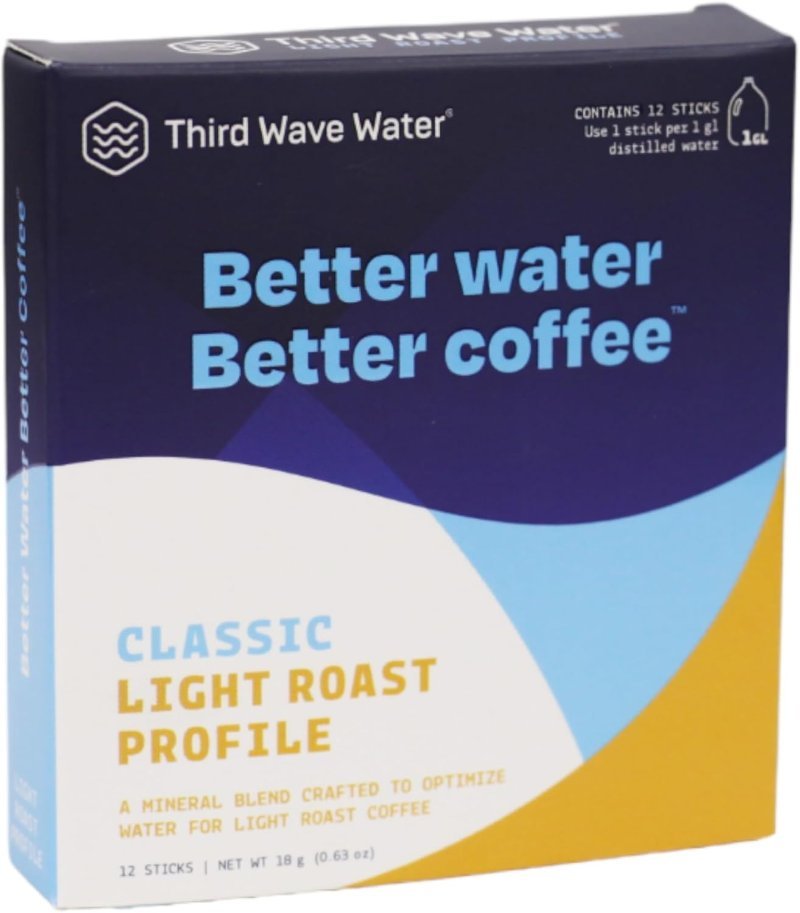
Third Wave Water is the low-effort way to do that. Each stick is a pre-measured blend of magnesium sulfate, calcium citrate, and sodium chloride sized for one gallon of distilled or RO water. Dump, shake, brew. The Classic Light Roast profile is the one I would start with for pour-over specifically: it skips the heavy buffering ingredient in favor of a small amount of sodium (about 10 mg per 10 oz cup), which leaves acidity intact rather than sanding it down. On a washed Ethiopian or a Kenyan the difference is not subtle — the florals and the citric snap come back. On a dark roast you will barely notice, which is worth saying out loud.
The Pick
Third Wave Water Classic Light Roast Profile (12 sticks)
One stick per gallon of distilled or RO water. Magnesium for extraction and brightness, calcium for body, minimal buffering so light roasts keep their acidity. The cheapest meaningful upgrade in most people’s setups.
The obvious objection: you now have to buy distilled water. True, and it is a real cost in convenience. It is also about a dollar a gallon, and a gallon is a lot of coffee.
Before you buy anything, find out what you already have
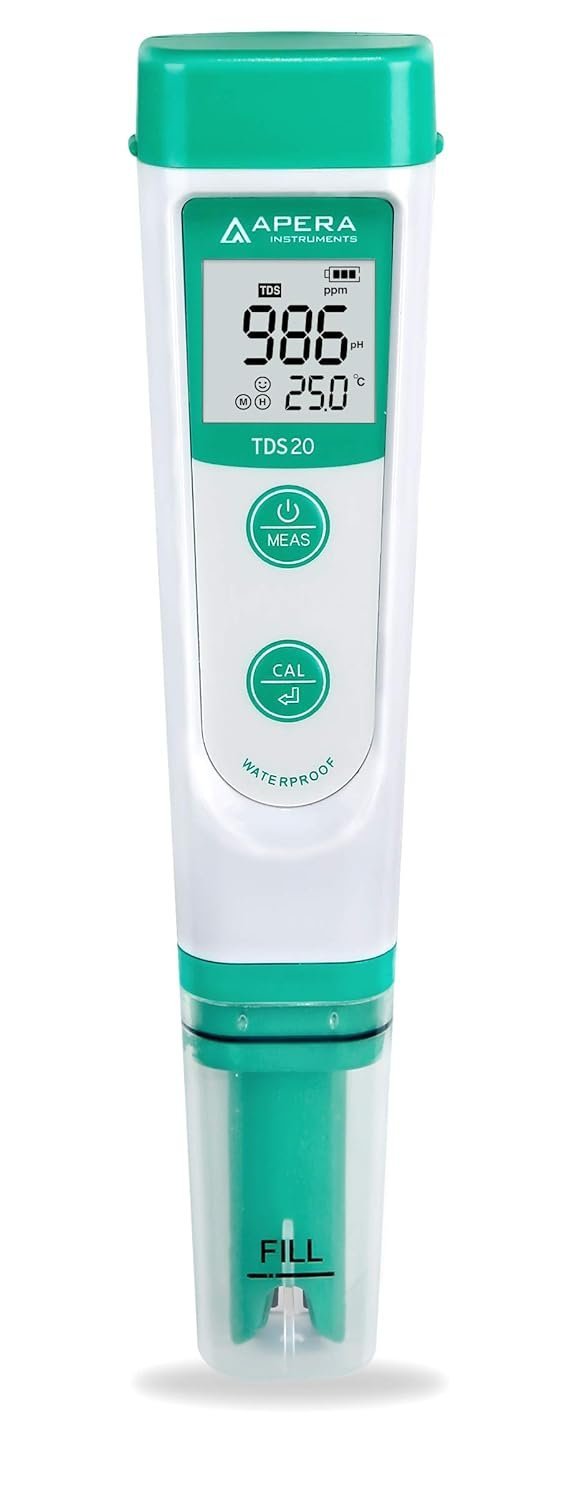
Some tap water is already in the SCA window. If yours is, none of the above is worth your money, and the honest move is to skip it. A pocket TDS meter tells you in five seconds. It will not break out calcium versus magnesium versus bicarbonate — for that you need your municipal water quality report, which is public and worth ten minutes of reading — but it gives you the single most useful number.
 For Diagnosing
Apera Instruments AI213 TDS20 Pocket Tester
Waterproof, two-point auto-calibration, and accurate enough to trust. Dip it in your tap water. Under 75 ppm and you are under-mineralized; over 250 and you are likely fighting hardness and bicarbonate.
The short answer
Bottled water absolutely changes your coffee, but only Volvic-style low-to-moderate mineral water reliably changes it for the better, and Evian-style hard water makes it measurably worse. If you want the result without the label-reading, mix your own from distilled and stop thinking about it. And if your tap already reads 120 ppm with reasonable hardness, congratulations — go spend the money on better beans instead.