If you’ve read anything else on this site, you already know we’re going to say this: the grinder matters more than the dripper, more than the kettle, and probably more than the beans themselves. That’s not a hot take among coffee people, it’s close to consensus. And yet it’s consistently the last thing people upgrade, because a $300 grinder sitting next to a $15 dripper feels backwards. It isn’t. Here’s why.
Why Grind Consistency Is the Whole Ballgame
Extraction happens at the surface of each coffee particle. If your grounds are all roughly the same size, water extracts them at roughly the same rate, and you get a clean, balanced cup. If your grind is inconsistent, made up of a mix of fine dust and chunky boulders, the fine particles over-extract into bitterness while the big chunks under-extract into sourness, at the same time, in the same cup. You end up with coffee that’s simultaneously bitter and sour, which is a uniquely unpleasant combination and one of the most common complaints we hear. Blade grinders, the cheap spinning-propeller kind, are functionally incapable of producing a consistent grind. It’s not a minor limitation, it’s the whole problem.
Burr Grinders: The Only Real Option
Burr grinders crush beans between two abrasive surfaces set at a fixed distance, which produces a far more uniform particle size. Within burr grinders, you’ll choose between:
- Flat burrs — two parallel ring-shaped burrs. Generally sharper, more articulate flavor clarity, favored by people chasing very specific tasting notes.
- Conical burrs — a cone-shaped burr inside a ring. Usually quieter, often cheaper to produce at a given quality level, and tend to give a slightly sweeter, rounder cup.
Honestly, the flat-versus-conical debate matters far less than just getting any decent burr grinder in the first place. Don’t let that decision paralyze you into sticking with a blade grinder for another six months.
Hand Grinder or Electric?
A good hand grinder can match or beat a mediocre electric grinder, and it’s a genuinely reasonable place to start if budget is the deciding factor, especially if you’re only making one or two cups a day. The tradeoff is time and forearm effort; grinding by hand for a full pot takes real, sustained cranking. Electric grinders cost more at a comparable quality level but save you the workout and are the better call if you’re brewing for more than one person regularly.
What We’d Actually Buy
These link to Amazon — we may earn a small commission at no extra cost to you. Full disclosure.
Tight budget: a well-reviewed hand burr grinder. Genuinely fine for daily use, especially solo.
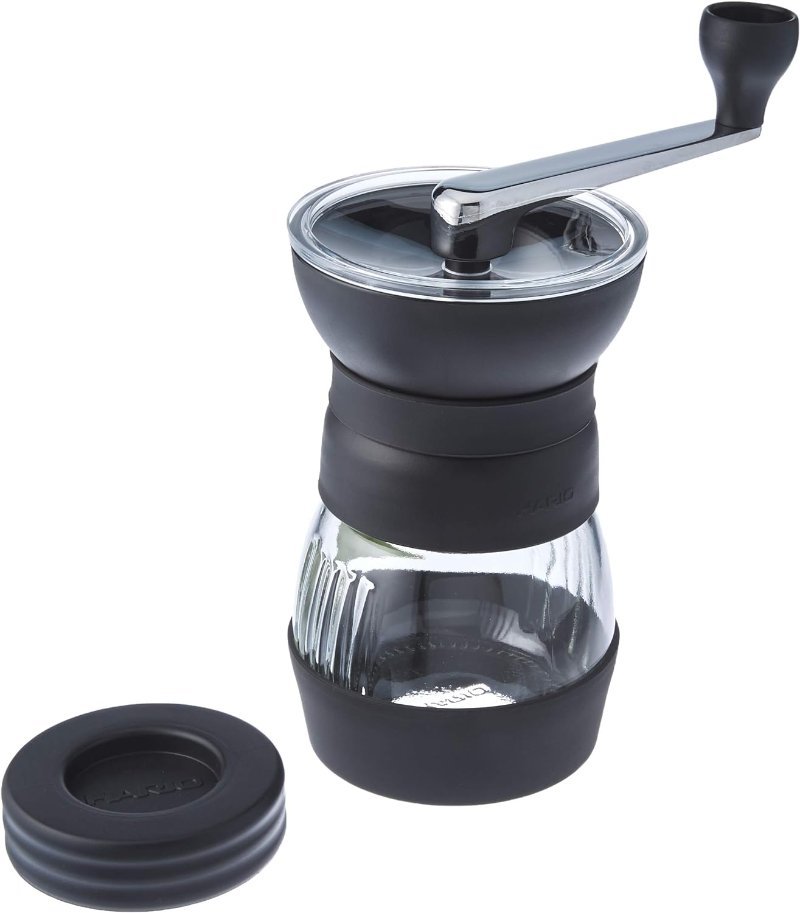
Hario Skerton Pro Hand Grinder
A hand grinder beats a blade grinder every time — no contest. It’s slower and your forearm will know it, but the grind consistency alone fixes half of most people’s bitterness problems.
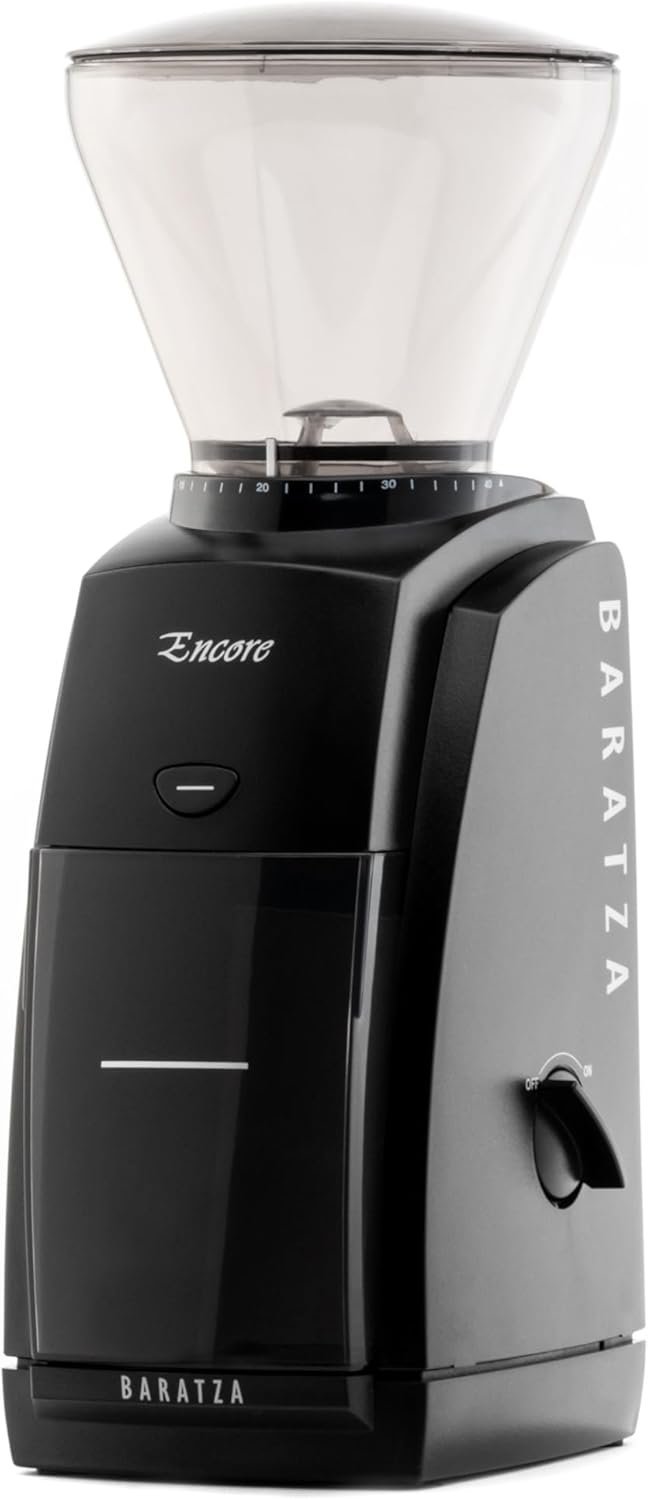
Sweet spot: an entry-level electric conical burr grinder with stepped grind settings. This is the single upgrade most likely to noticeably improve your coffee, full stop.
Baratza Encore
Forty stepped settings, parts you can actually replace, and it’ll outlast your dripper twice over — out of everything on this site, start here.
If you’re fully in it: a stepless flat-burr grinder that lets you dial in grind size with real precision. You’ll know if you’re this person. Most people aren’t yet, and that’s completely fine.
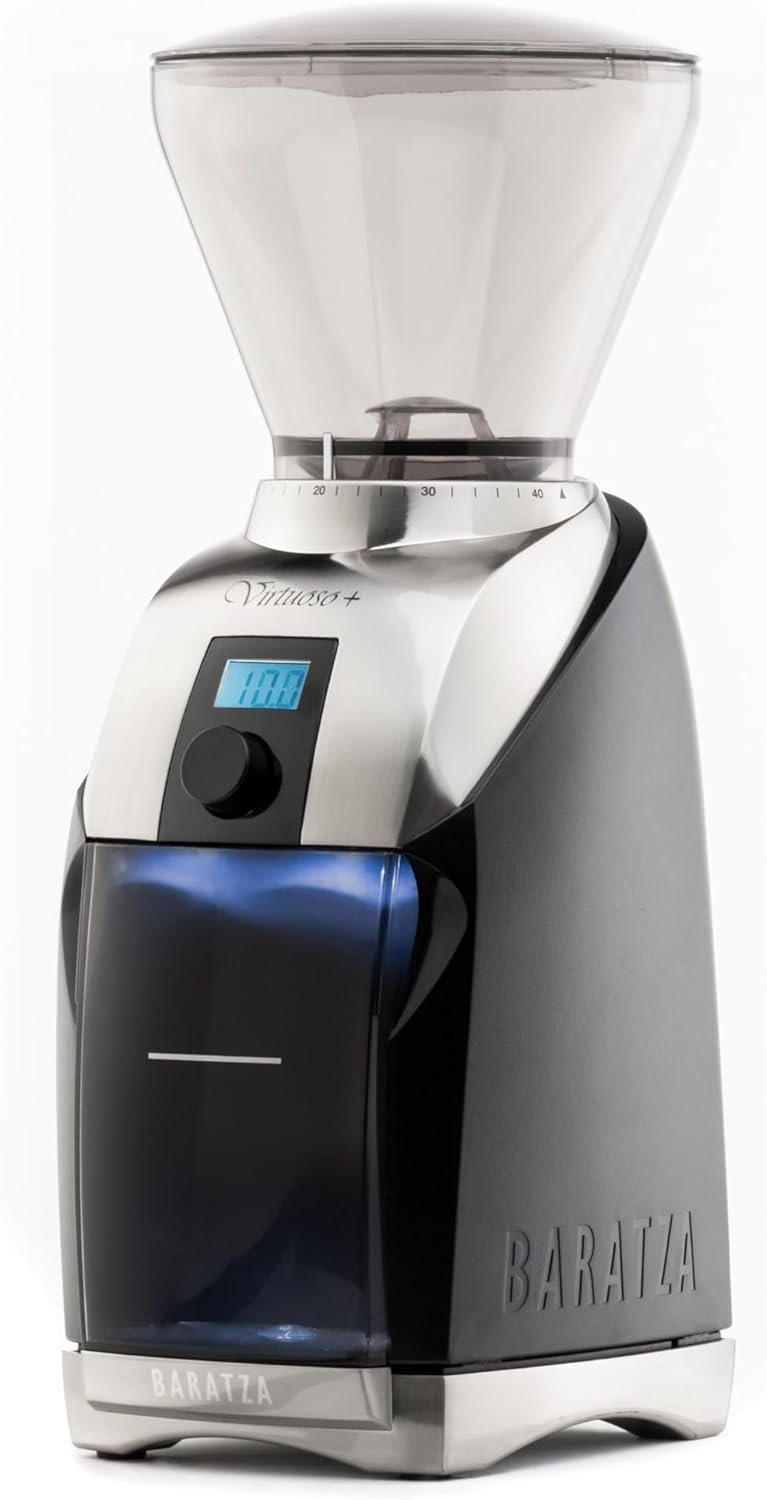
Baratza Virtuoso+
More precision than most home brewers will ever need, plus a digital timer that takes the guesswork out of dosing. Buy this once you’ve already fallen for the ritual.
Almost nobody needs to spend more than $200 on a grinder. Almost everybody needs to spend more than $0.