San Francisco has a reputation as one of the great coffee cities in America, and the company most responsible for that reputation was founded in Oakland. That is the first thing worth knowing about drinking coffee here. The second is that the roasters who actually stayed inside the city limits are, in most cases, the more interesting ones to buy from.
The city’s most famous coffee company started across the bay
Blue Bottle Coffee was founded in 2002 by W. James Freeman, in Oakland’s Temescal District. The original idea was almost absurdly small-scale: roast in six-pound batches and sell the result within 24 hours of roasting, as a home-delivery service. The delivery business did not last, but the obsession with roast dates did, and it became the thing the whole company was known for.
What followed was the part everyone remembers. Blue Bottle opened cafés around San Francisco, including one in the Ferry Building and one on the rooftop garden at SFMOMA, and the brand became shorthand for a certain kind of careful, unhurried, slightly self-serious coffee service. By June 2021 it was running 99 stores, across California, New York, Washington D.C., Boston, Chicago, and a long list of cities in Japan, Korea, China and Singapore.
Then it got complicated. In September 2017 Nestlé acquired a 68 percent majority stake; the financial terms were never officially disclosed, though the Financial Times reported Nestlé was understood to be paying up to $500 million for it. In 2026 Nestlé sold Blue Bottle’s global retail operations to Centurium Capital for roughly $400 million, with the March 2026 agreement arriving while the company was operating at a loss. Whatever else that sequence says about specialty coffee as a business, it does not say much about what is in the bag — and the bag is still good.
Some of the links below are affiliate links. If you buy through them, this site earns a small commission at no extra cost to you.
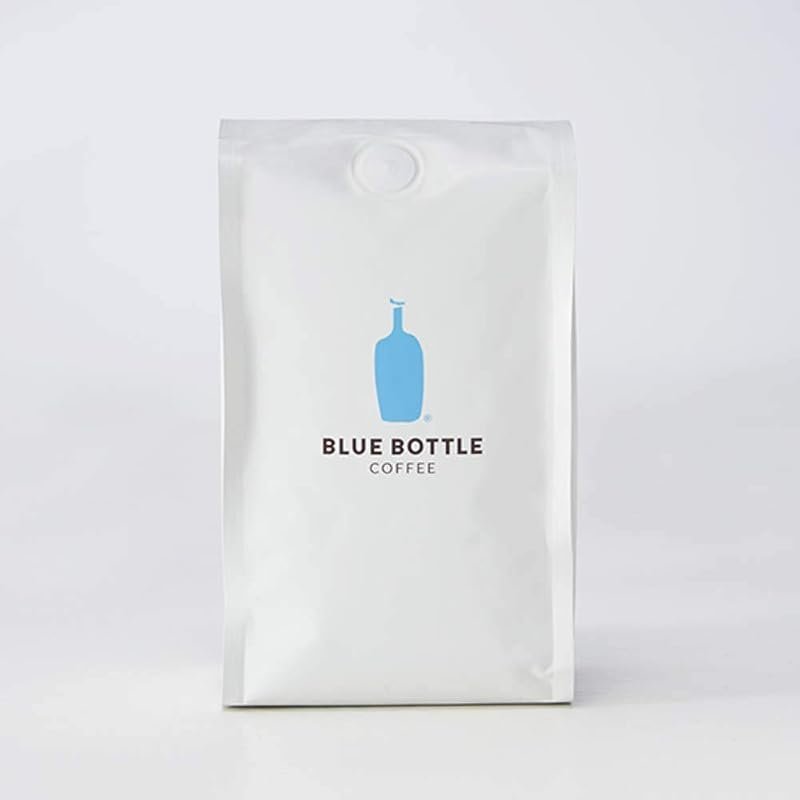
Bella Donovan is the blend to start with, and has been for years. It is the one that behaves like a house coffee should: chocolate-leaning, heavy enough to stand up to milk, forgiving if your pour is sloppy. It is not the bag that will show you what Blue Bottle can do at the top of its range, but it is the one you will actually finish.
Blue Bottle Coffee — Bella Donovan Blend
Blue Bottle’s long-running blended workhorse. Dark-chocolate and dried-fruit character, enough body for a latte, and well-behaved as a daily pour-over. If you have never had Blue Bottle and want to know what the fuss was about, buy this before anything else.
What came after: the roasters who stayed in the city
Sightglass is the most direct answer to “what happened next,” and the connection is not subtle. Jerad Morrison came to San Francisco for school and worked at Blue Bottle under James Freeman before he and his brother Justin opened their own place. Both brothers are Oregon-born and grew up in Southern Oregon; Justin started working in coffee at 15, and Jerad got his first coffee job in Seattle at around 18.
They started building out 270 7th Street, at Folsom in SoMa, in 2009, and opened in full in 2011. The space is roughly 7,000 square feet across multiple levels, with original Douglas fir floors upstairs and a Probat roaster sitting right at the front of the room rather than hidden in a back warehouse. The machinery was mostly vintage, which meant a thoroughly unglamorous fight to get everything certified and permitted for air quality through the Bay Area Air Quality Management District. On the espresso side they opened with a Slayer and a La Marzocco Strada EP — at the time, one of only six Stradas in the country.
Owl’s Howl is their espresso blend, and the certified-organic version is the one I would point a first-time buyer at. It is built for espresso, so it reads dense and syrupy, but it holds up on a pour-over if you back the grind off a little. If you have not read up on why that adjustment matters, the grind size post covers the mechanism.
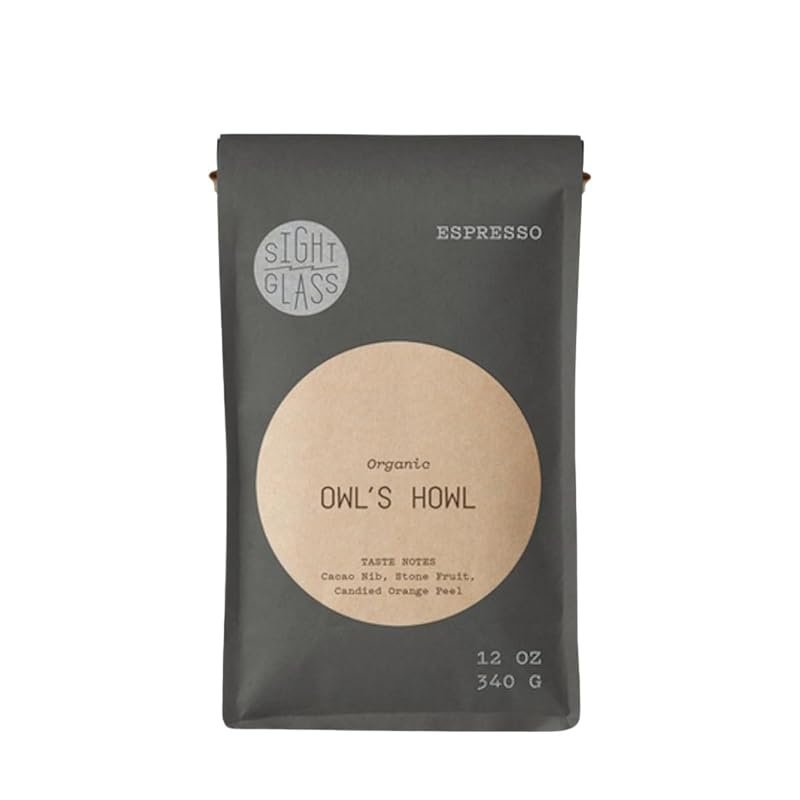
Sightglass Coffee — Owl’s Howl, Certified Organic
Sightglass’s espresso blend in its organic version. Dense, chocolate-forward and built to be pulled as a shot, but it works as a pour-over if you go a couple of clicks coarser than you would for a single origin. The closest thing on Amazon to drinking San Francisco coffee roasted in San Francisco.
Ritual Coffee Roasters is the other name that belongs in this conversation, and the honest note is that you cannot reliably buy it here. Founded in 2005 by Eileen Hassi Rinaldi, Ritual is explicitly grouped with Blue Bottle and Four Barrel as part of the same San Francisco wave of companies that roast their own beans, sell wholesale and run their own cafés. It was down to six locations across San Francisco and Napa as of 2019, and in March 2025 it announced the closure of its Haight Street café, ending a nine-year run in the neighborhood. Every Ritual listing I checked on Amazon came back dead — no add-to-cart, buy box unavailable. Buy it at a café or from them directly; do not order it through a third-party listing that has been sitting unavailable for years.
The Bay Area roaster doing the most sourcing work
If you widen the radius slightly past the city line, the most substantive operation in the region is Equator Coffees. Helen Russell and Brooke McDonnell — partners in life and in business — founded Equator Estate Coffees & Teas in a Marin County garage in 1995, which makes them older than the entire third-wave label. The main roastery has been on Jordan Street in San Rafael since 2003, and the company now runs twelve neighborhood cafés and sources from more than 50 producers and co-ops across 20 countries.
The credentials are not decoration. Equator was an early adopter of Fair Trade certification in 1999 and helped push the direct trade model before it had a marketing department attached to it — if the distinction between those two things is fuzzy for you, this is the piece that untangles them. In 2010 Roast Magazine named Equator its Macro Roaster of the Year. In 2011 it became the first coffee roaster in California to be a Certified B Corporation. In 2016 it won National Small Business of the Year from the Small Business Administration, the first Certified LGBTQ-owned business to do so.
Tigerwalk is their espresso blend and the easiest entry point. It is a medium roast with cherry and strawberry notes sitting over chocolate, which sounds like marketing copy until you pull it and find the fruit actually there.
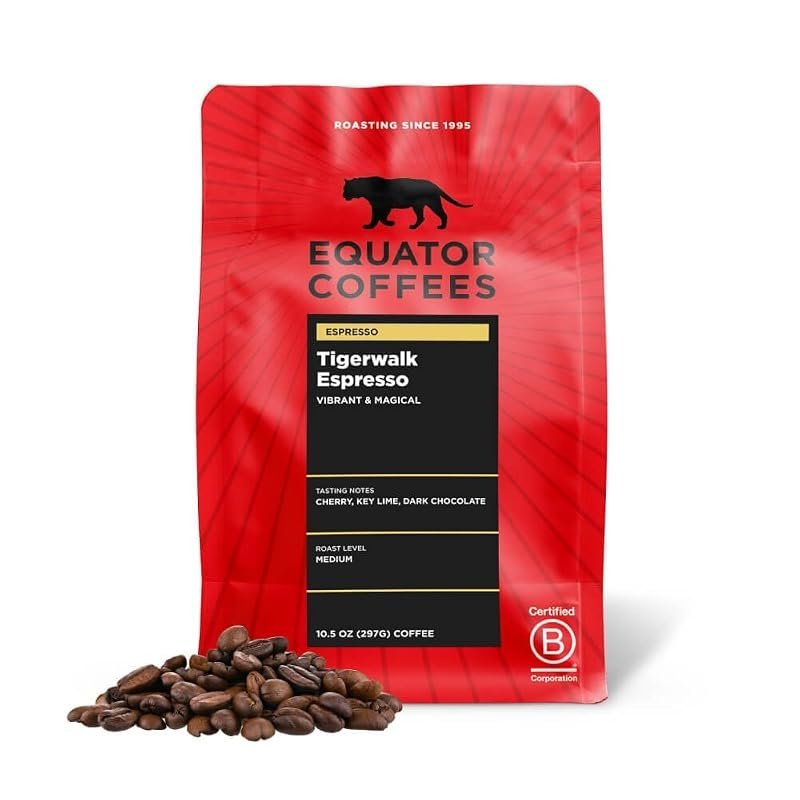
Equator Coffees — Tigerwalk Espresso
A medium-roast espresso blend from the Bay Area’s most decorated roaster. Cherry and strawberry brightness over a chocolate base, and more acidity than most espresso blends dare. Buy this one if you care as much about how the green coffee was bought as how it was roasted.
Why no San Francisco roaster is in the third-wave canon
Worth knowing, because it surprises people: the standard account of third-wave coffee does not name a San Francisco company as a leader. The term is generally attributed to Trish Rothgeb, who used it in a 2003 article as a deliberate echo of the three waves of feminism, though Timothy J. Castle had already published a piece titled “Coffee’s Third Wave” in the December 1999/January 2000 issue of Tea & Coffee Asia. The roasters usually called the Big Three of the movement are Intelligentsia in Chicago, Stumptown in Portland, and Counter Culture in Durham, North Carolina.
San Francisco got the cultural credit anyway, largely through Blue Bottle, which is listed among the major players of the mid-2010s alongside Philz and Verve — both also headquartered outside the city. The pattern holds: the Bay Area built the audience, and the roasters who got written into the history books were somewhere else.
What to actually order
Start with Bella Donovan if you want the famous thing done competently. Buy the Sightglass Owl’s Howl if you want coffee roasted inside the city by people who learned the trade at Blue Bottle and then went and did it their own way. Buy the Equator Tigerwalk if the sourcing story matters to you as much as the cup — and on current evidence it should.
If you want to keep going down the West Coast city rabbit hole, the Seattle edition is the closest sibling to this one, and the contrast between the two scenes is sharper than the geography suggests.