Guatemala Antigua is the most recognizable region name in Central American coffee, and that is exactly its problem. The word sells bags. It has sold an enormous number of bags that never came within forty miles of the Antigua valley. So a review of an Antigua bag has to do two jobs at once: say whether the coffee in it is any good, and say whether the word on the label is doing any actual work.
The valley is small, and the geography does the heavy lifting
Antigua Guatemala sits at 1,545 metres (5,069 feet) in a high valley ringed by three stratovolcanoes. Volcán de Agua rises to 3,766 m (12,356 ft) to the south. To the west, Acatenango reaches 3,976 m (13,045 ft), and Volcán de Fuego, at 3,763 m (12,346 ft), sits almost constantly active at a low level. The coffee itself grows between roughly 1,400 and 2,000 m (4,500–6,500 ft), per figures the growers’ association publishes.
What those volcanoes left behind matters more than the postcard view. The valley floor is deep, porous pumice and ash. The climate is subtropical highland — annual precipitation averages about 1,065 mm, dumped hard in June (231 mm) and September (220 mm), with a dry season so pronounced that January averages 1 mm and February 3 mm. That light, porous soil holds moisture through the dry stretch, so the trees go on ripening slowly without irrigation. Pair it with a mean daily high of 23.5°C against a mean low of 13.2°C and you get cool nights and a long, unhurried maturation. I went through that mechanism in more depth in the post on Guatemala’s volcanic highlands, so I won’t relitigate it here.
The traditional varieties are Bourbon, Caturra and Catuaí, harvested November through April and processed washed. Coffee leaf rust pushed a lot of growers toward hardier Catuaí and rust-tolerant hybrids, which is a real trade-off: the older Bourbon and Typica trees taste better and get sick more easily. Much of it is still grown under shade, for the reasons I laid out in the piece on shade-grown coffee.
“Antigua” is a legal term, and almost nobody shopping knows it
Café Antigua is a registered denomination of origin held by the State of Guatemala. The producers behind it — APCA, the association of genuine Antigua coffee growers — organized in 2000 with 34 members, and the registry certified the inscription in December 2011. There is a collective mark registered with a hologram, and APCA’s advice to buyers is refreshingly blunt: demand the certificate of origin. The association exists because coffee grown nowhere near the valley had been moving under the label for years. A 2003 WIPO estimate reportedly put the volume sold as Antigua well beyond what the valley can physically produce, though I’d treat that particular number as secondhand.
The practical upshot: the word Antigua on a grocery-aisle bag is a marketing claim, not a credential. The signals that mean something are a named farm or mill, a stated altitude, a grade — SHB, Strictly Hard Bean, is the top Guatemalan classification and accounted for roughly 81 percent of exports in USDA figures from April 2026 — and, for Antigua specifically, a certificate of origin. It is the same traceability gap I wrote about in direct trade versus fair trade: a certification is only worth what the roaster is willing to tell you about the lot.
Which is the honest frame for everything below. None of these bags publish a farm name or a certificate number. They are supermarket-tier Antigua, priced accordingly, and I am reviewing them as that rather than pretending otherwise.
The bag I keep going back to
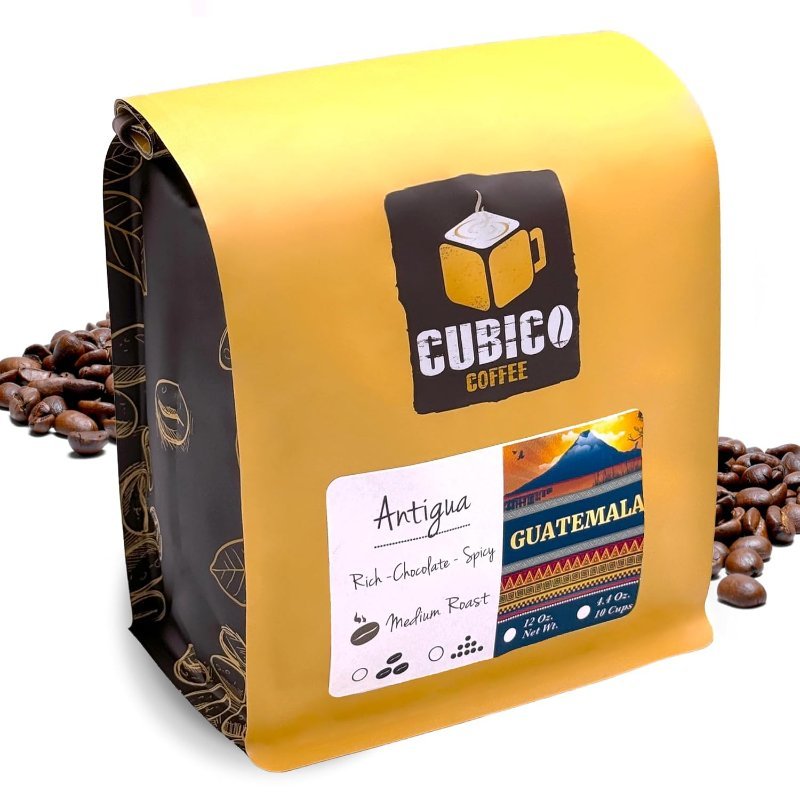
Cubico’s Antigua is roasted to order and shipped whole bean, which is most of why it beats the shelf-stable competition — freshness is the variable that actually moves the cup at this price. It lands medium: cocoa and baking spice in front, a dry apple-skin acidity sitting underneath it, and a body noticeably fuller than the Kenyan and Rwandan bags I have been drinking lately. It is not a bright, floral, look-at-me coffee. It is the one I reach for when I want something that tastes like coffee and still has a second act. The listing carries more than one size and grind, so check the selector before you add it to the cart. Heads up that these are affiliate links — buying through one earns me a small commission at no extra cost to you.
Cubico Coffee Guatemala Antigua, Whole Bean
Roasted to order, single origin, medium. Cocoa and baking spice with a dry apple acidity and real body. The freshest-tasting Antigua I have found at this price.
How to brew it
Medium-fine, 1:16, water just off the boil at around 205°F. Antigua has enough body that it forgives a slightly coarser grind better than a washed Ethiopian does, and that body is also what makes it muddy if you overdo the fines. If the cup tastes flat and heavy rather than sweet, go two clicks coarser before you touch anything else — the reasoning is in the grind size post. It also takes milk without disappearing, which is more than most single origins at this altitude manage.
Two other Antigua bags worth the money
If you want the chocolate side of Antigua pushed harder and the acidity pulled back, Stone Street takes it dark. This is the pick for people who brew by immersion, drink it with milk, or just do not want fruit in their coffee. It comes in a one-pound bag, which is also the better deal per ounce if you go through beans quickly.
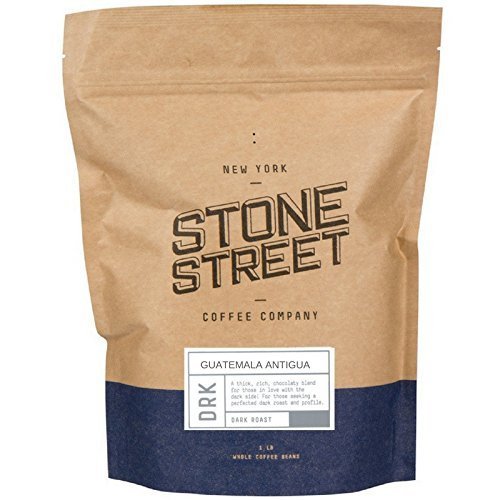
Stone Street Guatemala Antigua, Dark Roast, 1 lb
A deliberately dark take — bittersweet chocolate forward, acidity dialed down. Good in a French press or with milk, and the pound bag is the better value per ounce.
Coffee 46 Hundred sits between the two: a whole-bean Antigua that leans into the caramel register rather than the spice one. Worth trying if the Cubico reads a touch austere to you and the Stone Street reads a touch roasty. It is the one of the three I would hand to someone who normally drinks a flavored coffee and is trying to stop.
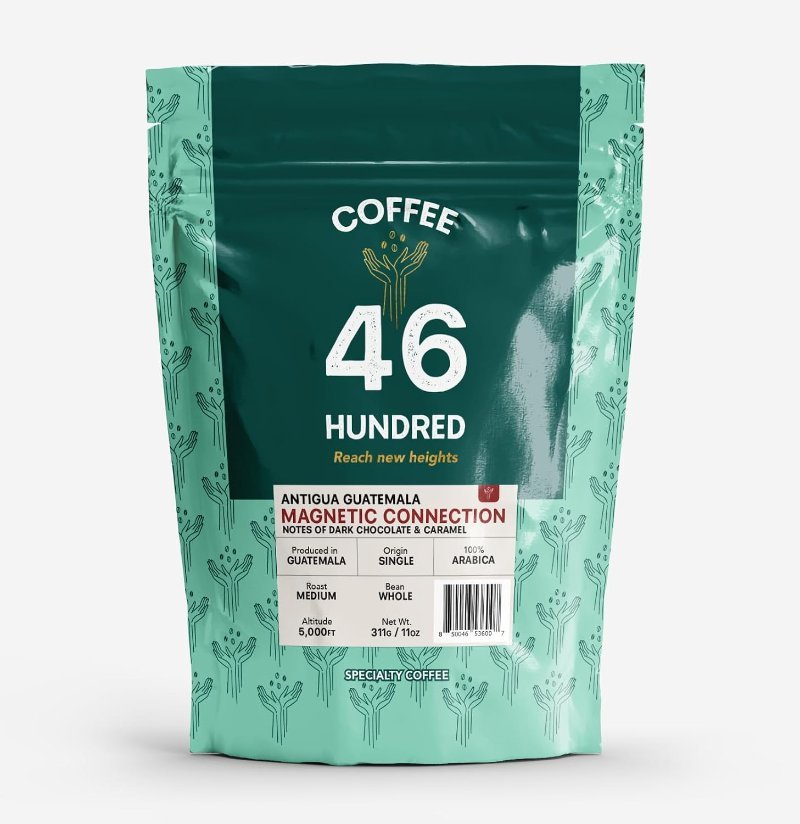
COFFEE 46 HUNDRED Antigua Guatemala, Whole Bean
Caramel and chocolate rather than spice, medium body. The gentlest of the three and the easiest sell to someone stepping off flavored coffee.
So is Antigua worth seeking out?
Yes, but seek out the coffee, not the word. What the valley gives you is real and mechanical — pumice soil, a hard dry season, cool volcanic nights, slow ripening — and it shows up as body and sweetness rather than as fireworks. If you have been chasing bright African coffees and finding them thin, an Antigua is the correction. Just understand that at this end of the market you are buying a region’s reputation with no paperwork behind it, and that the gap between a traceable Antigua lot and a bag with the name printed on it is wider than the price difference suggests. When you are ready to pay for the farm name and the certificate, that coffee exists and it is better. These are what I drink while I am not.