Camp coffee has a reputation problem, and it is entirely deserved. The default options are a foil packet of instant, a bag of pre-ground that went flat somewhere around the trailhead, or a percolator that boils the same water through the same grounds until everything tastes like a scorched ashtray. People accept this because they have decided that mornings outdoors are a place where standards go to die.
They do not have to. A pour-over setup that fits in a small stuff sack will make better coffee at a campsite than most people get at home, and it does not require you to haul a Chemex into the backcountry. What it requires is being honest about which four pieces actually change the cup and which ones are gear-shop theater.
Altitude is quietly doing you a favor
Here is the part nobody tells you: the higher you camp, the easier good pour-over gets. Water boils at 212°F at sea level, but roughly one degree lower for every 500 feet you climb. At 5,000 feet it boils at about 203°F. At 8,000 feet, closer to 197°F.
The accepted brewing window for pour-over is 195–205°F. So at any elevation a normal person actually camps at, water straight off the stove lands inside that window on its own. No thermometer, no standing around waiting thirty seconds for it to cool. The mountain does the tempering for you. At sea-level beach camping you should still let it rest a moment — but in the Cascades or the Rockies, boiling is the target.
The flip side is that thin, cold air pulls heat out of everything fast. A dripper sitting on a cold mug in 40°F air sheds temperature through the brew. Preheating the mug with your first splash of hot water matters more outside than it ever does in your kitchen.
The four pieces worth carrying
Everything below is a product we would actually pack, and the links are affiliate links — if you buy through them the site earns a commission at no extra cost to you.
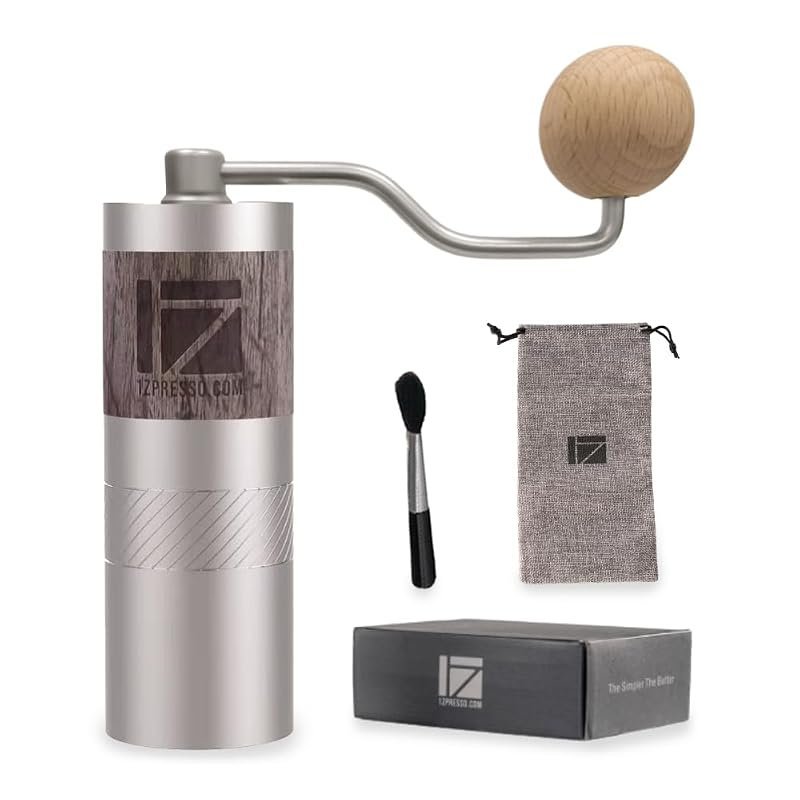
1. A hand grinder. This is the whole ballgame. If you carry one thing from this list, carry this. Ground coffee stales fast because grinding multiplies the surface area exposed to oxygen, and a bag ground on Thursday is noticeably duller by Saturday morning. Whole beans plus two minutes of cranking is the single biggest jump in quality available to you out there. The 1Zpresso Q is the one that earns its space: a stainless conical burr, a foldable crank so it does not snag on everything in your pack, about 18–20 grams of capacity, and 30 clicks of adjustment across ten numbered settings so you can actually dial in rather than guess. It also nests inside an AeroPress plunger, which is the kind of packing detail that tells you the people who designed it camp.
1Zpresso Q Manual Coffee Grinder
Foldable crank, numbered grind adjustment, and a burr set that holds up against grinders twice the price. Two minutes of work, and the rest of your setup suddenly has something to work with.
2. A dripper that collapses. Rigid plastic cones survive exactly one badly packed duffel. GSI Outdoors — founded in 1985 by three siblings who grew up adventuring in British Columbia, now run out of Spokane — makes the Ultralight JavaDrip, which is a silicone cone with three legs that clip onto the rim of a mug or the mouth of a wide water bottle. It weighs well under an ounce and flattens to a disc about an inch tall. It takes a standard #4 filter, so you are not hunting for a proprietary paper in a town with one gas station. The silicone does not hold heat the way ceramic does, which is a real drawback in a warm kitchen and a non-issue outside, where nothing holds heat anyway.
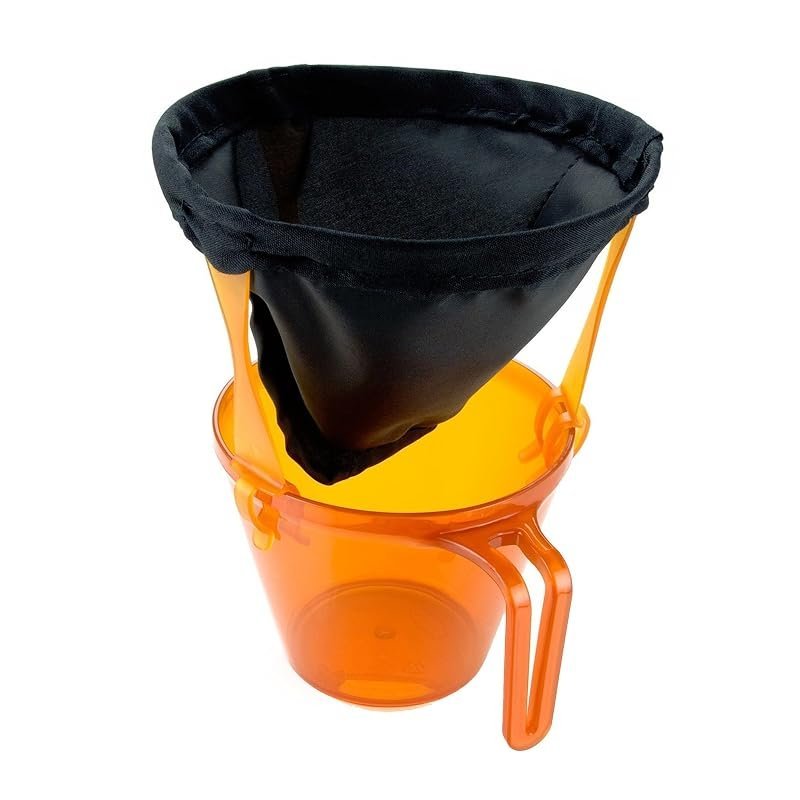
GSI Outdoors Ultralight JavaDrip
A collapsible silicone cone that clips to a mug or bottle, takes ordinary #4 filters, and disappears into a pocket of your pack. Backed by GSI’s lifetime warranty against defects.
3. A small gooseneck kettle — if you are driving. This is the honest dividing line between overlanding and backpacking. If your setup goes in a vehicle, bring a real gooseneck. Pouring boiling water from a wide camp pot onto a cone is how you get a crater in the bed, channeling, and a sour cup, and no amount of good beans rescues that. A 500ml 304-stainless gooseneck works on a camp stove burner and an induction cooktop alike, and it doubles as your water heater for everything else. If you are carrying everything on your back, skip it and accept a slower, sloppier pour — that is a fair trade for half a pound.
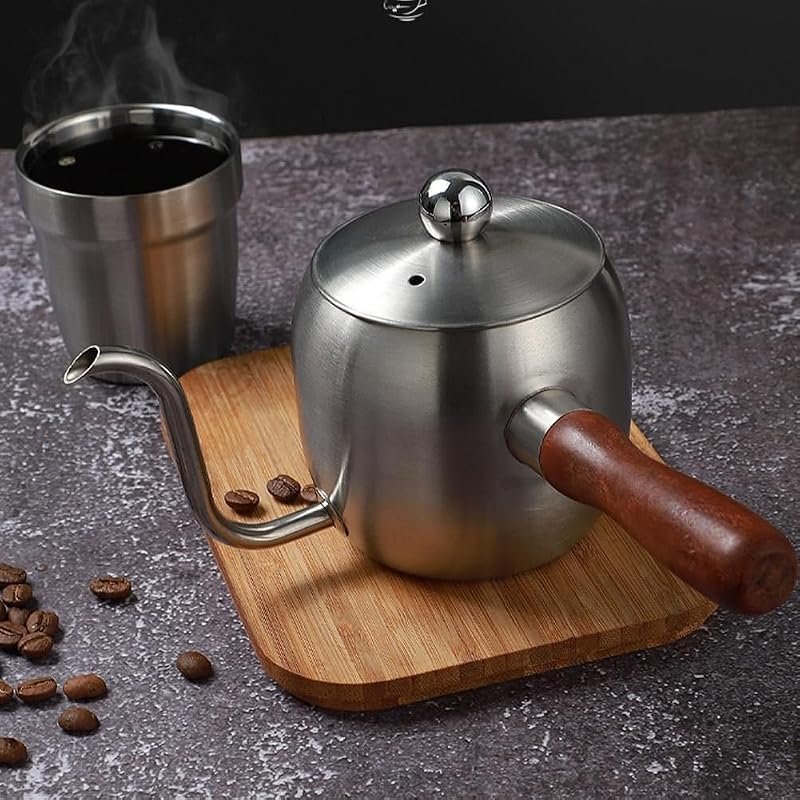
500ml Gooseneck Camping Kettle
304 stainless, wooden handle, and a spout narrow enough to actually control the pour. Works on gas burners and induction, which covers both the campsite and the van.
4. A scale, and here is where we will lose some of you. A scale is the least romantic object you can put on a picnic table, and plenty of people will tell you to eyeball it. They are wrong, but only sort of. Eyeballing works fine at home because you have made the same cup two hundred times in the same mug. At camp everything is unfamiliar — different vessel, different bag, different everything — and that is exactly when a 0.1-gram readout stops being fussy and starts being the difference between a great cup and a weak one you blame on the altitude. The Hario V60 Drip Scale reads to 0.1g up to 2,000g, has a built-in timer, and runs on two AAAs, which beats hunting for a charger in a truck bed. It is the one item here that is genuinely optional. It is also the one most likely to surprise you.
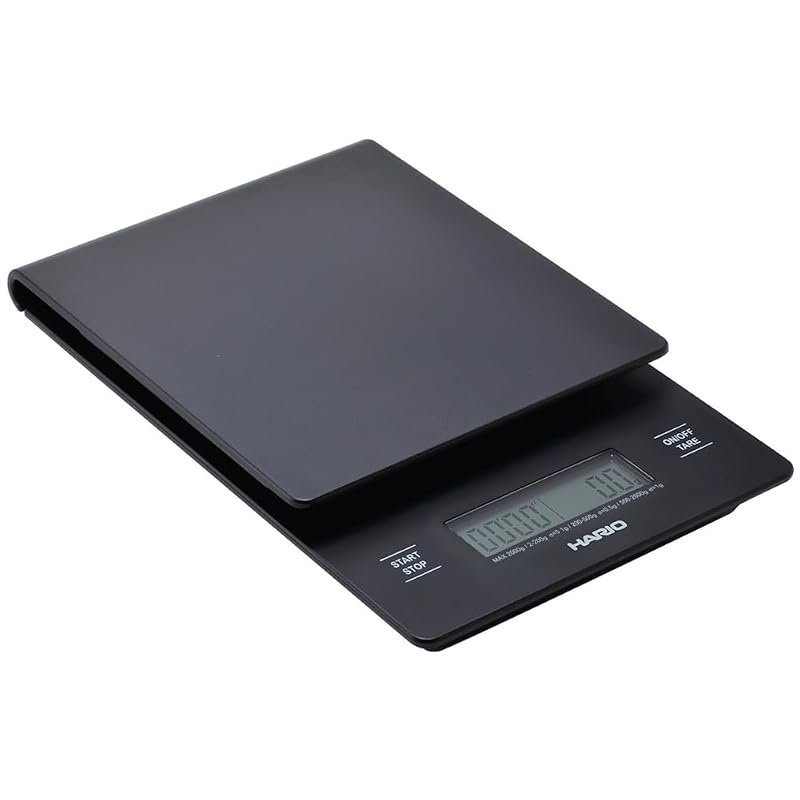
Hario V60 Drip Scale
0.1g precision, integrated timer, AAA batteries instead of a charging cable. Flat enough to slide alongside a cutting board in a camp kitchen box.
What to leave at home
The percolator, for a start. It is nostalgic and it is bad — recirculating boiling water through grounds over-extracts them by design. Also skip the all-in-one “camp coffee kits” that bundle a mediocre grinder with a mediocre dripper at a price that looks like a deal. The grinder in those sets is almost always the weak link, and the grinder is the part you cannot afford to compromise. Buy the grinder once, properly, and the rest can be cheap.
And leave the beans in the bag they came in. Decanting whole beans into a clever airtight camp canister sounds smart and mostly just means you carry an extra object. A one-way-valve bag rolled tight and clipped is fine for a weekend.
The routine, once you are out there
Boil water. While it heats, grind at a medium-coarse setting — slightly coarser than you would at home, because cold air and a thin silicone cone mean your brew runs cooler and you want to make extraction easier, not harder. Rinse the filter and preheat the mug with the first pour, then dump that water out. Bloom with about twice the weight of your grounds and wait forty-five seconds. Pour the rest in two slow circles.
Total time, including grinding: about five minutes, most of it standing there watching steam come off a mug while the sun works on the ridgeline. That is not overhead. That is the reason you are out there.