Cold brew is the one coffee method where the container is not an accessory. It is the brewer, the storage vessel, and the thing that decides whether day-five coffee tastes like day-one coffee. You steep for twelve to twenty-four hours and then the result sits in your fridge for the better part of a week, slowly reacting with whatever oxygen you left in the bottle. Everything about that argues for glass.
Plastic is the default on most cold brew makers and it is the wrong default. Coffee oils are lipophilic and they park themselves in plastic, which is why a six-month-old Tritan pitcher smells faintly rancid no matter how you scrub it. Glass holds no odor, takes no stain you cannot see, and lets you actually look at the brew — useful when you are trying to tell a properly extracted concentrate from a weak one. The tradeoff is weight and the obvious fragility, and both are real. Neither is a good enough reason to brew in plastic.
Borosilicate vs. soda-lime, and why it matters less than you think
Product listings make a lot of noise about borosilicate glass. It is the better material — lower thermal expansion, so it survives going from a hot rinse to a cold fridge without cracking. But cold brew is, by definition, never hot. For a vessel that lives between room temperature and 40°F, soda-lime glass is perfectly adequate, and it is usually thicker and heavier, which matters more for a bottle you will drop eventually. Borosilicate is worth paying for if you also want to make hot tea in the same bottle. If it is cold brew only, do not let the spec drive the decision.
The thing most bottles get wrong: the seal
Cold brew kept undiluted in a properly airtight glass container holds its flavor for roughly a week to ten days in the fridge; diluted, it drops to two or three days because you have introduced water and, usually, dairy. The variable that moves that number is headspace and seal quality. Oxygen degrades the oils and acids that make cold brew taste round instead of flat, so a bottle with a real gasket beating a bottle with a loose plastic cap is not marketing — it is the actual difference between good Friday coffee and mediocre Friday coffee. A bottle you can fill close to the top is doing you a favor for the same reason.
The bottles worth owning
These are split by what you actually want out of the thing, because brewing in the bottle and storing in the bottle are different jobs and the best product depends on which one you care about. Some of the links below are affiliate links, which means we may earn a commission if you buy through them at no extra cost to you.
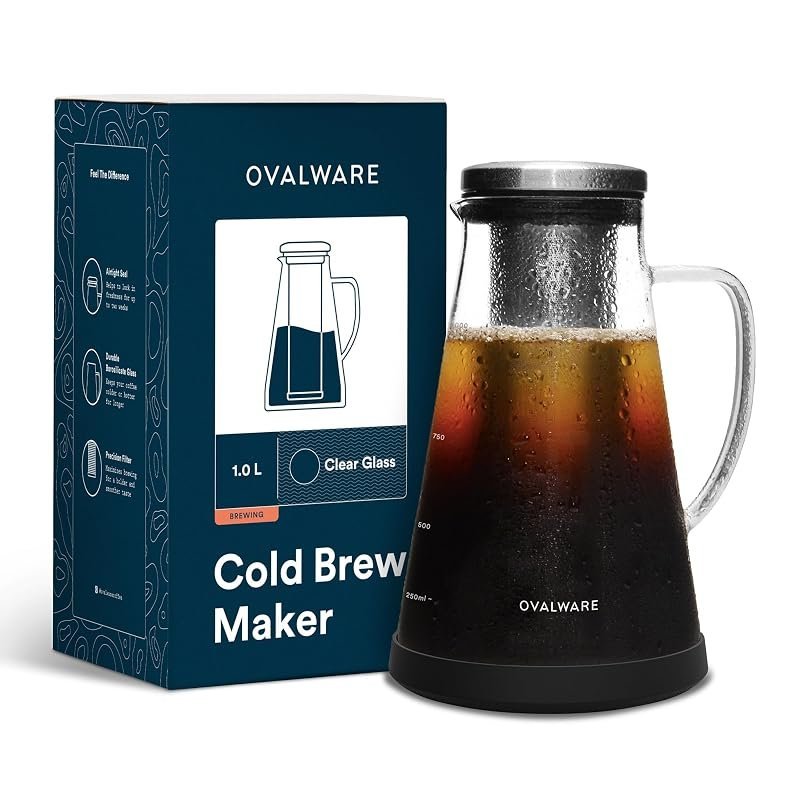
If you want one object that does everything, the OVALWARE is the pick and it has been for years. The 1-liter borosilicate carafe takes a fine-mesh stainless filter core that you load with grounds, steep, and then pull out — brewing and storage in the same vessel with nothing to decant. The silicone-gasketed lid is genuinely airtight, which is the whole ballgame for week-old brew. It is not cheap for what is fundamentally a bottle and a filter basket, and the filter mesh is fussy to clean if you let grounds dry in it. Rinse it immediately and it lasts indefinitely.
OVALWARE Airtight Cold Brew Coffee Maker, 1.0L
Brew and store in one borosilicate bottle. The airtight silicone seal is what keeps day-six cold brew drinkable.
If you drink cold brew like water, a liter is not enough and you want the County Line Kitchen 64-ounce mason jar. It is heavy soda-lime glass with a wide mouth, a stainless mesh filter, and a flip-cap lid, and the design philosophy is essentially “a big jar that does not leak.” The handle matters more than it sounds like it should — a full half-gallon of liquid in a smooth-sided jar is a genuinely annoying object to move around a crowded fridge. The wide mouth also means you can get a hand and a brush inside it, which the narrow-necked bottles do not allow.
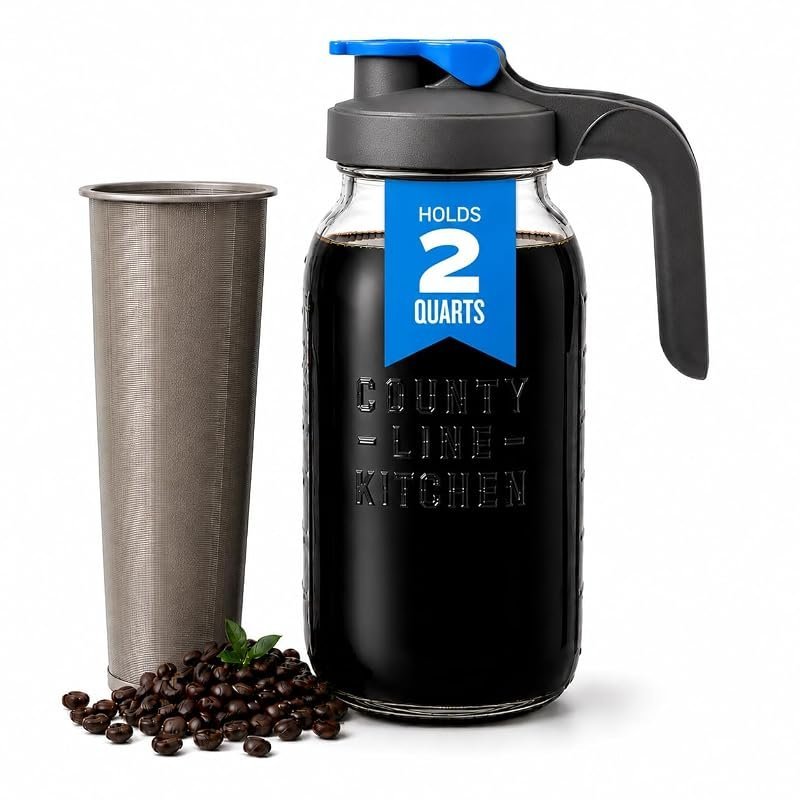
County Line Kitchen 64oz Cold Brew Coffee Maker
Half a gallon at a time, in thick glass with a handle and a mouth wide enough to actually clean. The workhorse option.
The Hario Filter-In bottle is the one that earns its place on looks and footprint. It is 650ml of Japanese heat-resistant glass shaped like a wine bottle, with the mesh filter built into the silicone stopper so it strains as you pour. It fits in a fridge door, which none of the others do. The catch is that the narrow neck makes loading grounds slightly irritating and the capacity is small enough that heavy drinkers will be brewing every other day. Buy it because it is a pleasant object you will use daily, not because it is the most practical brewer here.
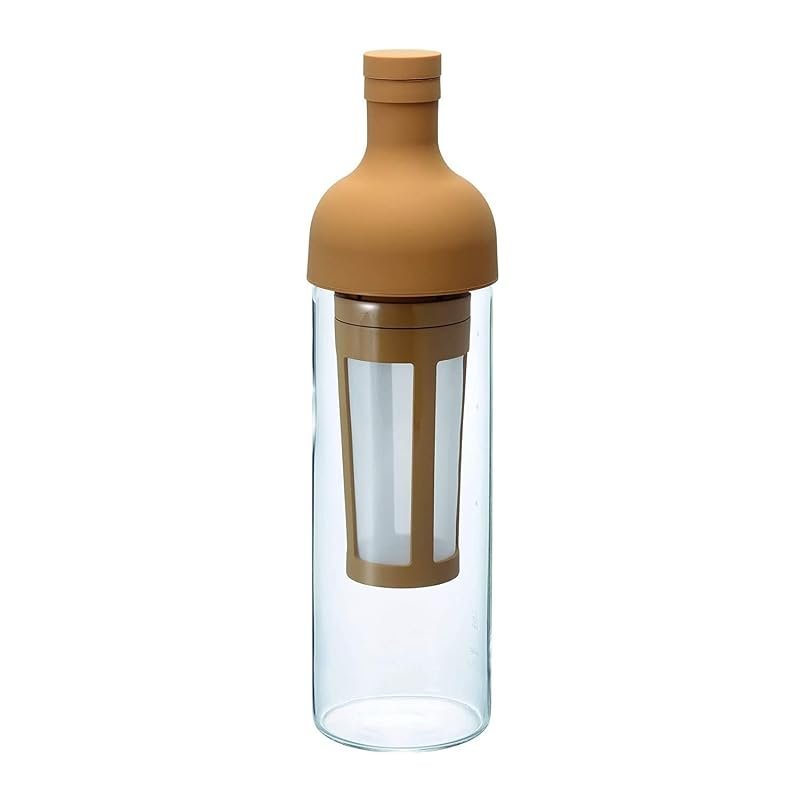
Hario Filter-In Coffee Bottle, 650ml
Borosilicate, filter built into the stopper, and narrow enough to live in the fridge door. The nicest one to actually use.
And if you already have a brewer you like and the problem is purely storage — you make a big batch in a French press or a mason jar and need somewhere to put it — skip the all-in-ones entirely and buy swing-top bottles. The wire bail and rubber gasket give you a better seal than most dedicated cold brew lids, they cost a fraction of the price, and splitting a batch across several small bottles means you are only ever opening one of them. Less headspace, less oxidation, better coffee on day six. This is the least glamorous recommendation on the list and probably the highest value one.
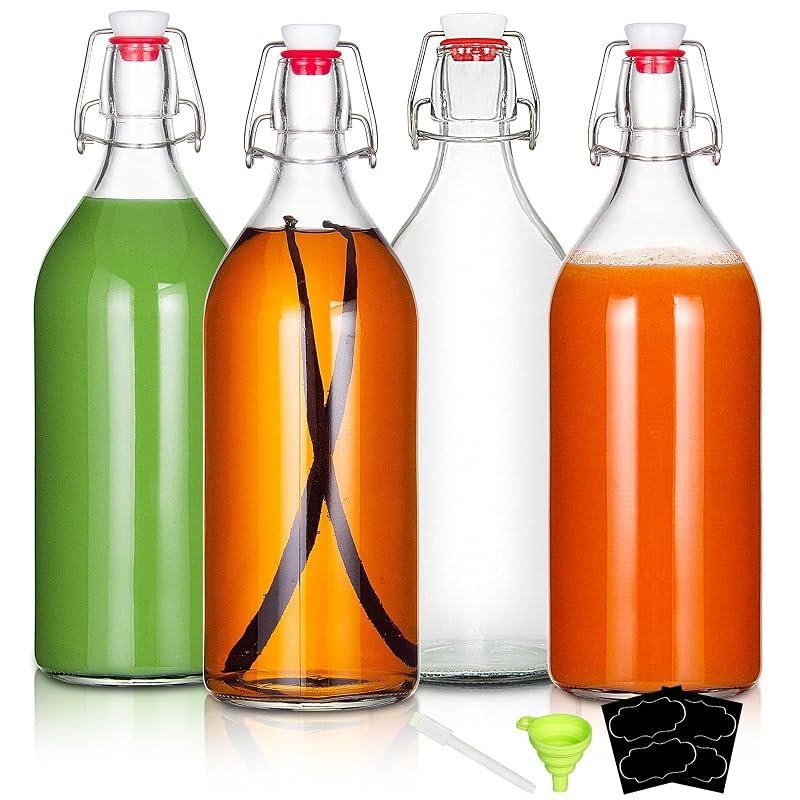
YEBODA 32oz Swing Top Glass Bottles, 4-Pack
Decant a big batch into several sealed bottles instead of one half-empty one. Cheap, and it measurably extends how long the brew tastes right.
What we would actually buy
One bottle household, no existing gear: the OVALWARE. It is the smallest number of objects that produces good cold brew and keeps it that way. If you already own something that brews fine, put the money into swing-tops instead — better storage improves every batch you make from now on, and a second brewer improves none of them.