For about two years the coffee trade had one story: arabica was expensive, robusta was cheap, and every roaster with a lab and a spreadsheet was quietly figuring out how much robusta they could slide into a blend before anybody noticed. That story has now inverted, and almost nobody buying a bag at the grocery store has noticed that either.
Here is what the “supply squeeze” actually is, why the arabica–robusta gap got so weird, and — the part that matters at your kitchen counter — whether any of it should change what you buy.
The two beans are not the same plant
Nearly everything you drink comes from one of two species. Coffea arabica is the delicate one: it wants altitude, shade, and a narrow temperature band, it self-pollinates, and it gets flattened by coffee leaf rust. Coffea canephora — robusta — grows lower, hotter, and tougher, shrugs off diseases that level arabica farms, and yields more per hectare.
The tradeoff shows up in the cup. Robusta carries roughly double the caffeine and substantially more chlorogenic acid, which is a chemist’s way of saying it tastes harsher — rubbery, grainy, woody at the bottom end. It also produces more crema, which is exactly why traditional Italian espresso blends have always carried some. Arabica gets the acidity, the fruit, the florals, and the entire specialty industry built on top of them.
Robusta is not a rounding error. It accounts for roughly two-fifths of world production, and its share of global exports climbed past 36% by late 2025.
What actually squeezed
The squeeze was really an arabica squeeze. Bad Brazilian weather, thin certified stocks, and speculative money pushed arabica to record territory, and the arabica–robusta differential — normally a 50% to 100% premium — collapsed toward multi-decade lows.
Commercial roasters responded the way commercial roasters do. Anyone with the technical capability to reformulate started swapping arabica out for robusta in blends, which generated fresh robusta demand and pulled the two prices toward each other from both directions at once. Robusta exports hit 58.99 million bags in the twelve months ending June 2026. Instant coffee, robusta’s traditional stronghold, kept growing across Asia, the Middle East, and Africa on top of that.
Where the market actually sits right now
Almost all of that pressure has come off, and fast. The USDA now forecasts global output in 2026/27 rising 6.0% — about 10.8 million bags — to a record 189.7 million bags, driven mainly by better conditions in Brazil. Vietnam’s crop is forecast at a record 32.5 million bags, 31.4 million of it robusta, with exports projected at 25.4 million bags. Vietnamese exports for January through July 2026 were already up 21.1% year over year.
Prices have followed. Arabica sat near $2.93 a pound on ICE in early September and has since traded down to a one-month low; robusta slid to a two-and-a-half-month low. Brazilian warehouses are reportedly running out of room, which tends to force the farmers who were sitting on inventory waiting for a better print to sell anyway. Both futures curves are in backwardation — the market’s way of saying it expects more coffee later, not less.
One wrinkle worth flagging, because it is the piece most coverage skips: Brazil’s own robusta crop is forecast down, to 24.4 million bags from 25 million, after cold snaps and heavy rain in the growing regions. The global glut is real, but it is being carried by Vietnam and by Brazilian arabica, not by robusta everywhere.
Why your bag hasn’t gotten cheaper
Green coffee is a commodity; a roasted bag with a label on it is a consumer product, and consumer products are sticky on the way down. Roasters hedge months out, so today’s retail price reflects beans bought at a very different number. Packaging, freight, and labor did not fall. And the blends that got reformulated toward robusta during the expensive years mostly are not getting reformulated back — that was a margin decision, and the margin is still nice.
Analysts expect the arabica–robusta spread to widen back out toward $0.70–$1.00 a pound as supply normalizes. If that happens, the incentive to lean on robusta shrinks and some of those blends will drift back. Slowly.
So what should you actually buy?
My take: stop treating “100% arabica” as a quality claim. It is a species claim, and it tells you nothing about altitude, processing, freshness, or whether the roaster knows what they are doing. A well-grown, carefully processed robusta beats a tired commodity arabica, and the last two years have produced more of the former than the specialty world wants to admit. Here are three bags that make the point from three directions.
These are affiliate links — if you buy through them, this site earns a commission at no extra cost to you.
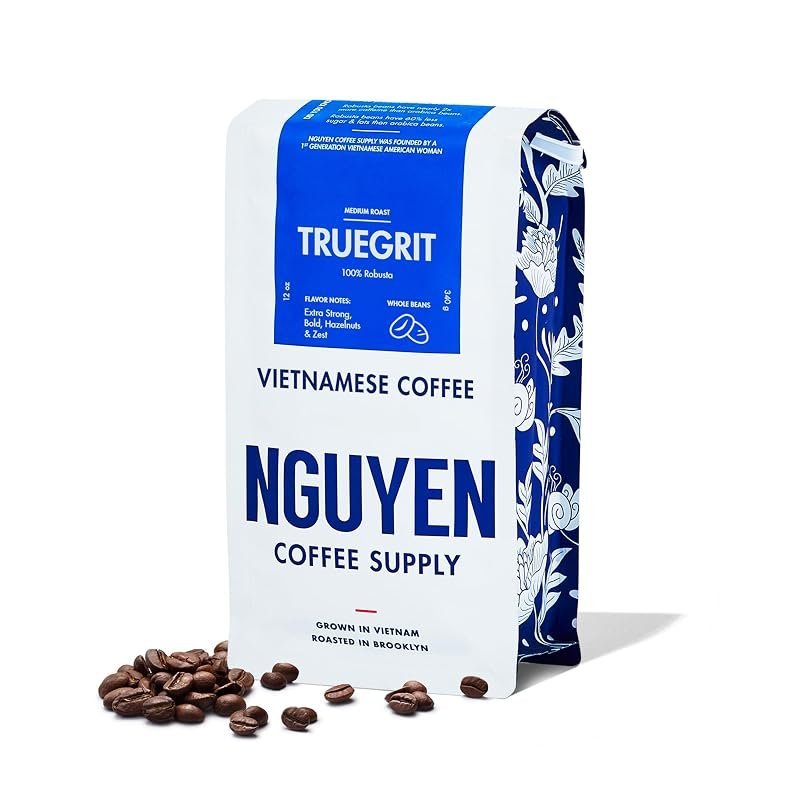
Try the bean everyone is arguing about. Nguyen Coffee Supply has been the loudest advocate for taking Vietnamese robusta seriously, importing through direct-trade relationships since 2018 and roasting in Brooklyn. Truegrit is their straight 100% robusta — medium roast, hazelnut and citrus zest, full-bodied, and roughly double the caffeine of their arabica bags. It is not trying to taste like a Yirgacheffe and you should not want it to. Brew it in a phin or a French press, where the body is an asset, and it will recalibrate what you think this species is capable of.
Nguyen Coffee Supply Truegrit Robusta
Single-origin Vietnamese robusta, direct trade, roasted in Brooklyn. 12 oz whole bean. The bag to buy if you want to know what good robusta actually tastes like.
The blend that is upfront about it. Most robusta in American cups is undisclosed. Death Wish built an entire brand on saying so out loud — arabica for balance, robusta for the caffeine and the body, USDA organic and Fair Trade, sourced across Peru, India, Guatemala, Honduras, and Ethiopia. The medium roast is the one I would point a pour-over drinker toward; the dark roast is a blunter instrument. Is it specialty coffee? No. Is it an honest, well-made example of exactly the blend strategy this entire article is about? Yes.
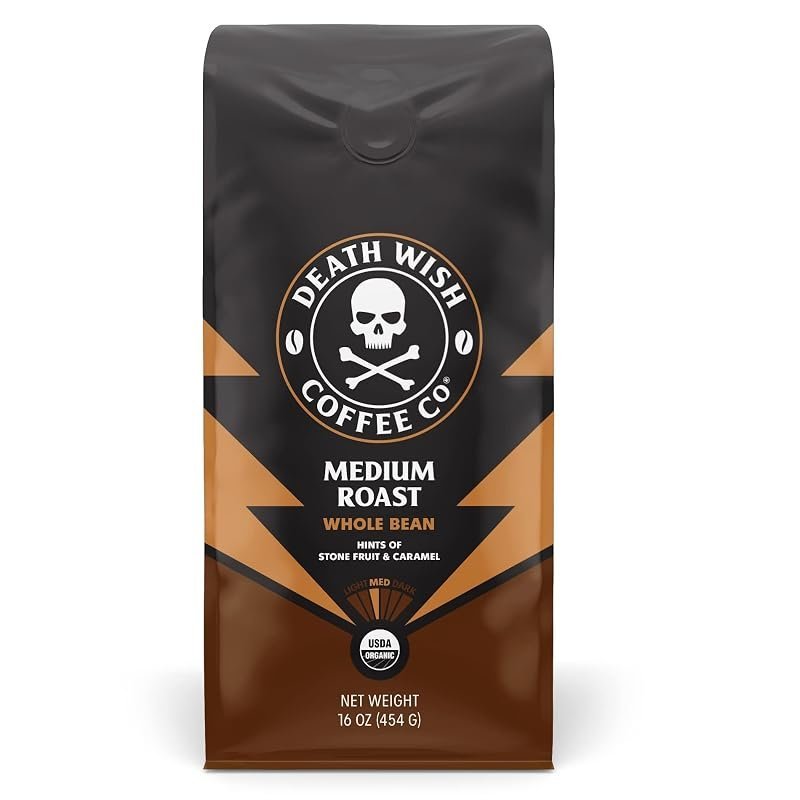
Death Wish Coffee Organic Medium Roast
Arabica and robusta blended on purpose and labeled that way. 16 oz whole bean, organic and Fair Trade certified.
What the arabica premium actually buys. And then the control group. Volcanica’s organic Yirgacheffe is the case for paying up: high-grown Ethiopian arabica with the lemon-and-blueberry acidity and the tea-like body that robusta, for all its virtues, simply cannot produce. Brew this next to the Truegrit some morning and the price gap stops being an abstraction about futures curves. The premium is real when the coffee earns it — which is the whole point, and the thing “100% arabica” on a can of pre-ground never told you.
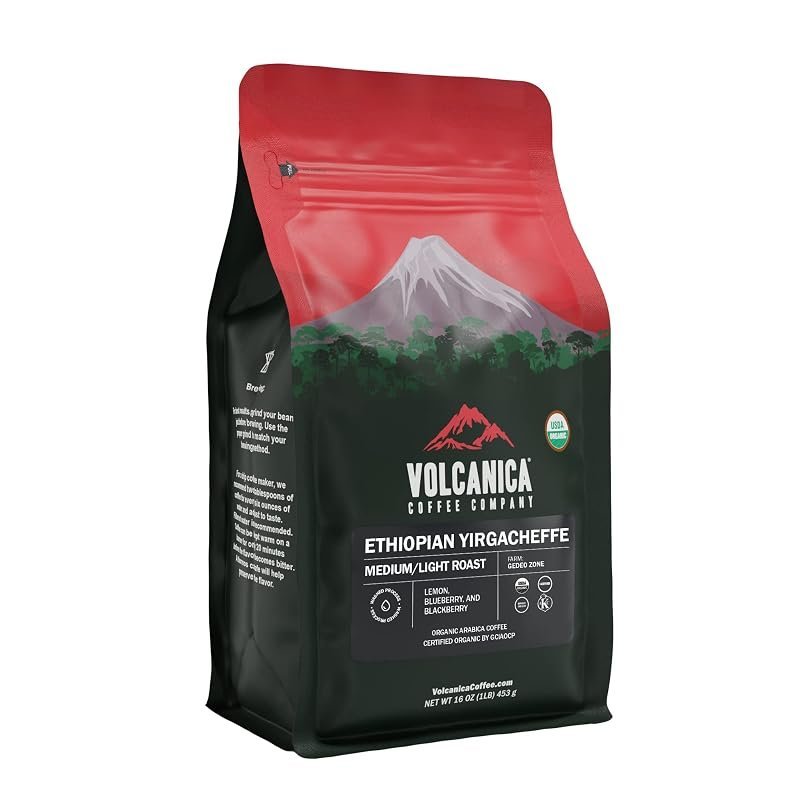
Volcanica Ethiopian Yirgacheffe
USDA organic, high-grown Ethiopian arabica. 16 oz whole bean, fresh roasted. Lemon, blueberry, and the acidity you are paying for.
The short version
The squeeze that made headlines was arabica-specific, it drove real and largely permanent robusta substitution into commercial blends, and it is now unwinding into a record global crop. Retail prices will lag that by months. Meanwhile the useful takeaway has nothing to do with futures at all: judge the roaster and the lot, not the species on the front of the bag.