Egg coffee sounds like a dare. It is not. Cà phê trứng is a small cup of very strong Vietnamese coffee buried under a thick, warm, custardy foam, and the closest thing in your existing frame of reference is tiramisu — not breakfast. It is also one of the only coffee drinks with a documented invention date and a reason for existing that has nothing to do with a marketing department.
It exists because Hanoi ran out of milk
In 1946, a bartender named Nguyễn Giang was working at the Sofitel Legend Metropole in Hanoi during the First Indochina War. Fresh milk had become scarce and unreliable, which is a problem when a chunk of your drink menu is built on café au lait. Giang went looking for something that would behave the way milk behaves — emulsify, sweeten, hold air — and landed on egg yolk. Whipped hard with sugar it goes pale, triples in volume, and sits on top of a liquid instead of sinking into it. Sweetened condensed milk, already ubiquitous in Vietnam precisely because it survives a climate that fresh dairy does not, handled the rest.
It caught on. Giang opened his own shop, Café Giang, in Hanoi’s Old Quarter in the 1960s, and the drink spread across the city from there. The café is still open and still run by the family — his son took it over — and the house recipe is still not public. What is public is the shape of the thing: yolk, condensed milk, and dark, bitter robusta, in that order of assembly.
This is one of the rare times you actually want robusta
If you have spent any time on this site you know the general posture toward robusta, which is that it is mostly a filler bean sold to people who are not paying attention. Egg coffee is the exception, and it is not a close call. You are about to pour two ounces of coffee under a sweetened egg custard. A delicate washed Ethiopian would be annihilated — you would taste sugar, fat, and a vague brown flavor. What the drink needs is something bitter enough and heavy enough to cut back through, and robusta has roughly twice the caffeine of arabica along with the blunt, cocoa-and-tire-smoke bitterness that comes with it.
Vietnam is the obvious place to source it. It is the second-largest coffee producer on earth after Brazil and the largest robusta producer by a wide margin — north of 40% of the world’s robusta, most of it grown on volcanic soil in the Central Highlands, with Đắk Lắk province alone accounting for something like a third of national output. The traditional roast profile there is dark and often finished with butter or oil, which sounds like heresy and is exactly right underneath an egg foam. We use affiliate links below, which means we earn a commission if you buy through them — at no extra cost to you.
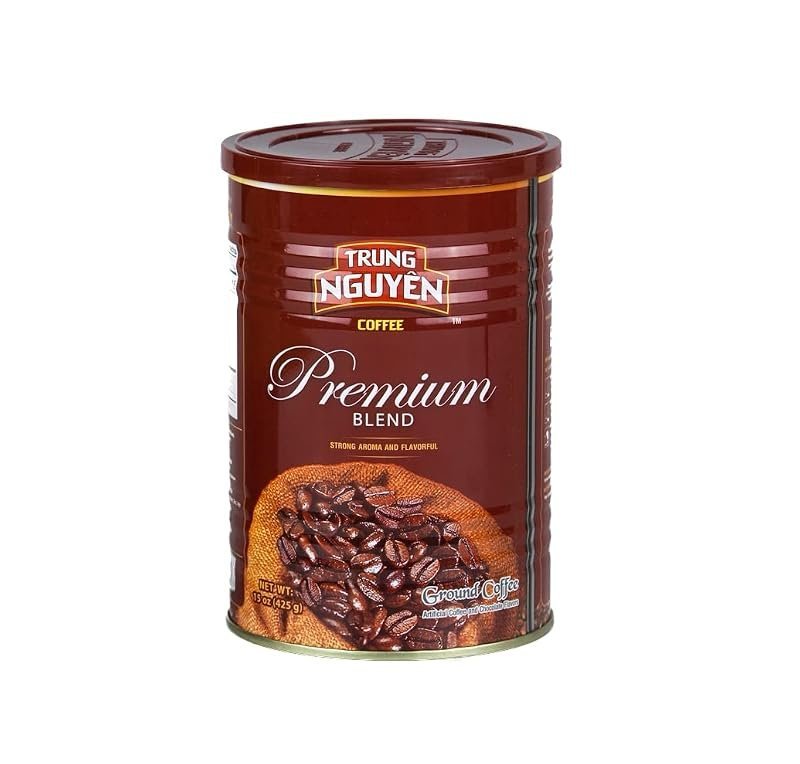
Trung Nguyên Premium Blend (15 oz can)
The default, and for once the default is correct. An arabica-robusta blend, roasted dark, pre-ground to roughly the coarseness a phin wants. It tastes like chocolate and scorched sugar and is frankly not very good on its own — which is the entire point here. Buy the can, not the instant sachets.
The phin is doing something your V60 cannot
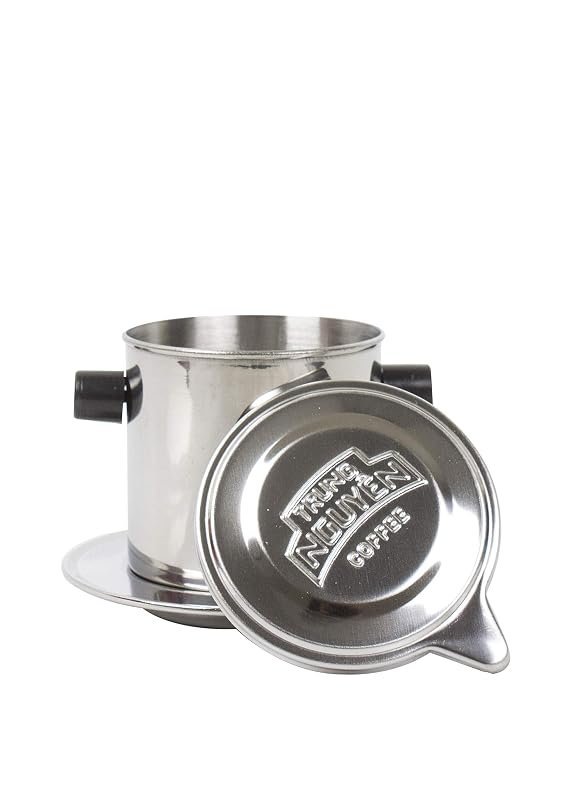
A phin is a small metal drip filter with four parts: a chamber that holds the grounds, a perforated plate the chamber sits on, a weighted insert that presses the bed flat, and a lid. You set it directly on the cup, add grounds, tamp lightly with the insert, wet the bed, then fill and walk away. Gravity does everything else.
What makes it right for this drink is the pace. A pour-over is done in two and a half to four minutes; a phin takes four to eight, sometimes longer, because the water has to work through a compressed bed with no help from you. The result is a very small volume of very concentrated, quite bitter coffee — two ounces or so — which is precisely the ratio the foam demands. Try to substitute a full mug of drip and the proportions collapse. Grind matters more than people expect: aim for medium to medium-coarse, about kosher salt. If the cup finishes in under three minutes go finer, and if it stalls past seven go coarser.
Stainless Steel Vietnamese Phin Filter, Single Cup
There is no meaningful premium tier here — a phin is a stamped metal cup with holes in it, and this one works. Single-serve size, no paper, no plastic, packs flat enough to throw in a bag. Somewhere around ten dollars for a brewer you will still own in a decade.
The condensed milk is load-bearing
Do not read “sweetened condensed milk” as a sugar delivery mechanism you can swap for a spoonful of white sugar and some cream. It is doing structural work. The sugar concentration is what stabilizes the yolk foam and keeps it from weeping, and the milk solids are what pull the raw-egg note out of the finished drink. Cut the quantity and the foam goes thin and starts smelling like an omelette within about ninety seconds.
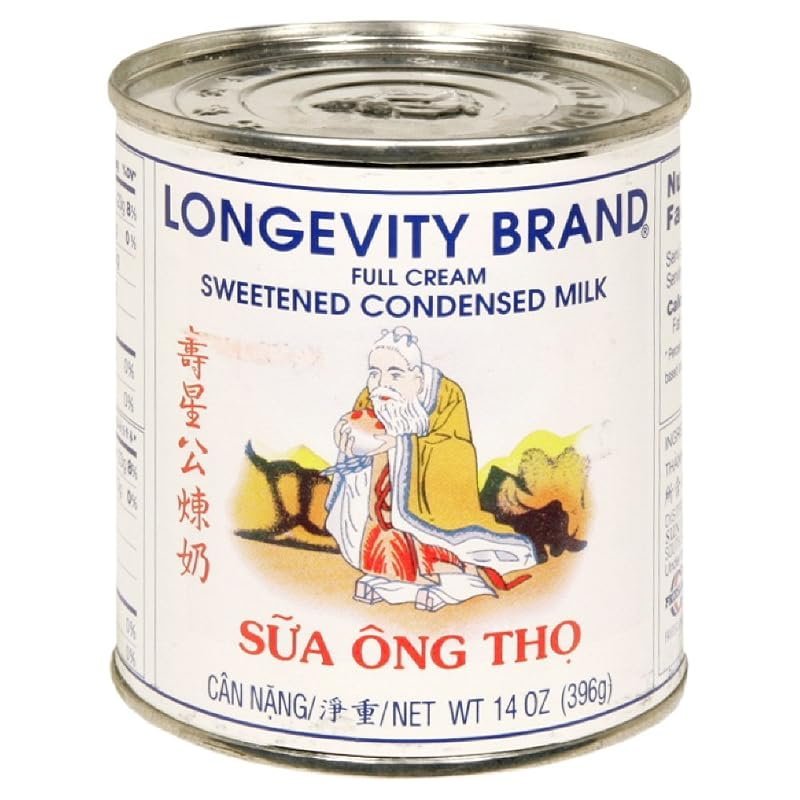
Longevity Sweetened Condensed Milk, 14 oz (4-pack)
The Vietnamese standard — the label you see stacked behind the counter at every phở place. Sweeter and thicker than the American baking-aisle brands, which is what you want. A four-pack is more than you need for egg coffee and exactly the right amount for the iced cà phê sữa đá habit you are about to develop.
How we actually made it
Brew first, foam second, or the coffee goes cold while you whisk. Two rounded tablespoons of grounds in the phin, a small pour to wet the bed, then fill to the top and lid it. While that drips, separate two egg yolks into a small bowl and add about two tablespoons of condensed milk. Whisk hard — a handheld electric frother or a small hand mixer is genuinely easier than a fork here, and you want three to five solid minutes of it. The mixture should go from orange and slack to pale yellow, thick enough to hold a ribbon, and roughly triple its starting volume. Under-whipping is the single most common failure.
Pour the hot coffee into a small glass, then spoon the foam over the top. It should float. Traditional service is in a glass sitting in a shallow bowl of hot water, which sounds fussy and is not — the drink cools fast, and a cold egg foam is a different and worse experience. Drink it without stirring, so each sip pulls foam and bitter coffee together.
The failure mode nobody warns you about
It can taste like egg. When it does, it is almost always one of three things. The yolks were cold, so they never emulsified properly — pull them out fifteen minutes ahead. The whisking stopped too early, leaving air pockets that carry sulfur notes. Or the chalaza, the stringy white bit anchoring the yolk, went into the bowl. Fish it out. Some recipes add a few drops of vanilla to cover any remaining edge, which works, though it also nudges the drink toward dessert territory it does not really need help reaching.
So is it worth doing?
Yes, but understand what you are signing up for. This is not a daily driver. It is sweet, it is rich, it takes ten minutes and dirties three things, and two of them in a row is one too many. What it is, though, is one of the genuinely great coffee drinks — a texture you cannot get any other way, sitting on top of coffee strong enough to survive it, invented by someone solving a real problem with what was in the kitchen. The total buy-in is a ten-dollar filter, a can of coffee, and condensed milk you will use anyway. Make it on a slow Saturday.