Ethiopia is where coffee comes from, full stop. Every Arabica plant on earth traces its genetic lineage back to the forests of southwestern Ethiopia, where coffee still grows wild today. That single fact explains almost everything about why Ethiopian coffee tastes the way it does — this isn’t a country that adopted coffee farming, it’s the country coffee farming was invented in, and the genetic diversity shows it.
Heirloom Varieties, Not a Single Crop
Most coffee-growing countries plant a handful of known cultivars — Colombia leans heavily on Castillo and Caturra, for instance. Ethiopia is different. Farmers there grow what’s broadly called “heirloom” coffee: thousands of indigenous varieties, many never formally classified or named, growing semi-wild in forests and small garden plots. Estimates for how many distinct varieties exist range from 6,000 to upward of 15,000. No other origin on the planet has that kind of genetic depth, and it’s a big part of why Ethiopian lots can taste so different from each other even within the same region.
The Regions Actually Matter
“Ethiopian coffee” as a single flavor doesn’t really exist any more than “European wine” does. The region tells you far more than the country ever will:
Yirgacheffe, technically a zone within the larger Sidama region, sits at some of the highest elevations in the country. It’s known for intensely floral, tea-like cups with bright citrus acidity — the jasmine-and-bergamot character that made Ethiopian coffee famous with specialty roasters in the first place.
Sidamo (or Sidama) covers a much larger area of the Rift Valley highlands, roughly 1,550 to 2,200 meters above sea level. Fertile volcanic soil and heavy rainfall produce coffee that’s a little rounder and less sharply floral than Yirgacheffe, with more stone-fruit sweetness.
Guji, bordering Sidama and Yirgacheffe, spent years being lumped in with its neighbors before earning recognition on its own. Volcanic soil and a wide swing between day and night temperatures give Guji lots a bright, berry-forward acidity that’s become a favorite among roasters chasing something distinct from Yirgacheffe.
Harrar, in the eastern highlands, is the outlier. Dry, cool weather makes it ideal for natural (dry) processing rather than the washed method used almost everywhere else in Ethiopia, and the result is a heavier-bodied, wine-like cup with blueberry and dark fruit notes that can taste more like a big red wine than a cup of coffee.
Why Processing Changes Everything
Two coffees from the same farm can taste completely different depending on how the cherry is processed. Washed coffee — the norm in Yirgacheffe and most of Sidamo — has the fruit pulp removed before drying, which produces a cleaner, brighter, more transparent cup. Natural process, common in Harrar and parts of Guji, dries the whole cherry with the fruit still on, letting sugars ferment into the bean and producing a heavier, funkier, more fruit-forward result. Neither is “better.” They’re just different tools, and a good roaster will tell you which one they used because it matters more to the final flavor than almost anything else on the bag.
What the Grocery Store Bag Leaves Out
A bag labeled simply “Ethiopian blend” is very likely a mix of lower-grade lots from multiple regions and processing methods, blended specifically to smooth out the differences that make single-origin Ethiopian coffee interesting in the first place. That’s not a scandal — blending has its place — but it does mean you’re not tasting what actually makes this origin worth seeking out. If you’ve only had that version, you haven’t really had Ethiopian coffee. You’ve had a rounded-off average of it.
If you’ve only ever had a mediocre “Ethiopian blend” off a grocery shelf, you haven’t actually had Ethiopian coffee yet.
Three real Yirgacheffe bags worth trying:
These link to Amazon — we may earn a small commission at no extra cost to you. Full disclosure.
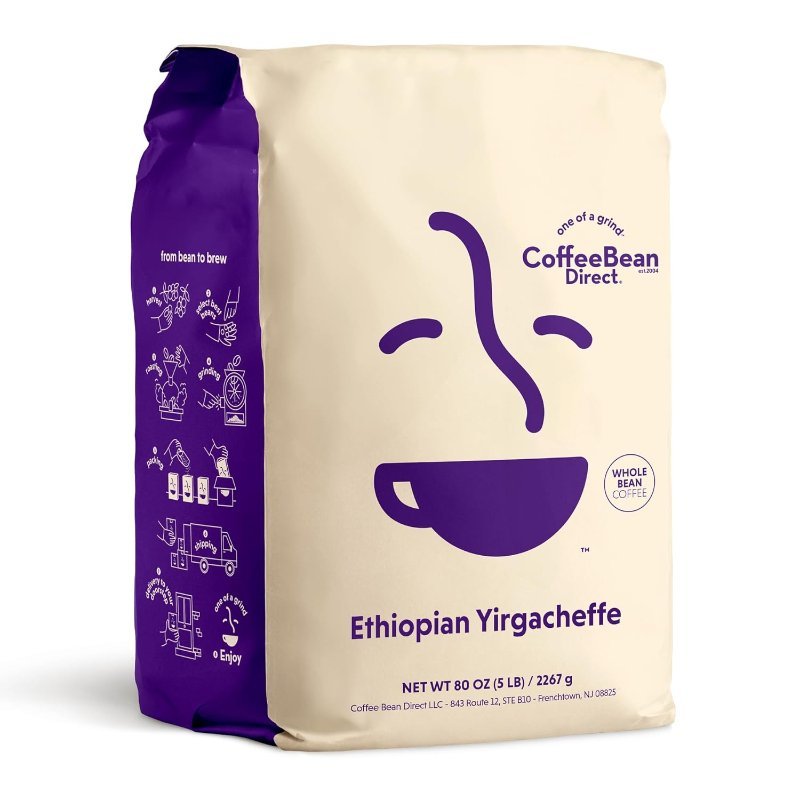
Coffee Bean Direct Ethiopian Yirgacheffe (5lb)
Bulk-bag pricing without giving up single-origin character. Not fancy, but a genuinely good everyday Yirgacheffe.
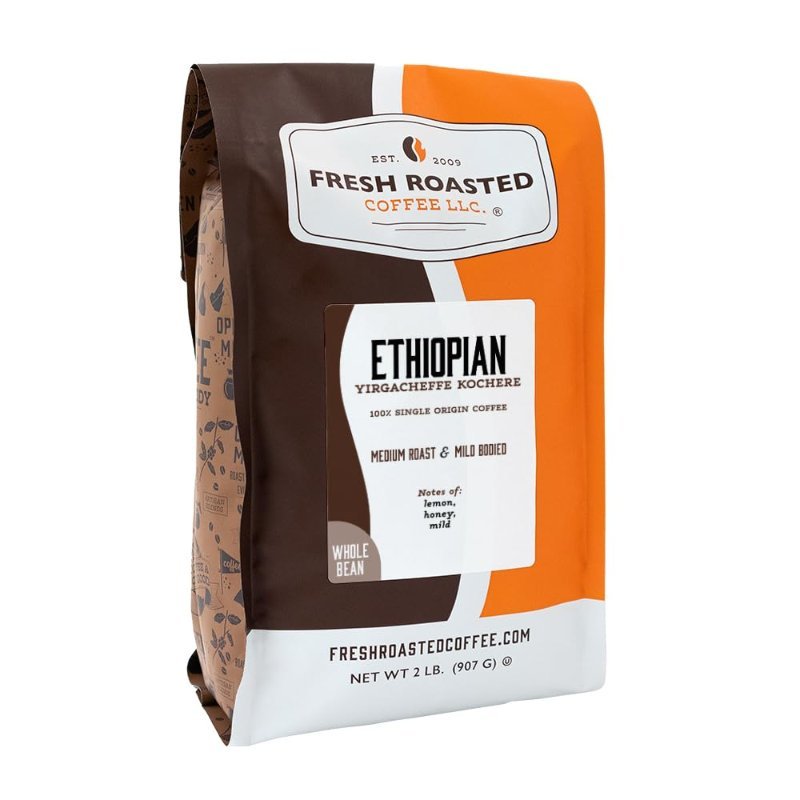
Check Price on Amazon →Fresh Roasted Coffee Yirgacheffe Kochere
This is the bag I’d actually point you toward — a specific washing station, roasted to order, with the citrus-and-honey character Yirgacheffe is known for.
Check Price on Amazon →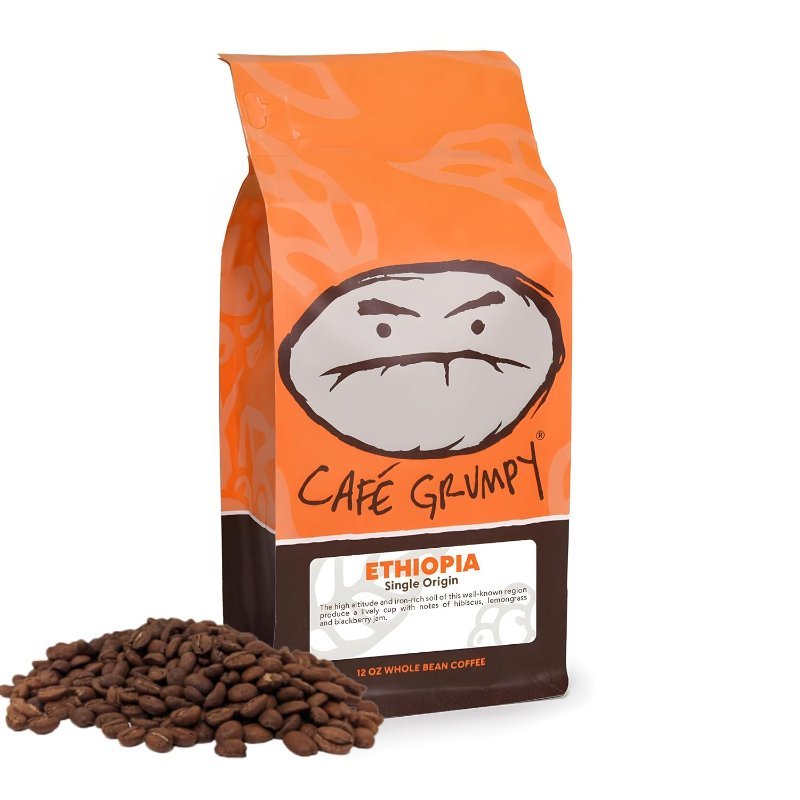
Café Grumpy Ethiopia Yirgacheffe
Fair Trade, bought direct from Yirgacheffe smallholders, and roasted in small runs by a shop that stakes its name on the cup — malted chocolate, apricot, a bergamot lift. You are paying for the paper trail and the roast date, not a marketing budget.
Check Price on Amazon →