Put a Sumatra Mandheling next to a Java and a Sulawesi in a blind cupping and most people would not guess the three came from the same country, let alone the same archipelago. Sumatra shows up heavy, savory, almost soil-toned — cedar, tobacco, dark chocolate, damp forest floor, with acidity flattened nearly to zero. The other two are cleaner and sweeter. That gap has very little to do with the plants and almost everything to do with one decision made in the days after the cherries are picked.
First, the taste that gives it away
Wet-hulled Sumatra is the most polarizing coffee in the mainstream specialty catalog. The vocabulary reviewers reach for — earth, wood, spice, leather, tobacco, mustiness — reads like a list of defects if you transplant it to a Kenyan or an Ethiopian. On a Sumatra it is the expected result. The body is thick and syrupy, the finish lingers, and the brightness that makes a washed African coffee sparkle is simply absent. If you have ever thought a pour-over tasted like a cigar box and were not sure whether that was a compliment, you were probably drinking Sumatra.
Giling basah is the whole answer
In most of the coffee world, parchment — the papery layer wrapped around the seed — stays on until the coffee has dried down to roughly 10 to 12 percent moisture. It works like packaging: it protects the seed from air, pests, and humidity while it slowly stabilizes. Only then does a dry mill hull it off.
Sumatra cannot really do that. The highlands sit under near-daily cloud cover and heavy humidity, so patio drying to 11 percent takes forever, and smallholders working fractions of a hectare need to be paid this week, not in three. So the local practice is giling basah, literally “wet grinding.” Farmers pulp the cherry at home, ferment it briefly, dry it only partway — often somewhere in the 30 to 50 percent moisture range — and sell it to a collector who hulls the parchment off while the seed is still soft and wet.
Two things follow from that. The bean comes out of the huller chipped and scuffed, because you are running a soft seed through a machine designed for a hard one, and it comes out naked and damp, exposed directly to air and whatever microbes are around while it finishes drying fast. Green Sumatra has a distinctive dark jade color as a result. The rapid, unprotected drying and the heat of hulling age the coffee prematurely, and that premature aging is where the wood, the earth, and the low acidity come from. By any orthodox processing standard this should be a disaster. It is instead the reason anyone buys the coffee.
“Mandheling” is not a region and not a varietal
Worth clearing up, because the bags never explain it. Mandheling is a trade name borrowed from the Mandailing people of North Sumatra, and the widely repeated story is that it stuck after a wartime misunderstanding — a soldier asked about the coffee, the answer he got was the local ethnic group, and the name followed the beans into the Japanese market afterward. It does not describe a growing area with any precision, and it certainly does not describe a plant.
The actual places are Gayo, in Aceh at the northern tip of the island, centered on Takengon and Lake Tawar at roughly 1,200 to 1,500 meters; and Lintong, named for the Lintong Nihuta district southwest of Lake Toba in North Sumatra, at similar elevations. The plants are a genuine jumble — Typica descendants, Ateng, Tim Tim (Hibrido de Timor), Onan Ganjang, Djember, S-line selections, Catimor. On most origins that varietal mix would be the headline. Here it barely registers next to what the wet hulling does.
What the rest of Indonesia does instead
Java, where the Dutch built the estate system that gave coffee its nickname, is largely washed. Clean, sweet, low-acid but not funky, with molasses and clove and dried fig. Sulawesi sits higher and tidier: some producers wet-hull, some fully wash, and the results land between the two poles — nutty, cocoa-toned, warm baking spice, syrupy body, without Sumatra’s barnyard edge. Bali leans washed and comparatively citrusy. Same country, same climate belt, completely different cups, because the drying and hulling decisions are different.
Brewing it without making mud
Wet-hulled coffee grinds unevenly — chipped beans shatter into fines — so a Sumatra pour-over turns sludgy faster than most. Grind a notch coarser than your usual, keep the water hot (around 205F), and go easy on agitation after the bloom. A flat-bottom brewer like a Kalita, or an immersion hybrid like a Clever, suits it better than a cone, which tends to stall on the fines and pull the cup toward bitter. And skip the very dark roasts if you want to taste the origin rather than the roaster; at a medium roast the chocolate and cedar are still legible.
What to actually buy
The links below are Amazon affiliate links — if you buy through one, this site earns a small commission at no extra cost to you.
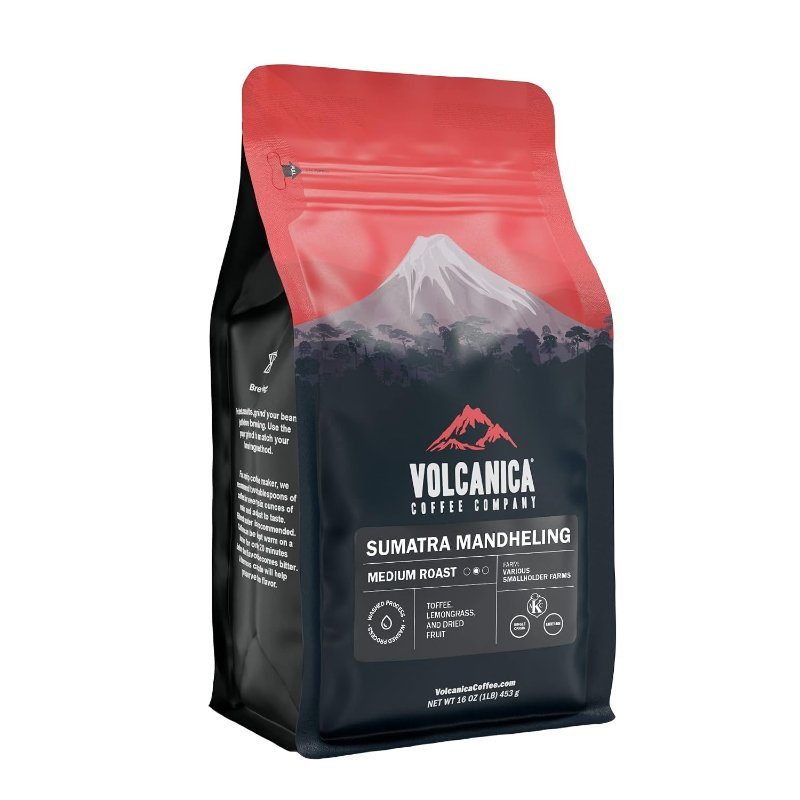
For a straightforward, unambiguous example of the style, Volcanica’s organic Sumatra Mandheling is the one to start with. It is roasted medium rather than pushed dark, which matters here more than usual — plenty of Sumatra on the shelf is roasted into oblivion specifically to lean on the earthiness, and you end up tasting carbon instead of process. This one keeps the heavy body and the low acid while leaving the chocolate and cedar notes intact. A pound is enough to decide whether wet-hulled coffee is your thing.
Volcanica Sumatra Mandheling — USDA Organic, Medium Roast, Whole Bean
A textbook wet-hulled Sumatra at a roast level that lets the process show through instead of burying it. Thick body, near-zero acidity, cocoa and cedar.
Then buy the comparison, because the point of this article is a contrast and you cannot taste a contrast with one bag. Volcanica’s Sulawesi Celebes Kalossi is the cleanest way to hear the difference: same roaster, same island chain, same general body, but noticeably tidier and sweeter, with nut and warm spice where the Sumatra has forest floor. Brew them side by side at the same recipe on the same morning and the processing argument stops being theoretical.
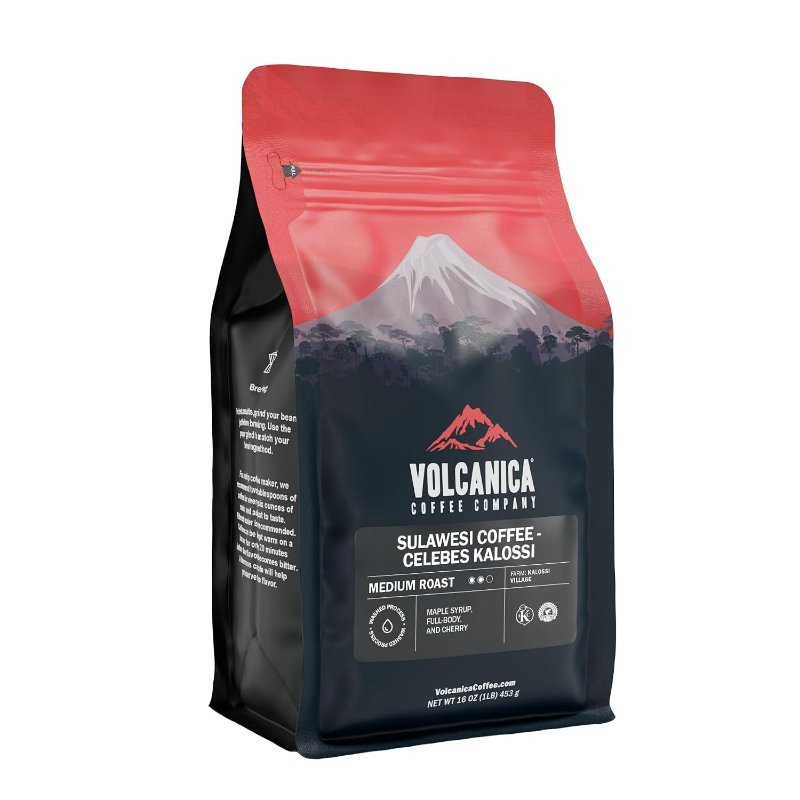
Volcanica Sulawesi Celebes Kalossi — Whole Bean, 16 oz
The rest-of-Indonesia control sample. Syrupy and low-acid like its neighbor, but cleaner and nuttier — the difference wet hulling makes, in one side-by-side.
Sumatra is not a coffee to reach for when you want clarity or sparkle. It is what you brew on a gray Portland morning when you want something that tastes like weight. Once you know that the weight is a byproduct of hulling wet seeds in a humid climate, rather than some mystical volcanic terroir, the whole category makes more sense — and it gets easier to tell a well-made wet-hulled coffee from one that is just old.