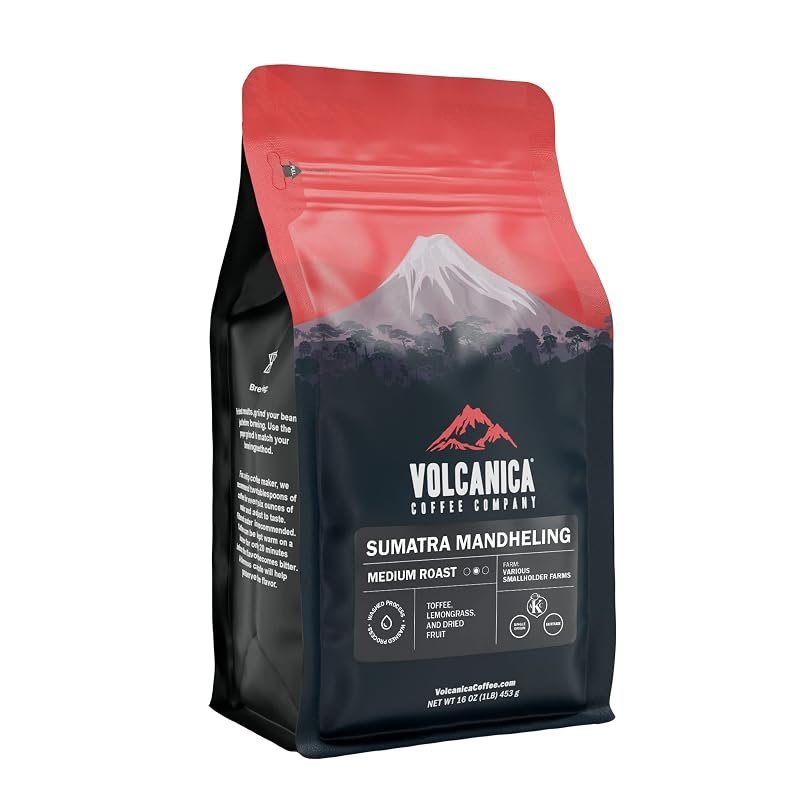
Sumatra Mandheling is the coffee people either keep in the cupboard forever or abandon after one pot. There is not much middle ground. It is heavy, dark-toned, almost savory, and it has roughly none of the bright fruit acidity that the rest of the specialty world has spent fifteen years teaching everyone to chase. I brewed through a 16-ounce bag of the medium-roast organic Mandheling from Fresh Roasted Coffee to see whether the stereotype holds up. It does — and whether that’s a recommendation depends entirely on what you want out of a cup.
“Mandheling” isn’t a place
This trips people up, so it’s worth saying plainly: there is no Mandheling growing region on a map of Sumatra. The name comes from the Mandailing, an ethnic group from the Tapanuli region of North Sumatra, and it survives as a trade name rather than a geographic origin. The coffee sold under it generally comes from North Sumatra and Aceh — the Lintong area around Lake Toba, and the Gayo highlands further north — at elevations running roughly 900 to 1,500 meters on volcanic soil.
The Dutch brought coffee to the archipelago in the seventeenth century and pushed seed from Java into Sumatran soil around 1835 under the colonial cultivation system. What grows there now is a mixed bag of cultivars — surviving Typica, plus Timor-hybrid descendants like Ateng, Tim-tim and Sigarar Utang, and S-795. That varietal jumble is part of why Mandheling lots taste more like a processing style than like a single plant.
The flavor comes from the mill, not the farm
The thing actually driving this cup is giling basah, wet hulling. Instead of drying the coffee down to around 11 percent moisture inside its parchment the way nearly everywhere else does, Sumatran mills strip the parchment off while the bean is still soft and wet — somewhere in the 30 to 35 percent range — then finish drying the naked bean. It’s a practical adaptation to a climate where waiting for a full dry is how you lose a harvest to mold.
The consequence is a bean that comes out swollen, jade-colored, and physically beaten up, with a cup profile that swings hard toward body and away from acidity. If you want the longer version of why that happens, we went deep on it in why Sumatra tastes nothing like the rest of Indonesia. The short version: the earthiness people describe is a processing signature, not a defect and not the soil.
What this particular bag does in the cup
Brewed at 22 grams to 360 grams of water, a hair finer than my usual pour-over grind, 205°F, finishing around 3:15 — it pours thick. Cedar and dried herbs on the nose, unsweetened baking chocolate through the middle, and a long, slightly resinous finish that sits on your tongue well after the cup is gone. Acidity is close to nil. The body is the point; it coats in a way a washed Kenyan never will.
The honest criticism: it is monochrome. Where a good Ethiopian gives you three or four things happening at once, this gives you one thing, loudly. Let it cool past lukewarm and the herbal note tips toward something closer to damp potting soil, which is exactly the descriptor Mandheling skeptics use and they are not wrong. Drink it hot, or drink it fast. It also flattens badly if you under-extract it — a coarse grind and a lazy pour give you dirty water rather than a lighter cup.
Where it shines is as the coffee you make at 6 a.m. before you want to taste anything subtle, and as the base of anything with milk in it. It holds up against a splash of cream better than almost anything else at this price.
Which Mandheling to actually buy
We earn a commission on purchases made through the links below, at no extra cost to you.
The bag reviewed here is the one to start with. Medium roast keeps enough of the herbal-cedar character to be recognizably Sumatran without the roast taking over, it’s certified organic, and a 16-ounce bag is the right size for finding out whether you like this style before committing to five pounds of it.
Fresh Roasted Coffee Sumatra Mandheling, Medium Roast, 16 oz
Balanced expression of the style — heavy body and cedar-and-cocoa depth without roast char burying it. The sensible first Mandheling.
If you already know you like Sumatra and you want the volume turned all the way up, the dark-roast reserve version from the same roaster pushes further into smoke and bittersweet chocolate. It loses most of the herbal nuance in the process, so I wouldn’t hand it to someone trying Mandheling for the first time — but as an espresso base or a cold brew starting point it is the more useful bag of the two.
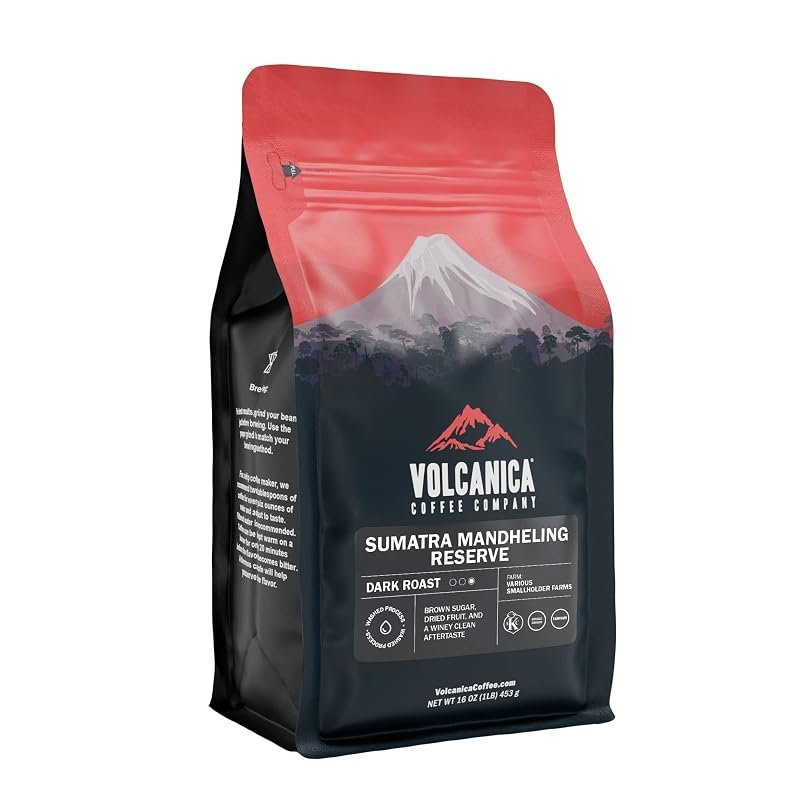
Sumatra Mandheling Dark Roast Reserve, Organic, 16 oz
Smoke, bittersweet chocolate, enormous body. Built for espresso and cold brew rather than a delicate pour-over.
And if the earthy thing is precisely what you’re trying to avoid but you still want a Sumatran in rotation, go the other direction. The Organic Coffee Co. roasts theirs lighter, which lets a bit of stone fruit and a cleaner finish survive underneath the body. It’s the most approachable Mandheling on this list and it comes in a two-pound bag, which is the better deal per ounce if you drink it daily.
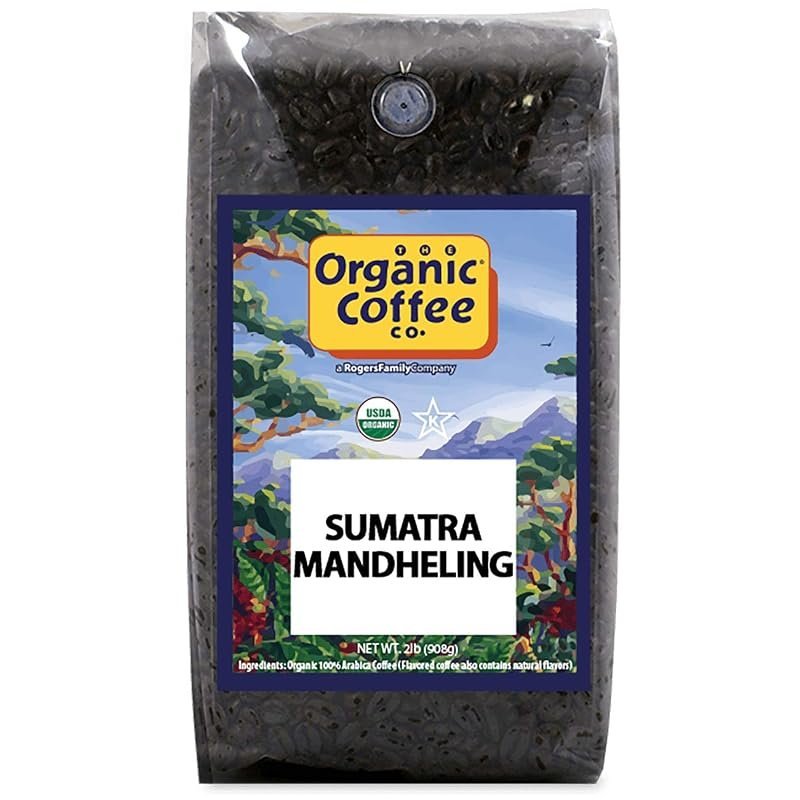
The Organic Coffee Co. Sumatra Mandheling, Medium-Light, 2 lb
Lighter roast keeps some fruit and a cleaner finish intact. Least polarizing of the three, and the best value per ounce.
The verdict
Mandheling is not a coffee to recommend universally, and anyone who does is selling something. It has no acidity, it rewards none of the delicate brewing technique people spend money to develop, and half of the flavor vocabulary attached to it — earth, tobacco, forest floor — reads as a warning label to a lot of drinkers. But if you want a cup with weight, if bright coffee reads as sour to you, or if you’re tired of paying a premium for fruit notes you don’t especially enjoy, this is the corner of the coffee world built for you. Grind a touch finer than you think, brew it hot, and drink it before it cools.