Rwanda and Burundi are two of the smallest coffee origins that matter, and most American drinkers have never deliberately bought either one. That’s a shame, because the African Great Lakes region produces some of the cleanest, most structured washed coffee on the planet — and it does so from a couple of landlocked countries with no port, no volume advantage, and a history that came very close to ending their coffee industries entirely.
Two countries, one terroir
Geographically, this is one growing region that happens to have a border running through it. Both countries sit on the high, steep hills east of Lake Kivu and the Nyungwe forest, and both grow almost entirely Bourbon — the old Yemeni-descended variety that French missionaries carried into the region in the early twentieth century. Rwanda’s first local selection, Mibirizi, was a natural Bourbon mutation that took hold at a mission in what is now Cyangugu.
Altitude is the other constant. Rwandan farms commonly sit between 1,700 and 2,000 meters; Burundi’s range runs roughly 1,250 to 2,000. That elevation slows cherry maturation, which is the mechanical reason these coffees taste dense and acidic rather than soft and sweet. If you’ve read our piece on why Kenyan coffee has that signature bright acidity, the same physics apply here — but the cup lands somewhere different, and the reason is processing.
Nearly everything is washed, and that is the whole point
Neither country has a meaningful smallholder home-processing tradition. Farms are tiny — often a few hundred trees — so cherry goes to a centralized washing station, gets depulped, fermented, washed, and dried on raised beds. In Burundi, this was enforced structurally: the state-era Sogestal system explicitly did not permit farmers to process at home. When the Burundian market liberalized, the interesting consequence was that individual stations could finally keep lots separate and sell them by station, by day lot, by batch. That’s the moment Burundi became legible as a specialty origin instead of an anonymous commodity.
Rwanda got there by a different and much harder road. Into the early 1990s, coffee was the country’s top export by value, but there was no infrastructure aimed at quality — not a single washing station. The 1994 genocide devastated the sector along with everything else. The rebuild was deliberate and foreign-assisted: the USAID-funded PEARL project, run with the National University of Rwanda and partners including the University of Michigan and Texas A&M, put up the country’s first washing station in Cyarumbo in July 2001 and organized scattered smallholders into cooperatives. PEARL became SPREAD and scaled out across districts; within a decade quality control was running across dozens of stations. Rwanda essentially built a specialty coffee industry from zero in about fifteen years.
What it tastes like — and the defect you should know about
The house style, if you can call it that, is clean red-fruit acidity over a body that’s fuller than Kenya and rounder than Ethiopia. Think black currant, cherry, orange peel, with caramel and cocoa underneath as the roast gets darker. Burundi tends slightly more floral and delicate; Rwanda tends slightly more structured and chocolatey. These are tendencies, not rules, and a good station in either country will out-cup a mediocre one across the border without breaking a sweat.
Now the caveat nobody selling you this coffee wants to mention: the potato defect. It is real, it is specific to this region, and it is the single reason some roasters avoid Great Lakes coffee. A bacterial infection (Erwinia species) enters the cherry through a puncture — usually antestia bug damage, sometimes a split from heavy rain — and the affected bean develops a sharp raw-potato smell that survives roasting. It hits individual beans, not whole lots, so one bad bean can spoil a single brew while the next cup from the same bag is perfect. Nothing you do at home prevents it. If you get one, dump it, grind again, and move on; buying from roasters who hand-sort and cup aggressively is the only real mitigation.
How to brew it
Treat these like the high-grown washed African coffees they are. Medium-fine grind, water at 200–205°F, a 1:16 ratio, and don’t rush the drawdown — the acidity needs the extraction to finish or it reads sour rather than bright. Light-to-medium roasts show the fruit; anything past full city buries it under chocolate, which is a legitimate choice but not why you bought a Rwandan.
Three bags worth ordering
Some links below are affiliate links, which means we may earn a commission if you buy through them at no extra cost to you.
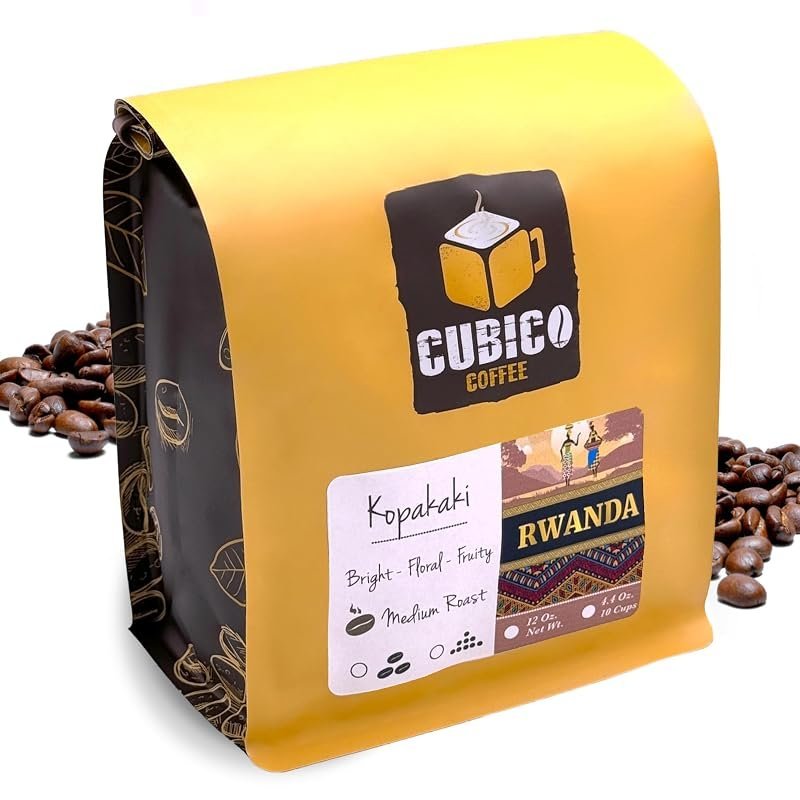
If you’ve never had a Rwandan and want to understand what the fuss is about, start with a named-cooperative lot rather than a generic country blend. Cubico’s Kopakaki bag names the co-op on the label, which is the kind of traceability that separates a real single origin from a bag with a flag on it — the same distinction we get into in our piece on what direct trade actually means. It’s the bag I’d hand someone as their first Rwanda.
Cubico Coffee Rwanda Kopakaki, 12 oz Whole Bean
A named-cooperative Rwandan washed lot, fresh roasted. Clean cherry-and-caramel profile that rewards a careful pour-over and doesn’t need a dark roast to be likeable.
For the Burundi side of the comparison — and you should do the comparison, it’s the fastest way to learn what the border does and doesn’t change — this traceable single-origin Arabica is the easiest one to actually get. Brew it back to back with the Rwandan on the same recipe and the Burundi will read lighter and more floral on the first sip.
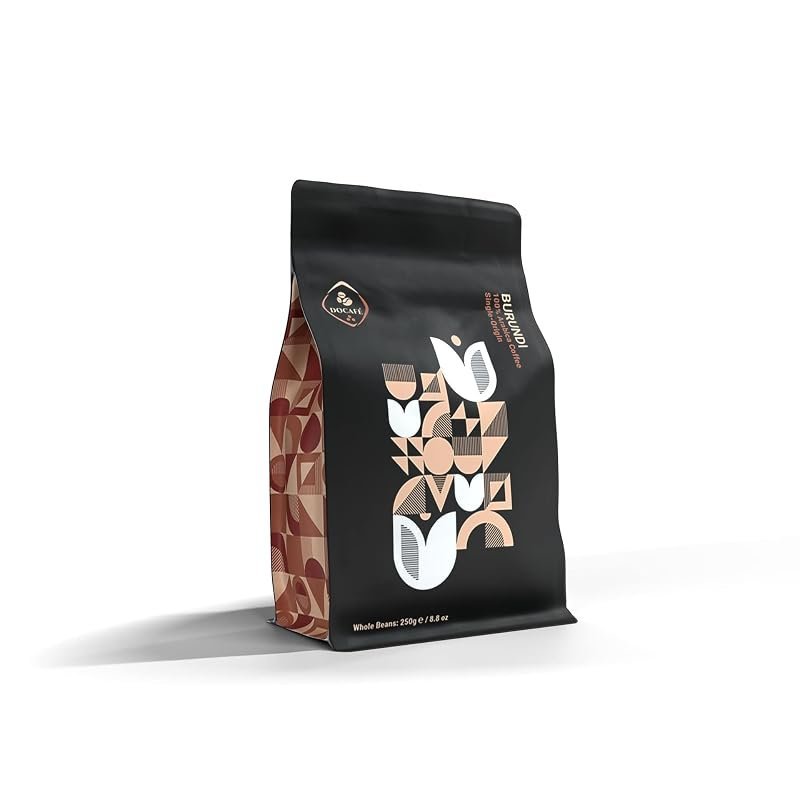
Burundi 100% Single Origin Arabica, Whole Bean
Traceable Burundian Bourbon, responsibly sourced. Delicate and citrus-leaning next to its Rwandan neighbor — buy both and taste them side by side.
And if you want the heavier, cocoa-forward end of the Rwandan range — the version that plays well with milk and survives a slightly careless brew — this medium roast is the pragmatic daily-driver pick. Less delicate, more forgiving, and available in a two-pound bag if you drink as much of this as I do.
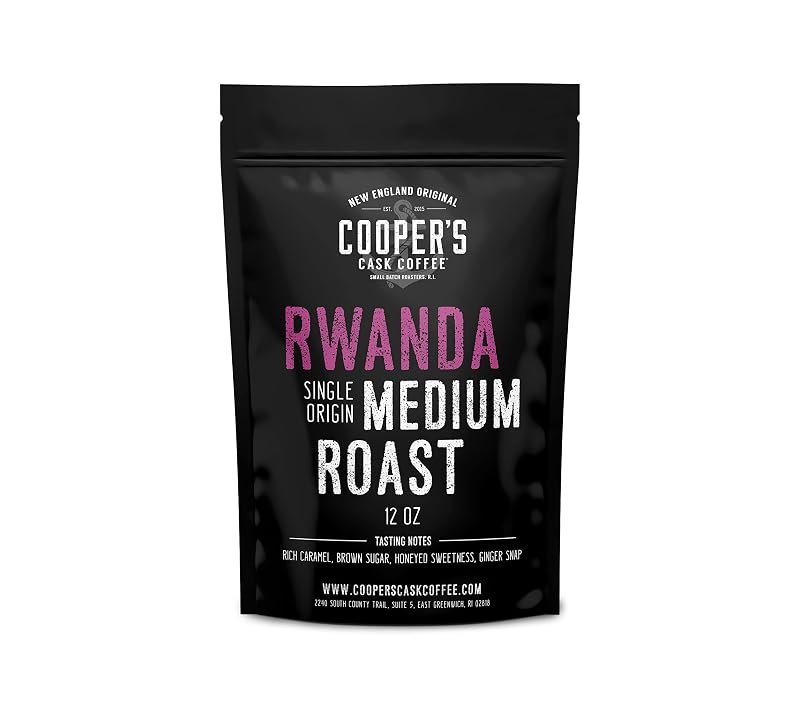
Rwanda Full Bodied Medium Roast, Single Origin Whole Bean
A fuller-bodied Rwandan medium roast leaning caramel and dark chocolate. The one to keep in the cupboard for mornings when you’re not paying close attention.
Buy one of each if you can swing it. The Great Lakes region spent two decades rebuilding an industry that had every reason to disappear, and the coffee is better than its market share suggests.