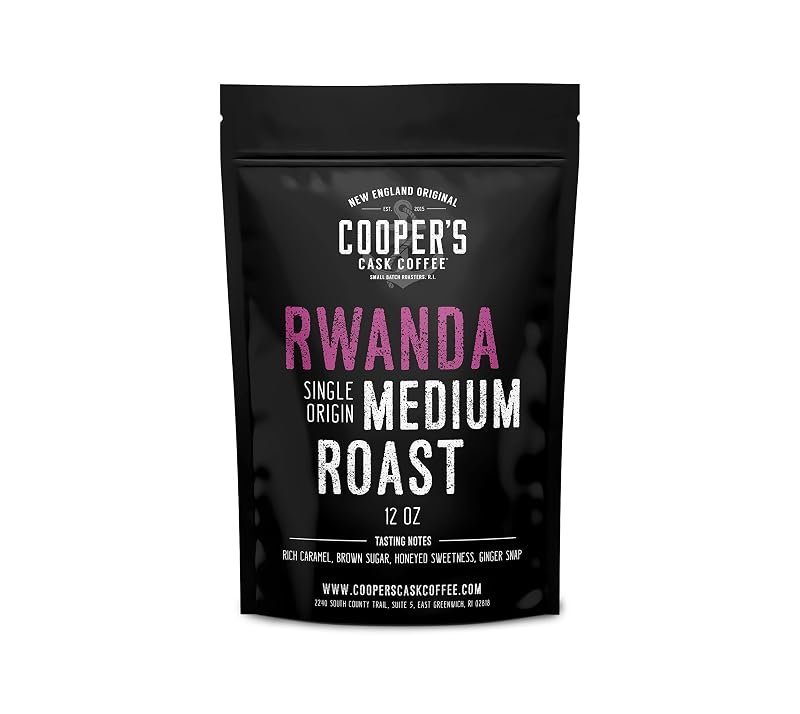
Rwanda is a one-variety country in a way that almost nowhere else is. Walk a hillside in Karongi or Nyamasheke and you are looking at Red Bourbon, over and over, planted on slopes that mostly sit between 1,500 and 2,000 meters. So when a bag advertises “Rwandan Bourbon,” it is not flagging something rare — it is close to a tautology. We pointed at this particular bag in passing when we wrote up the African Great Lakes region. This is the longer version, after a few weeks of actually drinking it.
What “Bourbon” tells you, and what it doesn’t
Bourbon is an old Typica-descended variety with a well-earned reputation: excellent cup quality, lower yields, and poor resistance to leaf rust and borer. That trade-off is why it gets name-checked on specialty bags. But in Rwanda it is the default planting, not a boutique decision, which means the word carries almost no sorting power on a Rwandan label. The information that actually predicts the cup is the washing station, the altitude, and how carefully the cherries were sorted.
That last point is recent history. In 2000, Rwanda had two coffee washing stations in the entire country and exported essentially commodity-grade coffee. The first central washing station went up in 2001 under PEARL, a USAID project run jointly with Michigan State and Texas A&M, built around processing hygiene and traceability. Maraba certified Fair Trade in 2002 — the first Fair Trade single origin out of Rwanda — and there are now more than 300 washing stations operating. Rwanda is also the only African country that runs a Cup of Excellence competition, with a trial year in 2007 and the first full edition in 2008. A quarter century is not long to build a specialty origin from nothing.
The bag: Cooper’s Cask Rwanda, Gitesi
This is a 12 oz whole-bean single origin, medium roast, sourced from the Gitesi site in Rwanda’s Western Province at elevations the roaster puts between 1,800 and 2,000 meters. Their stated notes are rich caramel, brown sugar, honeyed sweetness and ginger snap. Unusually for a supermarket-adjacent Amazon listing, the lot information is specific enough to be checkable, which is most of why we keep coming back to it.
Some links below are affiliate links. If you buy through one, this site earns a small commission at no additional cost to you.
Cooper’s Cask Rwanda — Gitesi, Medium Roast, 12 oz
Red Bourbon from the Gitesi site at 1,800–2,000 m. Caramel and brown sugar up front, a tea-like ginger finish as it cools. The most traceable Rwandan bag we have found at this price.
How it actually tastes
Caramel is the load-bearing note, and it shows up immediately. The acidity is there but it is orange peel and black tea rather than the grapefruit snap you get from a good Kenyan — rounder, slower, less likely to startle anyone. Body sits noticeably heavier than a washed Ethiopian, closer to a good Guatemalan in weight. The ginger thing the roaster advertises is real, but it only turns up in the finish once the cup drops below drinking-hot, which is a decent argument for brewing a smaller volume and not nursing it.
Where this bag earns its keep is as a first washed African coffee for someone who tried a Kenyan and found it too sharp. It has the clarity without the edge. The flip side is that it is not a coffee that will astonish you — there is no single flavor in here that makes you put the cup down and look at it. It is well built rather than thrilling, and at this price that is the right trade.
Brewing it without flattening it
Medium roasts from 1,800 m are dense, and the mistake people make is grinding them like a dark roast. Our ratio: 22 g to 360 g of water, 1:16, water at 94–96°C, medium-fine — a step finer than you would use for a light Ethiopian. Bloom 50 g for 40 seconds, then two pours, drawdown finished between 2:45 and 3:15 on a V60. If the cup reads thin and papery, the fix is almost always two clicks finer rather than hotter water; we went through why that works in the piece on grind size. It also takes an immersion brew well, which is not true of every washed African coffee.
A word about the potato defect
Any honest write-up of Rwandan coffee has to mention this. The potato defect is a distinct raw-potato smell that shows up in a brewed cup, and it is caused by the antestia bug puncturing the cherry and letting bacteria in. It affects individual beans, not whole lots, which is what makes it maddening: a bag can be flawless for a week and then produce one strange cup. Careful sorting at the washing station, raised drying beds and moisture monitoring all reduce the hit rate, and we did not get a potato cup out of this bag. But nobody can promise you that, and a roaster who claims their Rwandan is immune is overselling. Grinding fresh per cup helps, mostly because you get a chance to smell it before it becomes coffee.
Two other Rwandan options worth knowing
If you want to drink Rwandan coffee regularly rather than as a one-bag experiment, the economics get annoying fast at 12 oz a time. This multi-pack is the pragmatic answer — less lot detail than the Cooper’s Cask bag, and you lose the washing-station traceability, but it keeps a Rwandan in rotation without a per-ounce wince.
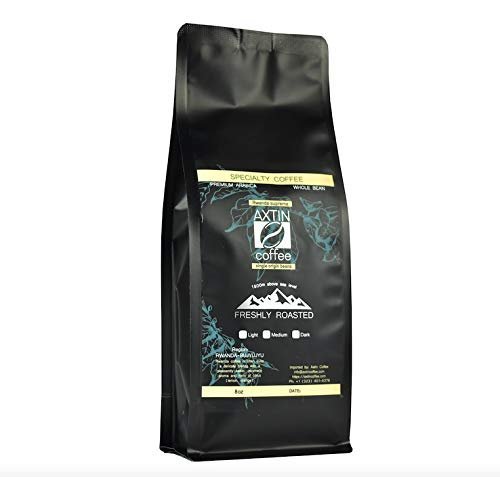
Rwanda African Coffee — Single Origin Whole Bean, 8 oz × 6
A straightforward Rwandan single origin in six 8 oz bags. Thinner on sourcing detail, far better on cost per cup, and it keeps better than one big bag because you open them one at a time.
And then there is the oddity. Cooper’s Cask ages Rwandan beans in rum barrels, which sounds like a novelty item and partly is — the barrel character arrives as caramelized sugar, raisin, molasses and oak, and it buries most of what made the coffee Rwandan. We would not make it a daily driver. As an after-dinner cup, or as the thing you hand someone who says all black coffee tastes the same, it does the job well.
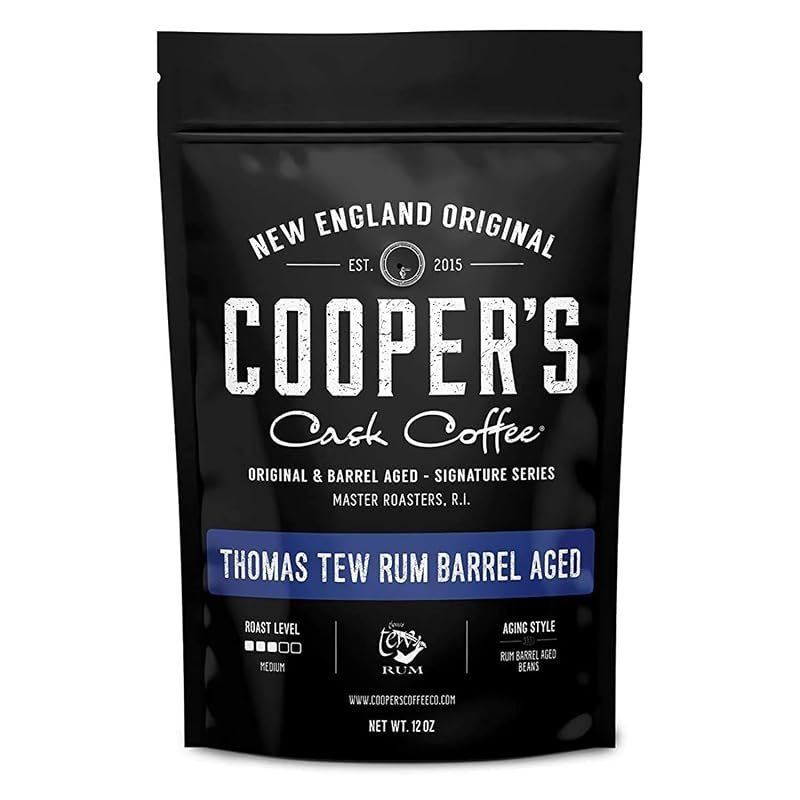
Cooper’s Cask Rum Barrel Aged — Rwandan Beans, 12 oz
Rwandan Bourbon aged in rum barrels: caramelized sugar, red raisin, molasses, cocoa and oak. Loud, specific, and not remotely subtle. Buy it knowing that is the point.
So is a Rwandan Bourbon bag worth buying?
Yes, with the caveat that you should buy it for the washing station rather than the variety. The Gitesi lot is the one we keep restocking: sweet, structured, forgiving of a sloppy pour, and specific enough about its origin that you can go read about the hillside it came from. Start there, and treat the variety on the label as the least interesting fact on the bag.