Dalgona coffee had a moment in the spring of 2020 that was difficult to escape: a jar of instant coffee, a whisk, and several hundred thousand people discovering they had forearms. Six years later the trend is over and the drink is still on café menus, which makes the interesting question a different one. Not whether whipping coffee was fun during lockdown, but whether it is worth doing on an ordinary Thursday.
I think it is — with one large caveat about what you are actually making.
It did not start on TikTok, and probably not in Korea
The drink is usually credited to Leong Kam Hon, a former Macanese shipwright who ran a coffee shop in Coloane, Macau — Wai Ting Coffee, later renamed Hon Kee. By his account he first whipped a cup for a visiting tourist couple in 1997. It stayed a local curiosity for years. Then in 2004 he served it to the actor Chow Yun-fat, whose enthusiasm was the drink’s first taste of international press, and for a while visitors came in asking for “Chow Yun-fat coffee.”
The name we use came later. In January 2020 the South Korean actor Jung Il-woo ordered it at that same Macau shop while filming the show Stars’ Top Recipe at Fun-Staurant, and said it tasted like dalgona — the Korean honeycomb toffee sold at street stalls. The comparison stuck hard enough to become the drink’s name, which is a little odd given that almost no dalgona coffee contains any dalgona.
From there it moved through Korean YouTube under the hashtag #dalgonacoffeechallenge and hit TikTok in early March 2020, right as most of the world was being told to stay home. In South Korea it picked up the nickname “quarantine coffee.” The appeal was partly the drink and partly the format: three ingredients everybody already had, and four minutes of repetitive stirring that made for oddly soothing video.
Here is where the tidy origin story falls apart, and I think it is worth saying plainly rather than repeating the version that travels well. The same technique has existed in India for decades as phenti hui coffee — beaten coffee — instant coffee and sugar beaten with a spoon into a pale, fluffy paste. The difference is mostly assembly order: with phenti hui the milk goes in on top of the paste, while dalgona spoons the paste onto the milk. Greece has been whipping instant coffee into frappé since 1957. Italy has crema di caffè, which is the same idea without the dairy. Wikipedia’s own page on the drink credits Macau in its infobox and Rajasthan in its body and never reconciles the two.
My read: nobody invented this. Beating sugar into concentrated coffee is the kind of thing that gets discovered independently wherever instant coffee and spare time overlap. What 2020 contributed was a name and an algorithm. If the Korean leg of that story is the part you find interesting, the specialty scene in Busan is a better window into what Korean coffee culture is actually doing now.
Why it only works with instant coffee
You cannot make this with espresso, and you cannot make it with pour-over. People try every spring and post the resulting puddle. The reason comes down to what instant coffee physically is.
Instant coffee is brewed coffee that has had the water taken out of it. Freeze-dried versions freeze the extract fast — quickly enough to avoid forming large ice crystals — then mill it into granules and pull the ice off by sublimation. It is slow and expensive. Spray-drying is the cheap route: the extract is blown through hot air and dried in five to thirty seconds into spherical particles around 300 microns across, then fused back together into something that pours. Either way, what ends up in the jar is dried coffee solids.
That matters because of concentration. A spoonful of instant dissolved in a spoonful of hot water is a far denser coffee solution than anything you could brew, and the published composition figures for instant coffee powder put protein at roughly 16 to 21 percent of its dry mass. Protein is what builds and holds foam in most foods, so a syrup that concentrated has something to build with. Your espresso, by contrast, is mostly water.
I want to be careful here, because this is the point where coffee writing usually starts inventing chemistry. The food-science literature on dalgona specifically is thin, and the sources that explain it at all say only that the answer has to do with the drying process. The concentration-and-protein account is the plausible reading, not a documented one. What is not in doubt is the practical half: instant whips, brewed coffee does not, and no amount of technique changes that.
Links to products below are affiliate links, which means a purchase through them earns this site a commission at no cost to you.
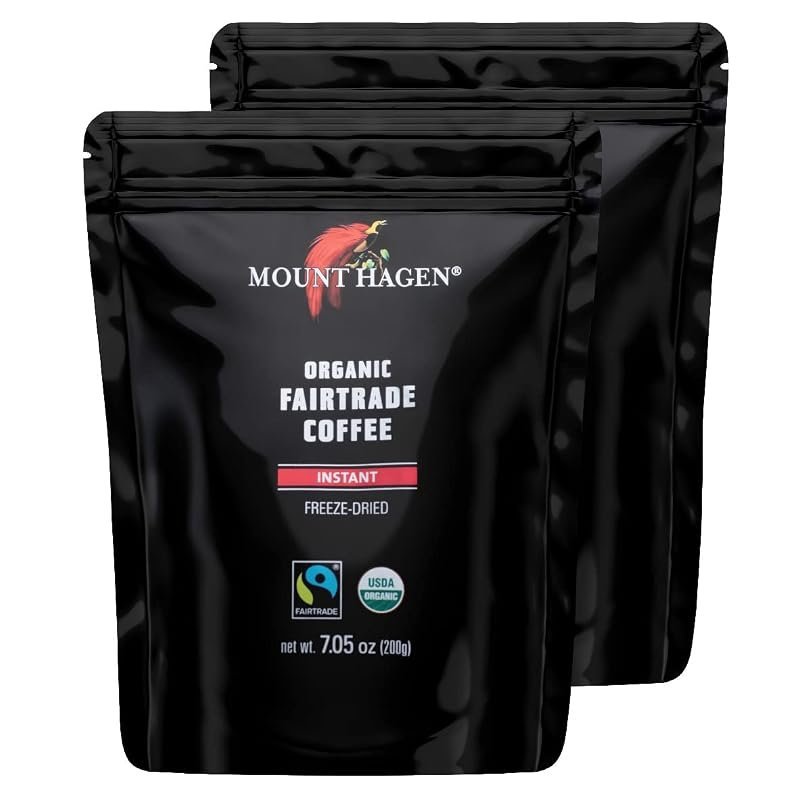
Since the drink is three ingredients and one of them is instant coffee, the instant coffee is not a place to economize. Most supermarket instant tastes like instant. Mount Hagen is freeze-dried, organic, single-origin Arabica, and it is the only instant I have had that I would drink on its own without complaint. Whipped with sugar, it gives you something that reads as coffee rather than as brown.
Mount Hagen Organic Freeze-Dried Instant Coffee (7.05 oz, 2-pack)
Freeze-dried organic Arabica in a resealable pouch. Low-acid and mild, which is exactly what you want once two tablespoons of sugar are involved. The two-pack is the sensible buy if you expect to make this more than once.
If you would rather use what the original videos used, that is Nescafé Gold. It is freeze-dried, it is everywhere, it costs a fraction as much, and it whips beautifully — the foam is arguably stiffer than Mount Hagen’s. It also tastes more like a hotel breakfast. For a drink you are going to bury under sweetened milk, that is a defensible trade, and it is the honest budget answer.
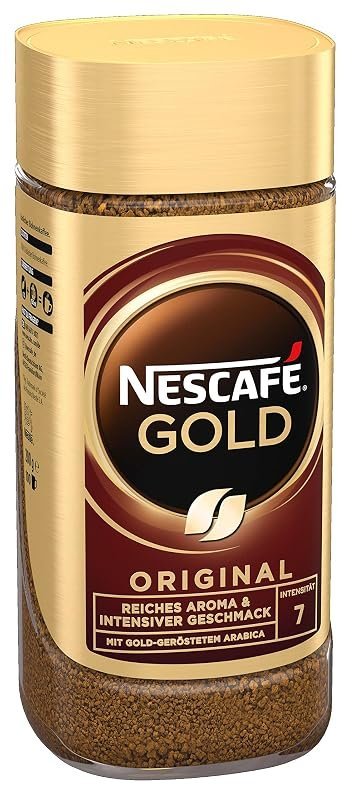
Nescafé Gold Original (7 oz jar)
The jar that powered most of the 2020 videos. Freeze-dried, cheap, and a reliable whipper. Flavor is unremarkable on its own, but it disappears under the sugar and milk anyway.
The ratio, and the ingredient nobody talks about
Equal parts instant coffee, sugar, and hot water. Two tablespoons of each makes a generous serving for two drinks. Whip until it turns from dark brown liquid to a pale, glossy, peaked foam that holds its shape on the whisk, then spoon it onto a glass of cold or hot milk. Traditional finishes are a dusting of coffee powder or cocoa, crumbled biscuits, or a thread of honey.
Now the part that the recipe videos glide past: that is two tablespoons of sugar per batch, and the sugar is not optional seasoning. It is doing structural work, and it is also the reason the drink tastes as good as it does. Dalgona coffee is a dessert. Calling it coffee sets up an expectation it was never going to meet.
The other thing the videos glide past is the labor. By hand this takes a long, boring four minutes or so, and the 2020 clips leaned into that because the suffering was the content. There is no reason to do it that way now. A hand mixer gets you to stiff peaks in under two minutes with no commitment from your shoulder, and if you own one for any other reason you already have the only tool this drink needs.
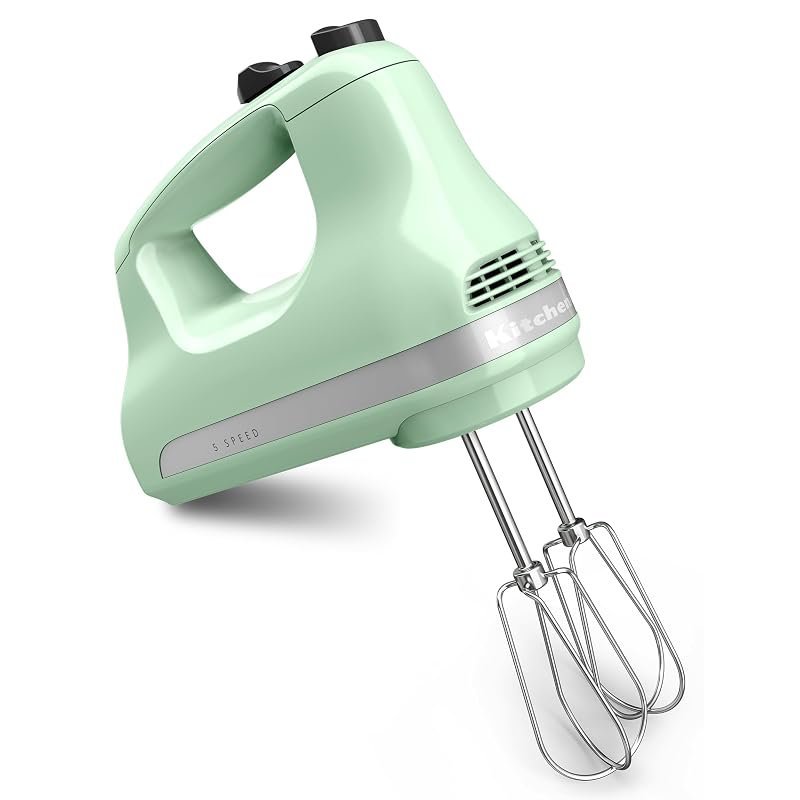
KitchenAid 5-Speed Ultra Power Hand Mixer (KHM512)
Five speeds, a soft start that keeps coffee powder in the bowl instead of on your counter, and enough motor to take a tiny batch to stiff peaks fast. Overkill bought only for this; correct if you bake at all.
So does it hold up?
As a coffee drink, no. It is a sweet milk drink wearing a coffee-flavored meringue, and if you came to it from grinding single-origin for pour-over you will notice immediately that there is no origin character anywhere in the glass. There cannot be. You dried the coffee, powdered it, and then poured sugar over it.
As a thing to make, it absolutely holds up. It is the rare internet food trend that was never actually bad — it was a real drink with a century of parallel history before the hashtag, and it survived the hashtag because it is a pleasant thing to drink. Treat it the way you would treat a peppermint mocha: an afternoon thing, not a morning thing, and no threat to your actual brewing setup.
And if the idea of a whipped topping on coffee appeals to you more than the execution here does, Vietnamese egg coffee is the better-engineered member of the same family. That one builds its foam from egg yolk and condensed milk over hot, strong coffee, and it is the only drink in this category I would make instead of a real cup rather than alongside one.