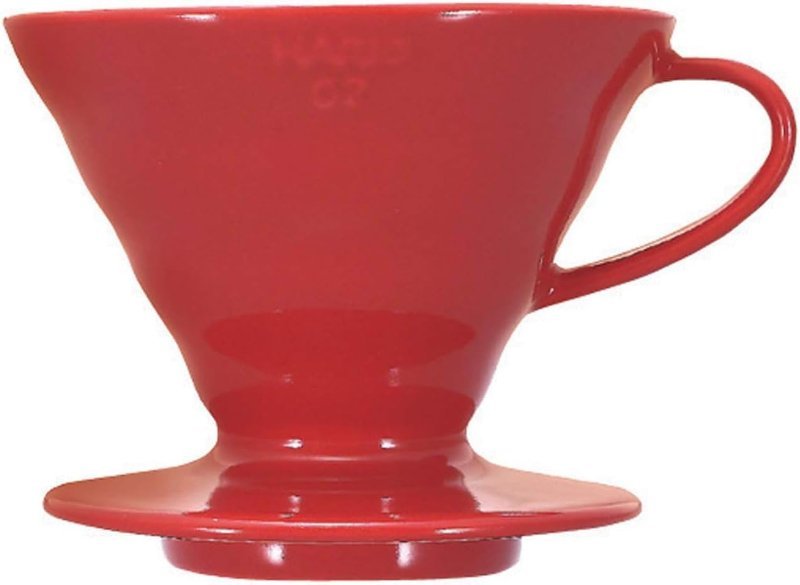
Buy a V60 and you are immediately asked to choose a material you have no basis for choosing. Same cone, same spiral ribs, same 60-degree walls, but four versions at roughly a three-times price spread and a forum full of people certain their pick is the one that tastes right. So does the material change the coffee, or is this a preference wearing a lab coat?
The short answer: material changes the temperature curve, the temperature curve changes extraction, and the effect is real but smaller than the argument surrounding it. What you do in the thirty seconds before you brew matters more than which cone you put in your cart.
What the material is actually doing
A dripper has one thermal job and it performs that job against you. It sits between hot slurry and room-temperature air and pulls heat out of your brew. How fast it does that comes down to two properties that people constantly conflate.
Thermal conductivity is how quickly heat moves through the wall. Ceramic runs around 4 W/(m·K). Glass is roughly 0.9. Plastic sits near 0.33, more than an order of magnitude below ceramic. On conductivity alone, plastic is an insulator and ceramic is a heat sink.
Thermal mass is how much heat the wall has to absorb before it stops stealing. A ceramic V60 is a dense chunk of fired clay. A plastic one weighs almost nothing. Cold ceramic takes a real bite out of your first pour simply getting itself up to temperature; cold plastic barely registers the water passing through it.
Those two properties point the same direction from a cold start and opposite directions once everything is hot. Ceramic is the worst offender at the beginning of a brew and the most stable performer by the end. That is why this argument never resolves — both camps are describing something true about a different part of the same pour.
What shows up in the cup
People have measured this rather than guessed at it. Side-by-side tests running an identical recipe through plastic, glass, and ceramic V60s land in the same place repeatedly: plastic finishes with the highest brew and coffee-bed temperature, ceramic with the lowest, and the spread comes in somewhere between 2°F and 4°F. Glass sits in between, closer to ceramic than to plastic, and sheds heat to the surrounding air faster than either once the brew is underway.
Two to four degrees sounds like rounding error, and for a dialed-in brew it nearly is. But it stacks with everything else. On a recipe already running slightly fast or slightly coarse, a couple of degrees is the gap between a cup that reads bright and one that reads sour. In Andytown Coffee Roasters’ comparison, tasters called the plastic brews punchier with more clearly separated tasting notes, while the cooler glass brews came across clear, crisp, and sweet with the notes harder to pin down. That is the signature of a small extraction difference, not of a different coffee.
Your filter rinse erases most of the gap
Here is the part that makes the debate largely academic. You should be rinsing the paper filter with hot water before every brew anyway, to wash out papery taste and seat the filter against the cone. Do that thoroughly and you have preheated the dripper, which removes the precise disadvantage ceramic’s thermal mass creates. Better still, the same mass that made ceramic slow to warm now makes it slow to cool, so it holds a steadier slurry temperature through a long, patient pour than plastic can.
The practical hierarchy falls out of that. Preheat properly and ceramic is the best-behaved of the three. Skip the preheat and plastic hands you the hottest brew by default. Buying ceramic and then skipping the rinse gets you the worst version of both — you paid for thermal mass and then used it against yourself.
So which one should you buy
A note before the links below: they are Amazon affiliate links, and we earn a small commission if you buy through them, at no additional cost to you.
If you are still figuring out your pour and your grind, buy plastic and stop thinking about it. It is the cheapest of the three by a wide margin, it will not shatter when you knock it into the sink, it is forgiving about preheating, and it travels. The knock against it is aesthetic and slightly practical: clear polypropylene stains over time and looks tired after a year of daily use. That is a cosmetic cost on a dripper that removes an entire variable from your learning curve.
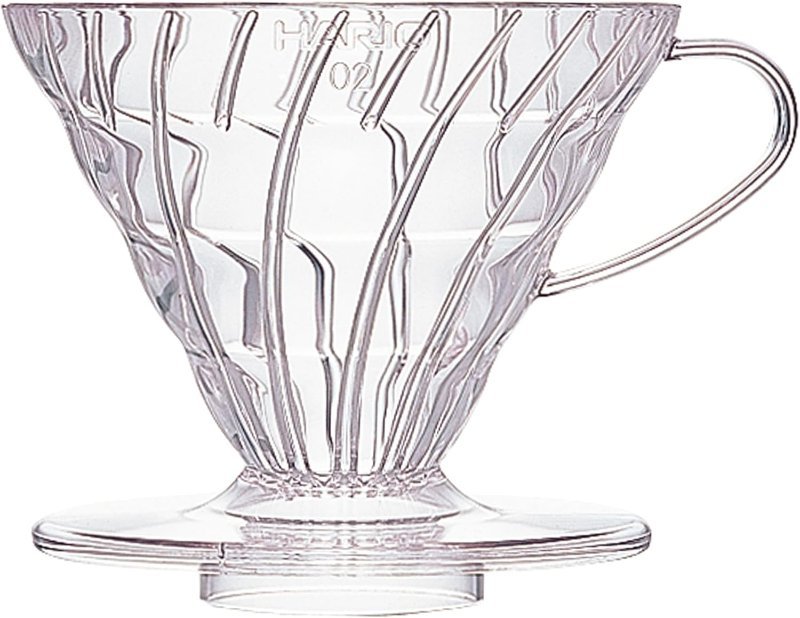
Hario V60 Plastic Coffee Dripper, Size 02, Clear
Lowest thermal mass of the three, so it steals the least heat from a cold start. Cheap, unbreakable, and the most forgiving option if your routine is still inconsistent.
If your routine is settled and you rinse the filter every time, ceramic is the better instrument. Preheated, its mass works for you: the walls hold their temperature while you pour slowly, which keeps the slurry from sagging in the back half of the brew where most people lose sweetness. It also sits heavier on the carafe and does not stain. Handle it like the ceramic object it is — a chipped rim ruins the seal and it will not survive a hard landing.
Hario V60 Ceramic Coffee Dripper, Size 02
Japanese ceramic with real thermal mass. Rinse it with hot water first and it holds slurry temperature more steadily than plastic across a slow pour.
Glass is the compromise pick, and it is an honest one rather than a cop-out. Heat-resistant glass conducts less than ceramic and carries less mass, so it warms faster from cold while still behaving more like ceramic than plastic once hot. The genuine advantage is that you can see the slurry from the side — watching the bed drop and the drawdown finish is a diagnostic you do not get through an opaque cone. The genuine disadvantage is that it is glass, near a sink, holding boiling water.
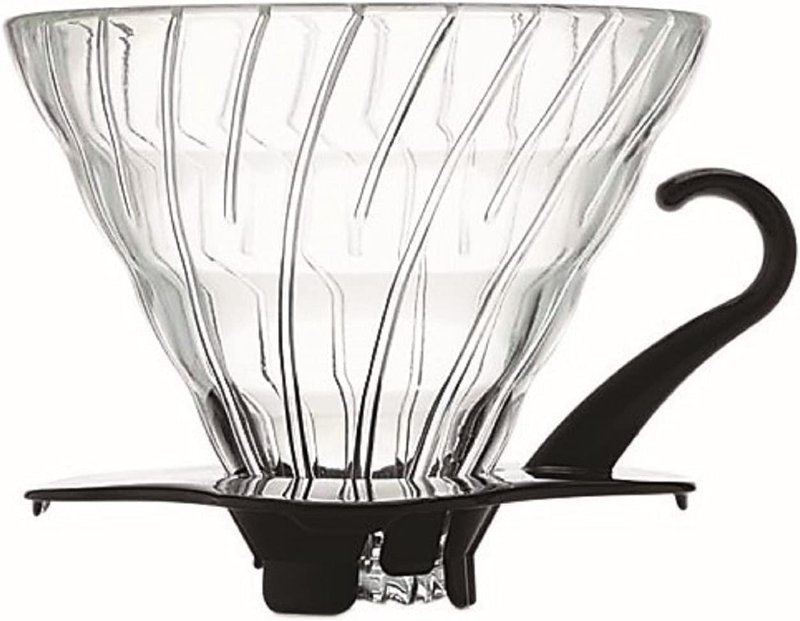
Hario V60 Glass Coffee Dripper, Size 02, Black
Heat-resistant glass with a plastic collar. Warms faster than ceramic from cold, and lets you watch the bed and drawdown from the side while you brew.
The verdict
Material is a real variable and a minor one. It moves your brew temperature a few degrees, which moves extraction slightly, which you can taste if you are paying attention and brewing side by side. It is nowhere near grind size, water temperature, or the freshness of the beans in the order of things that matter. Anyone telling you their ceramic cone transformed their coffee changed something else at the same time.
Buy plastic if you are learning or traveling, ceramic if your routine is locked in and you always rinse, glass if seeing the brew is worth the fragility. Then go spend the money you saved arguing about it on better beans and a preheated carafe.