Every pour-over recipe tells you to bloom. Almost none of them tell you what the bloom is actually doing, which is why so many people splash on a bit of water, watch the grounds puff for a while, and assume the box is ticked. The bloom is not a ritual. It is a fix for one specific physical problem, and once you understand the problem you can tell when it matters enormously, when it barely matters at all, and when your beans are quietly telling you they are past it.
The gas is the whole story
Roasting does not just brown the bean. It runs a cascade of Maillard and caramelization reactions inside a mostly sealed cellular structure, and one of the major byproducts is carbon dioxide with nowhere to go. It stays wedged in the bean’s cell walls under real pressure.
The numbers are bigger than most people assume. Published measurements put residual CO2 at roughly 6 to 7 mg per gram in light roasts, around 11 mg/g at medium, and north of 15 mg/g in dark roasts — more than double the light-roast figure. In the first day after roasting, concentrations inside the bean structure can exceed 10 to 12 mg per gram. A 22-gram dose is holding a couple hundred milligrams of pressurized gas, and it wants out.
It leaves fast at first, then slowly. Conventionally roasted coffee sheds something like 40% of its CO2 in the first 24 hours (high-temperature, short-time roasting pushes that closer to 60%), and the remainder bleeds off over roughly two weeks on a flattening curve. Grinding is what turns the slow leak into a flood: intact cell walls are what hold the gas in, and the instant you shatter them you expose enormous surface area with a direct exit. That is most of why pre-ground coffee goes flat so much faster than the same beans left whole.
Why trapped CO2 wrecks the extraction
Here is the mechanism that matters: escaping gas physically pushes water off the coffee. Pour onto fresh grounds with no bloom and you are trying to saturate a bed that is actively venting at you. Water does what water does and takes the path of least resistance — it channels around the puffing sections and runs through the gaps.
The result is not “weak coffee.” It is an uneven extraction, where some grounds get hammered and others never properly get wet. That cup tastes thin and sour and harsh at the same time, which is a maddening thing to diagnose because the usual fixes pull in opposite directions. Grinding finer makes the over-extracted fraction worse. Grinding coarser makes the under-extracted fraction worse. The problem was never the grind.
There is a flavor component on top of the mechanical one. Dissolved CO2 forms carbonic acid, which reads on the palate as a sharp, faintly fizzy edge. A trace of it is part of why very fresh coffee tastes lively. A lot of it just tastes prickly and hollow.
How to actually do it
Two to three times the dry weight of water, 30 to 45 seconds. For a 22g dose that is roughly 44 to 55g of bloom water. The goal is total saturation, so pour in a slow spiral out to the edge of the bed rather than dumping it in the center, and give the slurry a gentle swirl or a light stir afterward. Dry pockets buried in the middle of the bed are the single most common bloom failure, and they do not fix themselves once the main pour starts.
Past about 45 seconds the returns stop and the costs begin: the bed is cooling the whole time, and a cold start on the main pour quietly costs you extraction later. If you are brewing a very fresh dark roast that is still visibly working at 45 seconds, extend to a minute. Otherwise, move on.
All of that depends on weighing your dose and watching a clock, which is where most home setups actually fall down. We may earn a commission if you buy through the links below, at no extra cost to you.
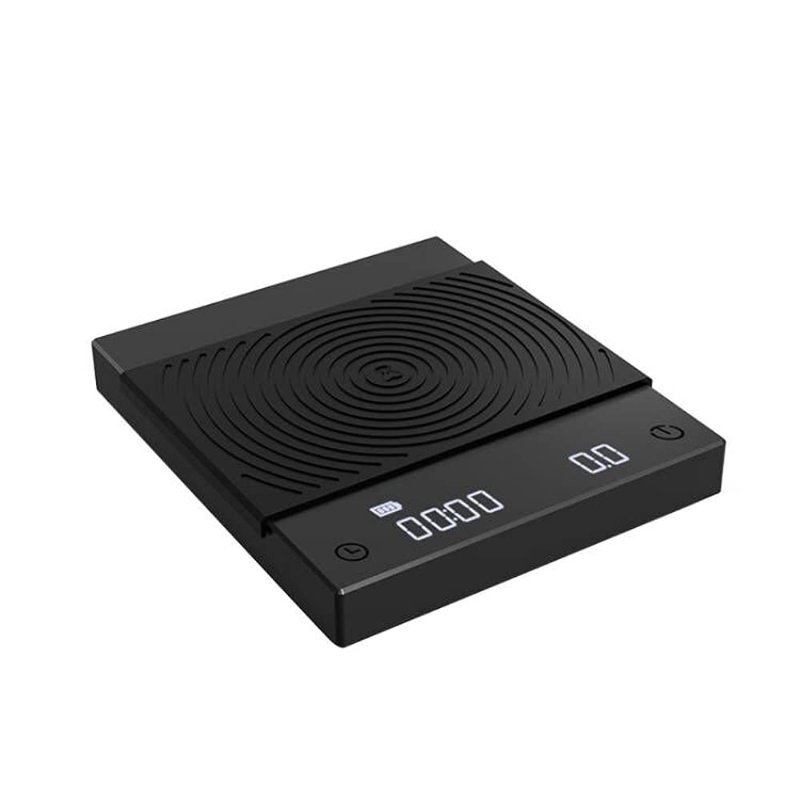
TIMEMORE Black Mirror Basic 2 Coffee Scale
0.1g resolution with a built-in timer that starts on its own when the first water hits, so you are not fumbling for your phone with a kettle in your hand. The flow-rate readout is a genuine luxury, but the reason to own this is that it makes “44g of water, 40 seconds” a measurement instead of a guess. A kitchen scale that reads in whole grams and has no timer cannot do this job.
The bloom is also a freshness test
Because the size of the bloom is a direct function of how much CO2 is left, it doubles as the cheapest freshness meter you own. A dome that rises and holds means the beans are young. A bed that fizzes briefly and collapses means you are two or three weeks past roast. A bed that does essentially nothing means the coffee has finished degassing and you are drinking the leftovers.
One important caveat, because this is where people misread the signal: calibrate to the roast level, not to a video you saw online. A light roast at ten days is never going to dome up the way a dark roast at three days does, because it started with less than half the residual CO2. A modest bloom on a light roast is normal. A modest bloom on a dark roast means the bag has been open too long.
If you want to see what a real bloom looks like so you have something to compare against, buy something with a printed roast date and brew it inside two weeks.
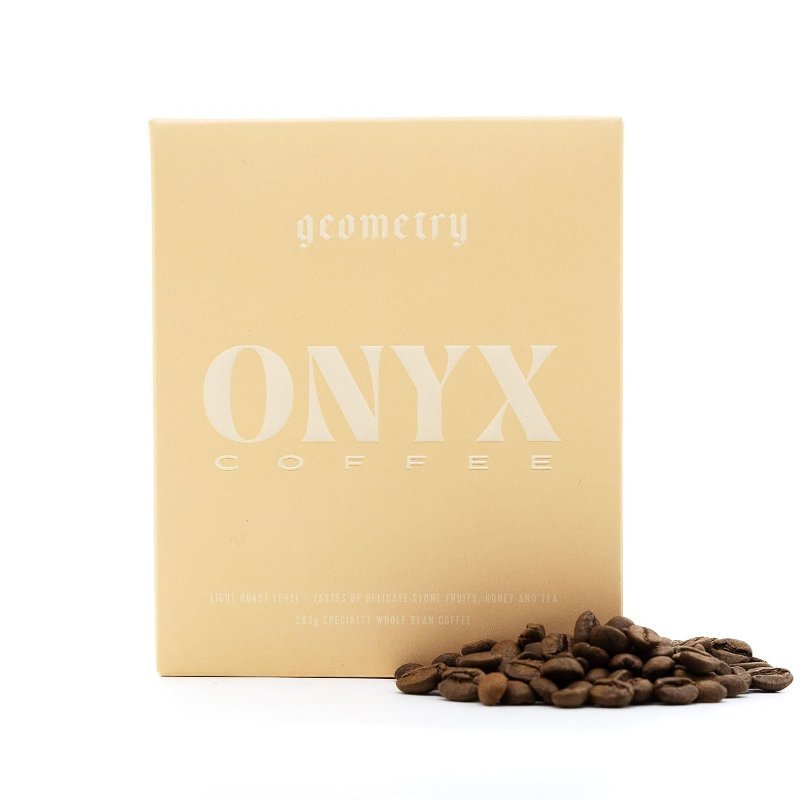
Onyx Coffee Lab Geometry, Whole Bean
Onyx roasts to order and dates the bag, which is the part that matters here — you cannot judge your bloom against an unknown roast date. Geometry is a light-roasted blend built for clarity, with berry and citrus notes and enough acidity that a channeled, uneven extraction will be obvious rather than hidden. Buy it whole bean; grinding it a week early defeats the entire point of this article.
When you can honestly skip it
Not every brew needs a discrete bloom step, and pretending otherwise is how coffee advice turns into superstition.
- Full immersion. In a French press or a Clever dripper, the grounds sit submerged for four minutes with a stir. Saturation is not in question, and the CO2 has plenty of time to come out on its own. A bloom is optional there, not load-bearing.
- Espresso. You are already doing it. Pre-infusion is the same idea under pressure, which is why machines with a proper pre-infusion stage handle fresh coffee so much better.
- Coffee that is genuinely stale. Supermarket pre-ground that has been open for a month has nothing left to vent. Blooming it is theater. It also costs you nothing, so keep doing it out of habit if you like — just know it is not what is wrong with that cup.
For everything else — V60, Chemex, Kalita, Origami, any percolation brew with fresh coffee — the bloom is not optional and it is not a flourish. It is the thirty seconds that decides whether the next two minutes of pouring land on an evenly wetted bed or a bed full of holes. It is free, and it is the single highest-return change most people can make to their brewing today.