Most iced coffee at home fails in the same boring way. The first two sips are fine. By the middle of the glass it tastes like coffee-scented tap water, and by the bottom you are drinking the memory of coffee. This is not a bean problem or a roast problem. It is an arithmetic problem, and once you see the numbers it stops being mysterious.
Why your iced coffee gets watery
A normal pour-over is brewed around 1:16 — one gram of coffee to sixteen grams of water. That cup is already about 98.5% water by weight before it ever meets a glass. Now fill a pint glass with ice, which is easily five or six ounces of frozen water, and pour the coffee over it. As that ice melts it contributes another five or six ounces of plain water to a drink that was brewed to be exactly the strength it already was. You have quietly rebrewed your coffee at something closer to 1:24. Nothing about that ratio was ever going to taste good.
Chilling brewed coffee in the fridge overnight avoids the melt but creates a different problem: coffee that has been sitting for twelve hours has oxidized, and the bright acids that made it interesting have gone flat and slightly sour. The ice is not the villain on its own. The villain is letting the ice decide your ratio.
The concentrate method, in practice
The fix is to move the dilution decision from the ice to you. Brew a concentrate at a deliberately absurd ratio, then cut it with a measured amount of cold water or milk, then add ice only to a drink that is already cold and already at drinking strength. The ice has almost nothing left to do except sit there, so it melts slowly and the last sip tastes like the first.
The working numbers: 1:5 by weight is the ratio to start from. That is 100 grams of coarsely ground coffee to 500 grams of water, steeped 12 to 24 hours, then filtered. At 1:5 the result is roughly three times drinking strength — unpleasant straight, which is the point. Cut it 1:1 with cold water and you land somewhere around a strong drip coffee. Cut it 1:1 with milk and you have essentially an iced latte without an espresso machine. Cut it 1:2 if you like things gentler. Grind coarse, because 12 hours of contact time will find every fine particle you left in there and extract it into something bitter.
A note on links: some of the products below are Amazon affiliate links, which means we earn a small commission if you buy through them — at no extra cost to you.
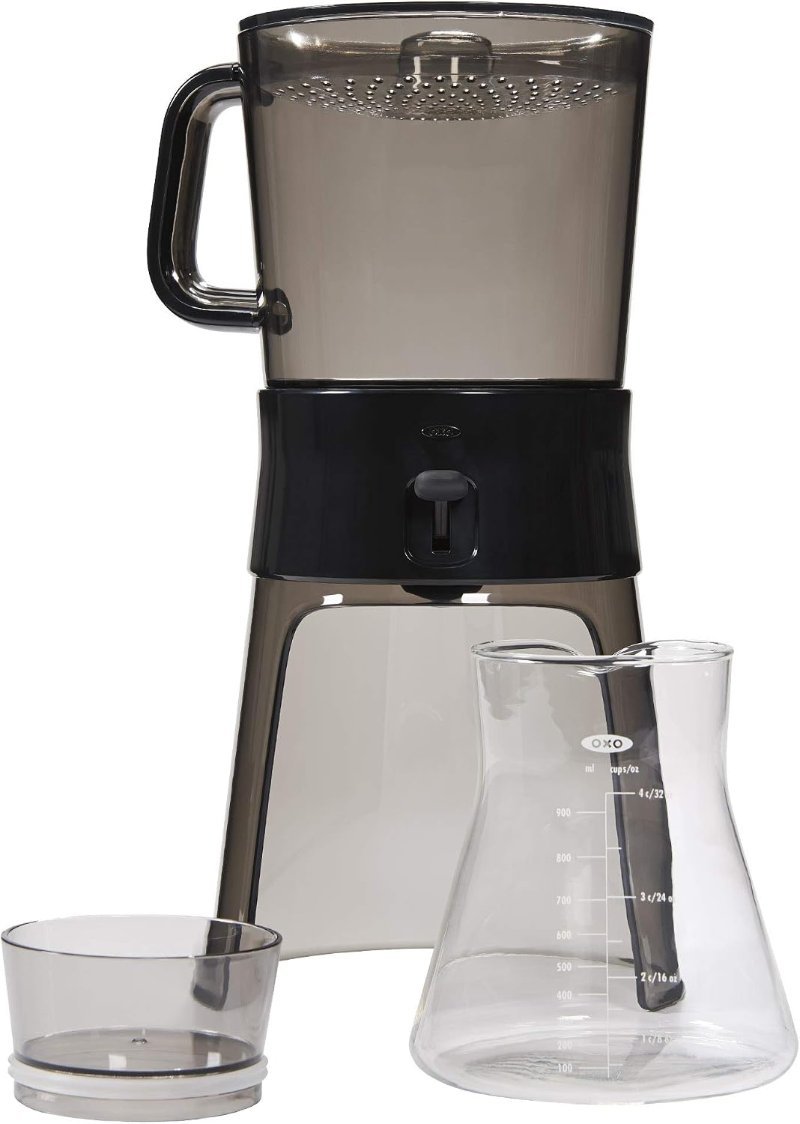
You do not strictly need dedicated equipment for this. A mason jar and a fine mesh strainer lined with a paper filter will get you there. But straining two liters of coffee sludge through a paper cone at 6am is the kind of chore that quietly kills a habit, which is the argument for the OXO. Its filter basket sits inside the brewing tank, the lid distributes water evenly instead of leaving a dry crust of grounds on top, and a switch on the bottom releases the finished concentrate straight into the included carafe. The carafe holds enough concentrate for roughly a week of one-a-day drinks, and it stores in the fridge without taking over a shelf.
The pick
OXO Good Grips Cold Brew Coffee Maker, 32 oz
Purpose-built for concentrate rather than ready-to-drink cold brew, with a switch-release filter and a carafe that holds about a week of daily iced coffee. The one to buy if you plan to actually keep doing this.
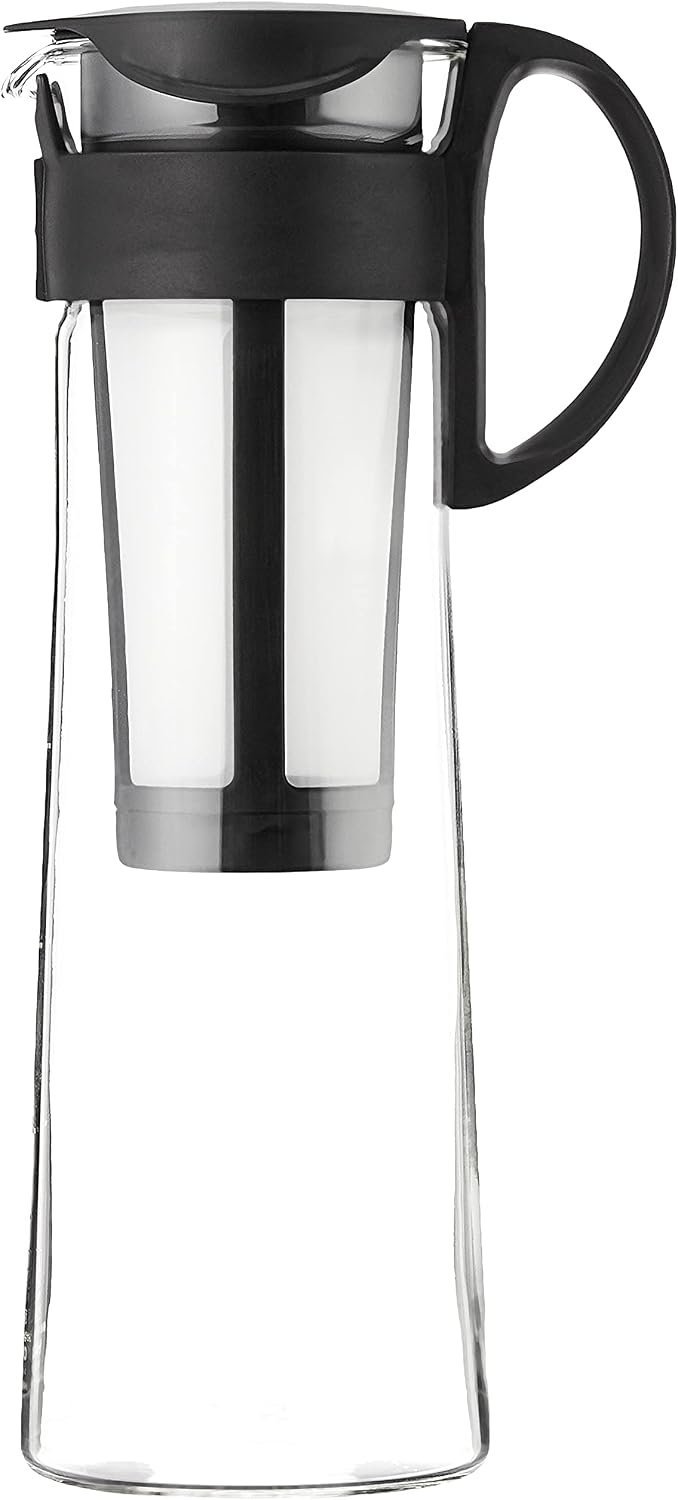
If a plastic brewing tank on the counter is not going to happen in your kitchen, the Hario Mizudashi is the glass alternative and it looks considerably better doing the same job. Be clear about what it is, though: at Hario’s suggested dose of about 80 grams to a full liter, you are brewing roughly 1:12 — ready-to-drink cold brew, not concentrate. To use it the way this article describes, keep the same 80 to 100 gram dose and fill the water to about 600ml instead. You get less volume per batch, but you get actual concentrate, and the whole thing lives in the fridge door.
The nicer-looking one
Hario “Mizudashi” Cold Brew Coffee Maker, 1000ml
Glass carafe with a full-depth mesh filter. Underfill the water to about 600ml to push it into concentrate territory rather than ready-to-drink strength.
The ice cube trick, for people who want to be thorough about it
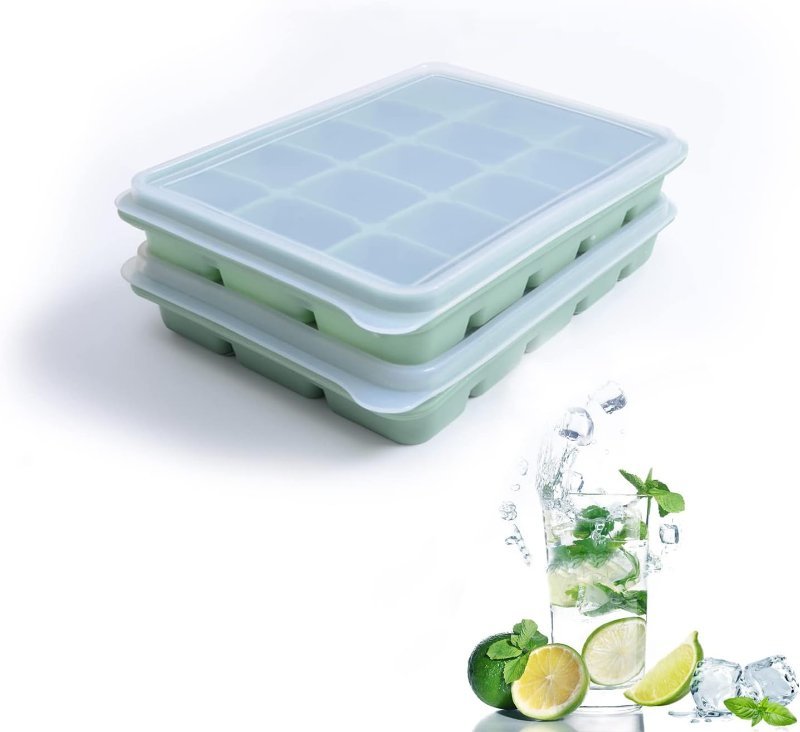
Even a well-diluted drink loses some ground over twenty minutes on a hot afternoon. The obvious answer is to stop making the ice out of water. Pour leftover diluted concentrate — or plain brewed coffee, if that is what you have — into a tray, freeze it, and use those cubes instead. Now the melt is contributing coffee to the coffee, and the drink gets slightly milder rather than progressively worse. Trays with lids matter more than they sound like they should, because uncovered coffee ice picks up freezer smells within about two days.
The cheap upgrade
Silicone Ice Cube Trays, Set of 2 with Removable Lids
Stackable, flexible, and lidded so the cubes do not taste like whatever else is in your freezer. Freeze diluted concentrate in these and the melt stops diluting your drink.
The other way: flash brew
There is a second, faster solution worth knowing, usually called Japanese iced coffee or flash brew. Instead of removing the ice from the equation, you make the ice part of the recipe. Brew a pour-over at your normal total ratio, but split the water: roughly 60% goes through the cone as hot brewing water, and the other 40% sits in the carafe as ice. For a 300ml serving that is about 20g of coffee, 160g of hot water, and 160g of ice. The hot coffee is over-concentrated on its way down, the ice melts to bring it back to normal strength, and the sudden temperature crash traps aromatic compounds that would otherwise steam off.
Flash brew is the better choice for an expensive, delicate light roast — it keeps the floral and citrus notes that a 16-hour cold steep sands right off. It also takes five minutes instead of a day. What it will not do is sit in your fridge; it is best within the hour and noticeably duller the next morning. Concentrate is the batch-cooking approach, flash brew is the à-la-minute one.
What we actually do
Concentrate on Sunday, flash brew when a good bag shows up. A 1:5 batch in the OXO takes about ten minutes of hands-on time and covers the week, and having it already in the fridge is what makes the difference between a habit and a thing you tried once. The single change that matters most, whichever route you take, is deciding the dilution yourself with a scale instead of letting a handful of ice cubes decide it for you.