Flavored coffee is the one category serious pour-over people are supposed to sneer at, and mostly I do. But peppermint and gingerbread bags move an enormous amount of volume every winter, people who read this site buy them for guests or for a spouse who thinks single-origin Kenyan tastes like grapefruit, and pretending the category doesn’t exist helps nobody. So I went looking at what’s actually purchasable right now and ranked four of them.
One thing up front, because it changes how you should read every ranking of this kind you’ll ever see: I’m judging these on how they’re constructed — the base coffee, the flavoring approach, the format, the price per ounce — not on a blind cupping. Flavored coffee is the one genre where the ingredient list and the manufacturing method tell you more than a tasting note does, and I’d rather be straight with you about the basis than invent an afternoon of tasting flights.
How flavored coffee is actually made
This is the part the bag never explains. Flavoring isn’t roasted into the bean — it’s applied after. Roasted beans come out warm and porous, which is exactly when they’re most absorbent, and they go into a mixer where flavoring oil gets tumbled onto them for somewhere in the neighborhood of 15 to 30 minutes until the coating is even. The oil typically works out to around 3% of the bean’s weight. Then the beans rest, sealed, for several hours so the carrier can evaporate and the flavor can cure.
Those oils are not just crushed peppermint. A single flavor profile can run to dozens of aromatic compounds — sometimes close to a hundred — mixing genuinely derived extracts with synthesized molecules, all suspended in a food-grade carrier, usually propylene glycol. That’s not a scandal; PG is what keeps highly concentrated flavor compounds dissolved and evenly dispersed so the coating goes on uniformly instead of in hot spots. It’s the same class of carrier used across the food industry. But it does mean “naturally flavored” on the front of a bag is doing less work than most shoppers assume.
The more interesting question is what’s underneath the coating. Laila Ghambari, who won the 2014 US Barista Championship, has been blunt that flavoring frequently masks low-quality, bitter beans — adding flavor after the roast covers up both green defects and roast defects that would otherwise be obvious in the cup. That’s the honest tension in this whole category. Nobody is spending Panama Geisha money on the base coffee for a bag of gingerbread. So the real question isn’t “is this good coffee,” it’s “is the flavoring well made and is the roaster at least serious about the underlying blend.”
How I ranked them
Three things moved the needle. First, whether the company’s actual business is flavored coffee or whether this is a seasonal SKU bolted onto a brand that sells something else. Companies that live on flavored coffee year-round have generally solved the flavoring problem; companies that ship a holiday bag as a marketing exercise often haven’t. Second, what’s disclosed about the base bean and the flavoring. Third, price per ounce, because flavored coffee gets seasonally gouged harder than almost anything else in the grocery aisle.
I also weighted against anything sold as a limited holiday edition being bought outside the holidays, which is a specific trap worth naming — more on that at number four, where the listing has swung from unbuyable to cheap inside a month.
The ranking
Some links below are affiliate links, which means I may earn a commission if you buy through them, at no extra cost to you.
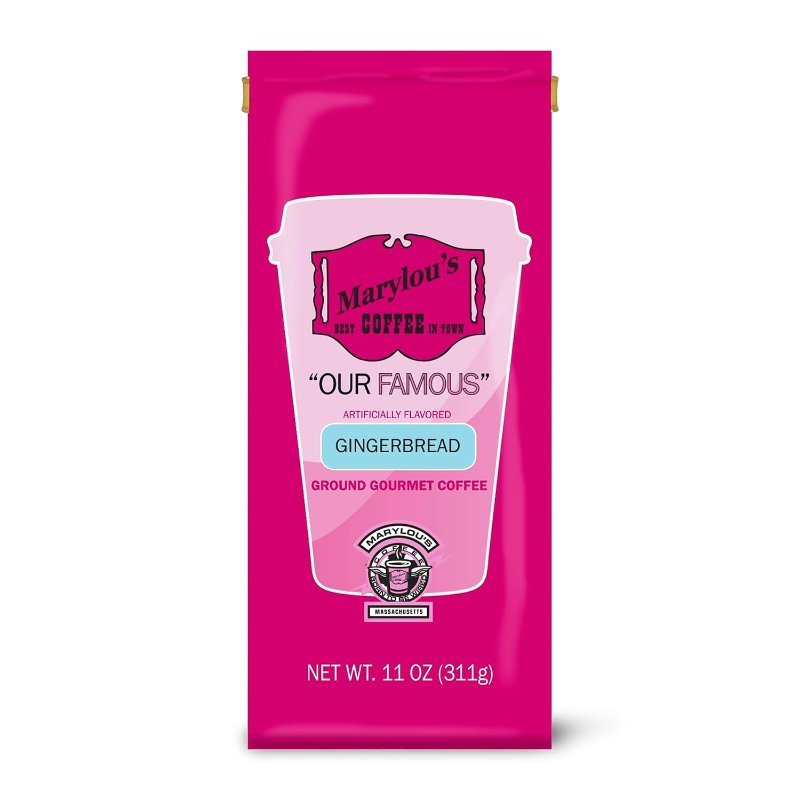
1. Marylou’s Gingerbread
Marylou’s is the pick, and the reason is pedigree in exactly the thing being sold. Marylou Sandry took over a convenience store in Hanover, Massachusetts in 1986 and turned it into a chain that now runs dozens of locations from Waltham down into Rhode Island — and it did that in the heart of Dunkin’ country, on the strength of an absurdly long flavored-coffee menu. Flavored coffee is not a seasonal side quest for this company; it is the entire business model. When a roaster’s core competency is applying flavor oil well, the gingerbread bag benefits from thousands of iterations of getting that right. It’s also the joint cheapest bag here, and gingerbread is the harder flavor to execute — mint is a single dominant note that survives brewing easily, while gingerbread has to hold ginger, cinnamon and molasses warmth in balance without collapsing into generic “spice.”
From a New England chain whose whole identity is flavored coffee. The most convincing gingerbread of the group and one of the cheapest bags here.
2. Crazy Cups Peppermint Mocha
The best peppermint of the four and the one I’d hand to someone who’s never bought flavored coffee before. Crazy Cups runs more than fifty flavor SKUs, so again — this is a company that does this for a living rather than once a year. The listing is unusually specific about what isn’t in it: no added sugar, no artificial sweeteners, calorie-free, and the flavoring is described as all-natural. That matters more than it sounds, because a meaningful share of the “peppermint mocha” products on the market are sweetened, which is fine in a mug but disastrous if it ever touches a burr grinder. It’s also the smallest bag here, which I consider a feature. Flavored coffee stales exactly as fast as unflavored coffee, and the aromatics fade faster than the coffee does — a ten-ounce bag you finish is better than a sixteen-ounce bag that goes flat in the cupboard.
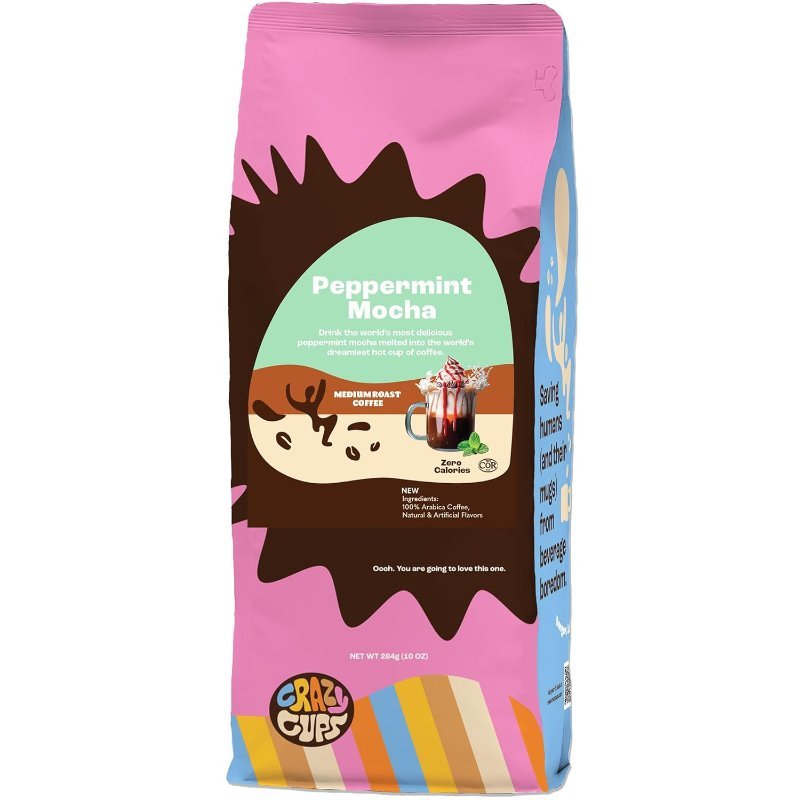
Unsweetened, naturally flavored, and sized so you’ll actually finish it before the aromatics fade. The safest first flavored bag.
3. The Bean Organic Coffee Co. Peppermint Mocha
This is the one for people who can’t stomach the propylene-glycol conversation above, and it earns the spot on a detail most competitors don’t bother with: the flavoring itself is certified organic, not just the beans. USDA and CCOF certification on both halves of the product is a real distinction in a category where “organic coffee” usually means organic beans wearing conventional flavor oil. They also tell you what the base blend is — Yemen Mocha and Java Arabica, small-batch roasted — which is more transparency about the underlying coffee than anyone else here offers, and a nod to the historic Mocha-Java pairing rather than an anonymous commodity blend. The catch is price: it lands at roughly double the cost per ounce of the two above it. Worth that premium if organic certification is a hard requirement for you, hard to justify if it isn’t.
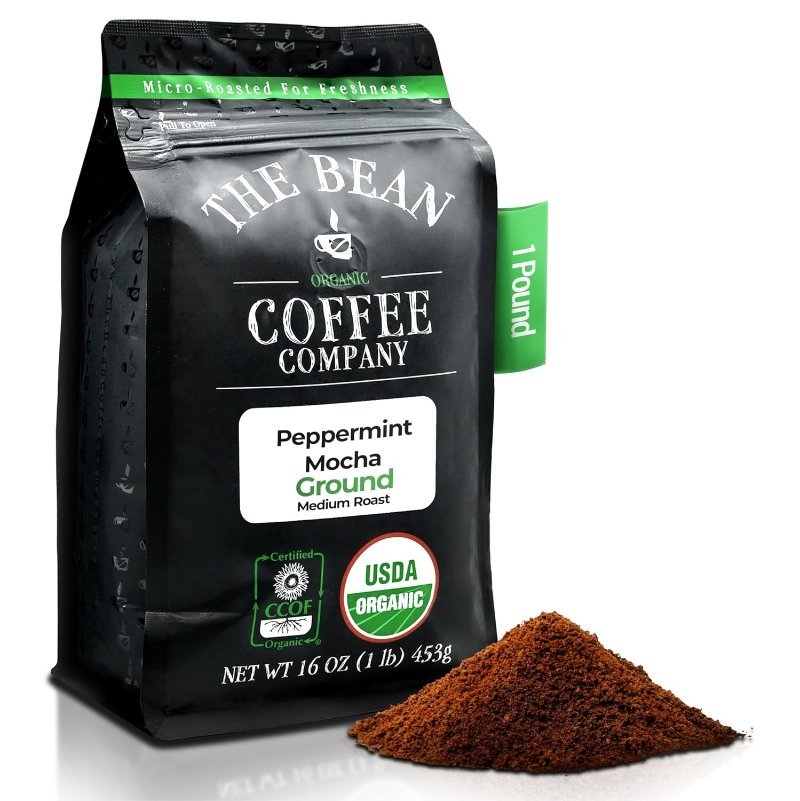
Organic certification on the flavoring as well as the beans, plus an actual named base blend. You pay a real premium for both.
4. Starbucks Peppermint Mocha — no buy box again, still fourth
Not because it’s bad. It’s the most recognizable peppermint coffee in America, it’s 100% arabica, and at its normal shelf price it’s a perfectly reasonable thing to put in your cart. The problem is that you mostly cannot. This entry has now flipped three times: in August the listing ran roughly triple the per-ounce cost of my top pick, in September it had no buying options at all, by mid-September Amazon had it back at $14.47 with a live buy box, and as of this October check the buy box is gone again — one marketplace seller at $31.99 for the 17-ounce bag, which is $1.88 an ounce against $1.00 for Marylou’s and $1.04 for the Crazy Cups bag. That makes it the most expensive coffee on this page by weight, for the least disclosure. It would land fourth on my criteria regardless, because I reward roasters whose actual business is flavored coffee and who tell you what’s in the bag. Watch for the buy box to come back when the holiday run restocks in November, and buy it then if brand familiarity is what you want.
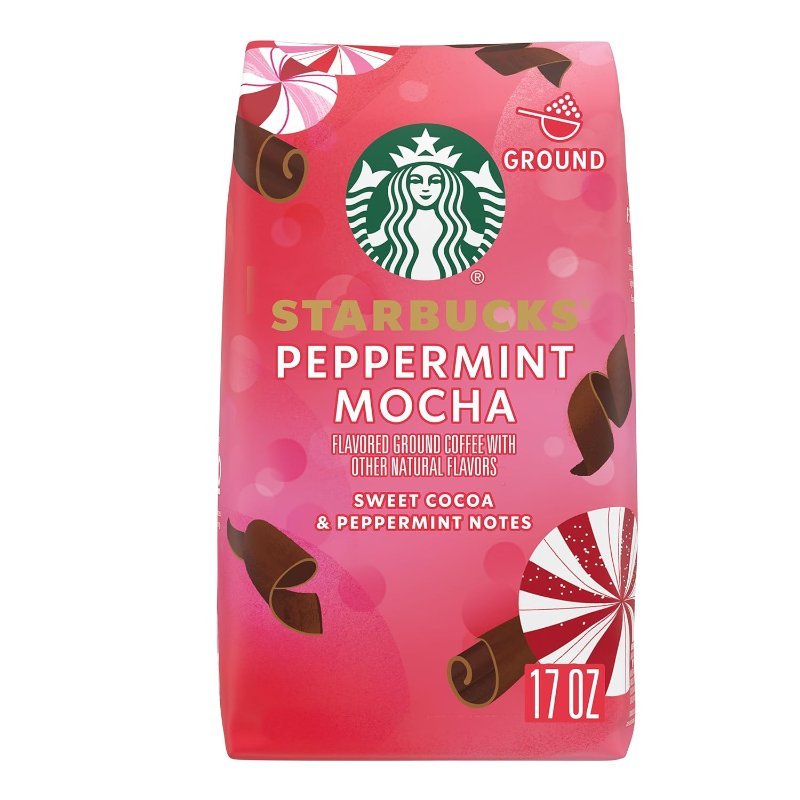
The default peppermint coffee, and right now the one you cannot buy at a sane price — Amazon’s buy box is gone and the lone reseller wants $31.99. Fourth on flavor and disclosure even when it is in stock.
Do this before you brew any of them
Buy these pre-ground, and if you own a nice burr grinder, keep them away from it. This isn’t snobbery, it’s mechanical. Flavoring oils coat the burrs and the internal chute, then oxidize, and the result is that every subsequent coffee you grind picks up a ghost of peppermint. Home espresso forums are full of people who ran one bag of flavored beans through an expensive grinder and spent weeks chasing the taste back out. Getting it out means brushing the burrs, running cleaning tablets like Grindz through the machine, and in bad cases disassembling and wiping the burrs down with alcohol — and even then people report a lingering hint. Water should stay away from burrs and motors entirely unless the manufacturer explicitly says otherwise.
All four of these are sold ground for exactly this reason, so the easy answer is to leave them that way. Brew them as drip or in a press rather than as pour-over, too. A paper filter and a slow, aromatic-forward pour-over is engineered to showcase the delicate high notes of a good single origin, and applying that method to an applied flavor oil mostly just strips the thing you paid for while the base bean — which, as established, is not why you bought this — gets the spotlight it didn’t earn.
Flavored coffee isn’t trying to be the Ethiopian natural you save for Sunday morning. It’s trying to make a Tuesday in December feel like something. Judged on that, the Marylou’s gingerbread does the job better than anything else on this list, and it does it for less money than the famous bag.