Something changes in the cup around the first week of real cold. The bright, tea-like Kenyan that tasted like a revelation in July suddenly reads as thin and sour at 6:45 a.m. in a 61°F kitchen. Nothing happened to the coffee. What changed is the room, the water, and what you actually want out of a mug you’re holding with both hands.
Two of those are physics. A cold ceramic dripper and a cold carafe pull real heat out of the slurry — enough that a brew you started at 205°F can finish in the 180s, which under-extracts the sweetness and leaves the acids standing there unaccompanied. Preheating the dripper and the server with a rinse of boiling water is the single highest-return thing you can do in winter, and it costs nothing. If the cup still tastes hollow after that, go a couple of clicks finer rather than chasing it with hotter water.
The third thing is just taste, and it’s the reason this list exists. In winter I reach for coffees with weight — cocoa, nuts, dried fruit, molasses — and almost never for the delicate, floral, high-acid washed lots that I’d happily drink iced in August. These four are the bags that actually get reordered in our house between October and March, and they’re all currently buyable.
Guatemala Antigua, when you want cocoa and smoke
If you only buy one winter bag, buy an Antigua. The valley’s coffee grows in pumice-heavy volcanic soil between three volcanoes, and the cups that come out of it lean dense and chocolatey in a way that stands up to a cold morning without needing sugar. A darker roast of it — which I normally resist — is one of the few places where the extra development earns its keep, because Antigua has enough structure underneath that you don’t just end up with ash.
Some of the links below are affiliate links, which means we may earn a commission if you buy through them — at no extra cost to you.
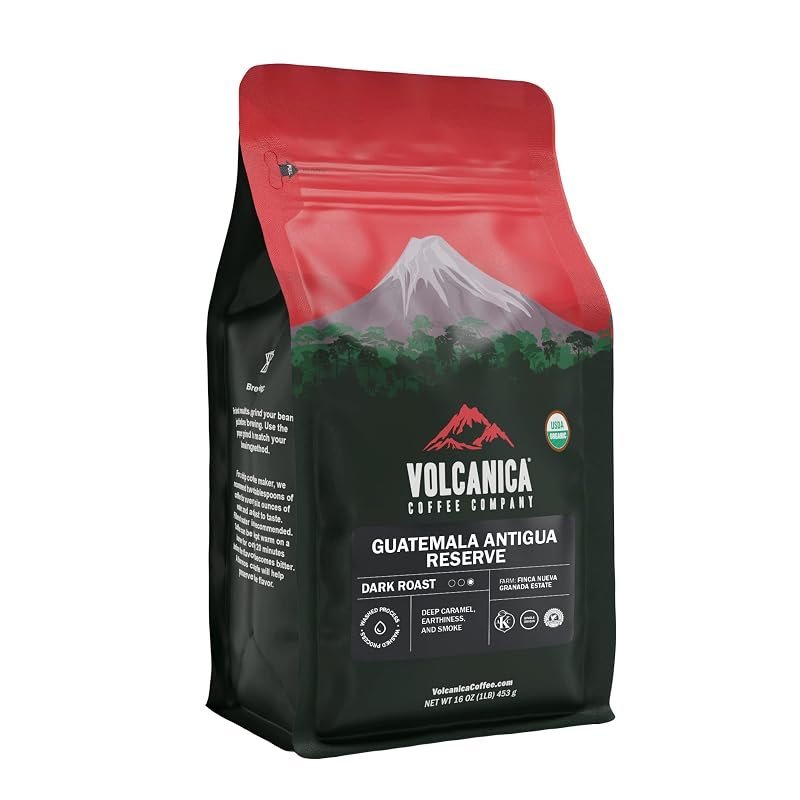
Volcanica’s Reserve lot is the one I keep restocking. It’s a dark roast from the Antigua district at roughly 5,000–6,000 feet, and it brews a deep caramel-and-dark-chocolate cup with a faint smoky edge on the finish. On a flat-bottom dripper at a 1:16 ratio it is almost impossible to make taste bad, which matters more in December than I like to admit.
Volcanica Guatemala Antigua Reserve, Dark Roast, 16 oz
Deep caramel and dark chocolate with a soft smoky finish. Forgiving across brew methods, and the most reliably satisfying cold-morning bag on this list.
India Monsooned Malabar, for the lowest-acid cup on the shelf
This is the oddest coffee here and the one I recommend hardest to anyone who says bright coffee bothers their stomach. Monsooned Malabar is a processing style, not a region flavor: after harvest, graded green beans are spread in ventilated warehouses on India’s southwest coast and deliberately exposed to monsoon-laden air for roughly twelve to sixteen weeks, raked and re-spread the whole time. They swell, turn a pale gold, and come out with a nearly neutral pH.
The origin story is that nobody designed it. Coffee leaving the Malabar Coast for Europe used to spend months in damp wooden holds and arrived transformed — swollen, mellow, low-acid — and European buyers decided that was what Indian coffee tasted like. When steamships and better packaging shortened the voyage and the effect vanished, Indian producers started reproducing it on purpose. The style now carries protected status under India’s Geographical Indications law.
What you get in the cup is thick, musty-sweet, faintly woody, with no acidity to speak of. If you’ve had a Sumatra and liked the heavy, earthy end of the spectrum, this goes further in that direction. If you want fruit, skip it entirely — this is not a subtle coffee and it does not pretend to be.
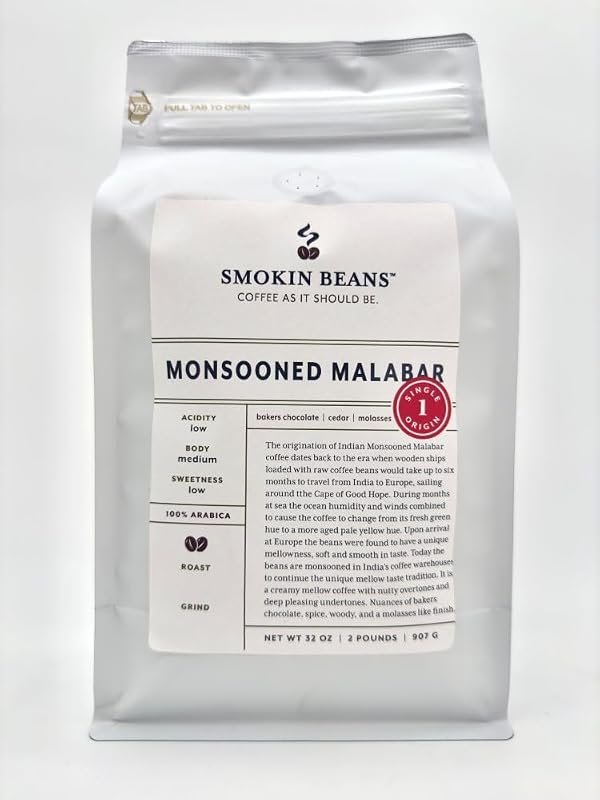
Smokin Beans India Monsooned Malabar, Medium Roast, 2 lb
Monsoon-processed Arabica with a heavy, syrupy body and essentially no brightness. Buy it for the mouthfeel, and brew it a touch coarser than you think.
A Brazilian natural, for the cup you drink without thinking
Brazil grows roughly a third of the world’s coffee, and most of it is dried whole in the fruit — the natural process — which leaves sugars behind in the bean and produces exactly the nutty, chocolate-forward, low-acid profile that winter rewards. Brazilian single origins get dismissed as filler because so much Brazilian coffee ends up anonymous in blends. A good one is not filler; it’s the bag you want when you’re making a liter for the house and nobody wants to talk about tasting notes.
Koffee Kult’s Brazil is the one in our rotation. It’s heavy-bodied and buttery, with dark chocolate, caramel and toasted walnut, and it survives being made badly — which is the real test of a house coffee. It’s also the pick here that works best with milk, if your winter habit involves a splash of something.
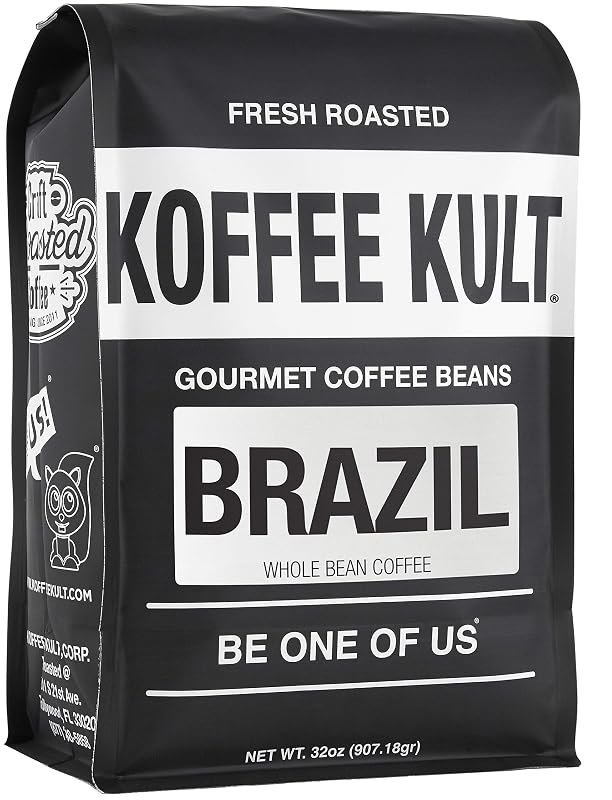
Koffee Kult Brazil Single Origin, Medium Roast, 32 oz
Dark chocolate, caramel and toasted walnut in a thick, buttery cup. The two-pound bag is the right size for a coffee you’ll drink daily and not fuss over.
An Ethiopian Harrar, if you still want fruit in January
Winter doesn’t have to mean giving up fruit, it just means trading citrus for dried fruit. Harrar comes from small shade-grown farms in Ethiopia’s eastern highlands and is dried whole on raised beds, and the result reads as blueberry and dark chocolate with a dusty spice behind it — jammy rather than zippy. It scratches the same itch a bright washed coffee does without the sharp edges that feel wrong in the cold.
Be honest about what natural Ethiopian coffee is, though: it’s inconsistent by nature, and the funky, overripe end of it puts a fair number of people off for good. Buy a pound before you commit to a habit.
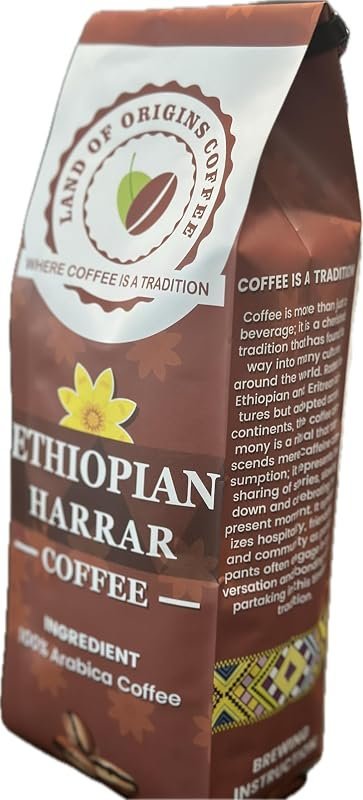
Land of Origins Ethiopian Harrar, Medium Roast, 16 oz
Natural-process Harrar with blueberry, dark chocolate and soft spice. Jammy and low-acid — the winter answer to a summer washed Ethiopian.
What I’d actually buy this week
Start with the Antigua. It’s the least risky bag on the list and the most likely to make a cold morning better. Add the Brazil if you drink more than a cup a day or make coffee for other people. The Malabar is a deliberate choice for a specific problem — acidity — and the Harrar is for the mornings you still want something to think about.
One housekeeping note, since winter is also when people buy in bulk: a two-pound bag only stays good if you keep it sealed and out of the light, and the freezer is a better home for the back half of it than most people believe. If you’re stocking up now the way we did before fall, buy the big bag and decant a week at a time.