Buying a gift for someone deep into coffee is a trap. They already own the dripper. They own the kettle, the grinder, the scale that reads to a tenth of a gram. Anything obvious you hand them, they bought two years ago and have opinions about. So the usual move — grab the nicest-looking pour-over set on the shelf — lands as a polite thank-you and a shelf demotion.
The way out is to stop shopping up and start shopping sideways. A person with a full setup does not need a better version of what they have. They need the thing adjacent to it: a brewer that works on a different principle, a variable they have been ignoring, a consumable they are too cheap to buy for themselves. That is where the good gifts live.
Rule one: buy the variable they have not touched
Most home setups plateau in the same place. The grinder gets upgraded, the recipe gets dialed, and then two or three variables sit untouched for years because fixing them is unglamorous. Storage is one. Water is another. Neither is fun to buy for yourself, which is precisely what makes them good to receive.
Heads up: the links below are Amazon affiliate links. If you buy through one, this site earns a small commission at no extra cost to you.
A brewer that does something theirs physically cannot
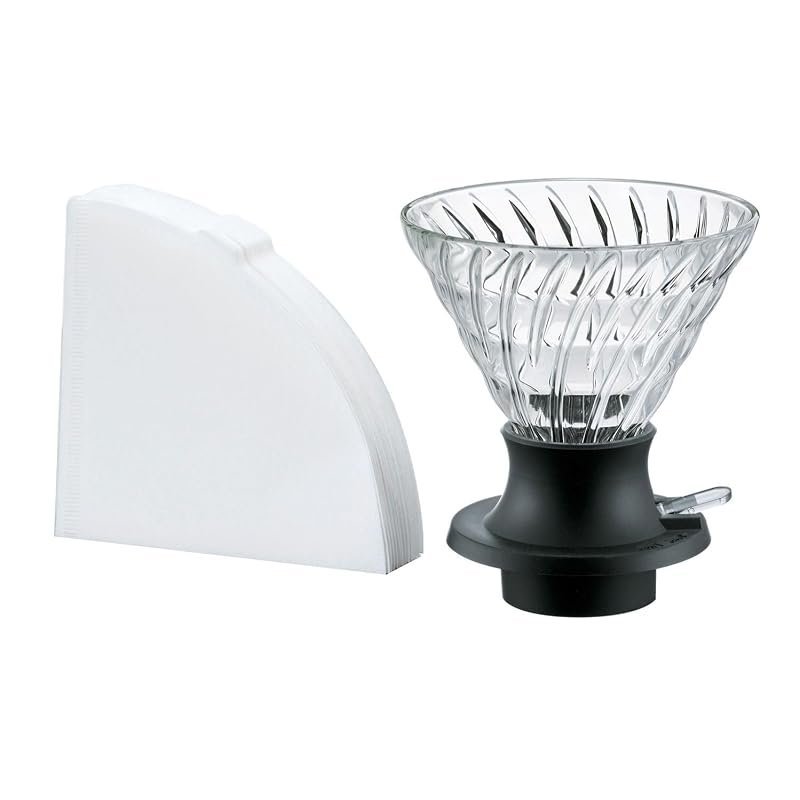
This is the pick I would hand over first. The Hario Switch is a heatproof glass V60 cone sitting on a silicone base with a stainless steel ball valve in it. Flip the switch closed and the water stays put — you have an immersion brewer, like a French press that uses paper. Flip it open and it drains like a normal V60. That single valve puts a whole category of recipes in reach that a standard cone cannot do at all: full immersion, hybrid steep-then-release, staged brews where the first half sits and the second half percolates.
Someone who has been brewing V60 for three years has refined their pour into muscle memory. The Switch hands them a genuinely different lever to pull, using filters and a grinder they already own. It takes size 03 filters, so if they have been buying 02s there is a small resupply cost — worth flagging on the card if you are gifting it. This is the pick that gets used, not shelved.
Hario “Switch” Immersion Dripper, Size 03
Glass V60 cone with a ball-valve base. Immersion, percolation, or both in one brew. Uses standard 03 filters.
Fix the water, not the gear
Here is the variable almost nobody with a nice setup has actually addressed. The Specialty Coffee Association points at roughly 150 ppm total dissolved solids, calcium hardness somewhere in the 50–175 ppm range, and alkalinity near 40 ppm as the target for brewing water. Tap water in most cities is nowhere near that, and it is inconsistent season to season. Magnesium pulls out sweetness and aromatics; calcium builds body; alkalinity is the buffer that flattens acidity when there is too much of it. Get the ratio wrong and a $22 Kenyan tastes muddy no matter how well you pour.
Third Wave Water solves it with a mineral stick you dump into a gallon of distilled or RO water. The Classic Light Roast profile leans low-alkalinity, which is exactly right for the bright African and Central American coffees a snob is probably drinking. It is also the rare gift that produces an audible reaction — the first side-by-side against tap water is not subtle. We went deep on this in our post on water chemistry and pour-over. The catch is honest: it is a consumable, and they have to keep buying distilled water. Some people love that ritual and some resent it.
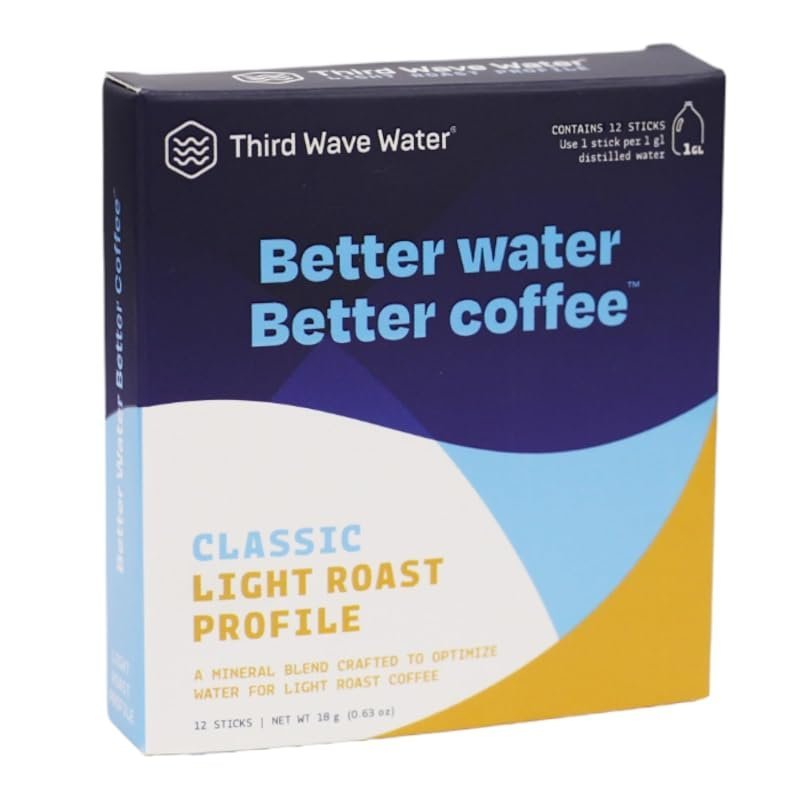
Third Wave Water — Classic Light Roast, 12 Gallon Sticks
One stick per gallon of distilled water. Hits SCA-range mineral targets without a chemistry set. The cheapest real upgrade on this list.
The bag is the weak link
Somebody spending $20-plus on twelve ounces of single origin is usually storing it in the bag it came in, rolled over and clipped. That bag has a one-way degassing valve, which is great for the first week and useless after it has been opened a dozen times. Oxygen is what stales coffee, and every open-and-close cycle refills the headspace.
The Fellow Atmos is a stainless canister whose lid pulls a partial vacuum when you twist it — no pump, no batteries, just a twist that visibly drops the plunger. The 1.2-liter size holds a full 16 ounces, which means a standard 12-ounce bag fits with room to spare instead of being decanted in two batches. It is not a laboratory vacuum and it will not stop staling forever, but pulling most of the air out of the container between brews is a real, measurable improvement over a folded bag. It also looks like something a person would leave on a counter, which matters more than anyone admits.
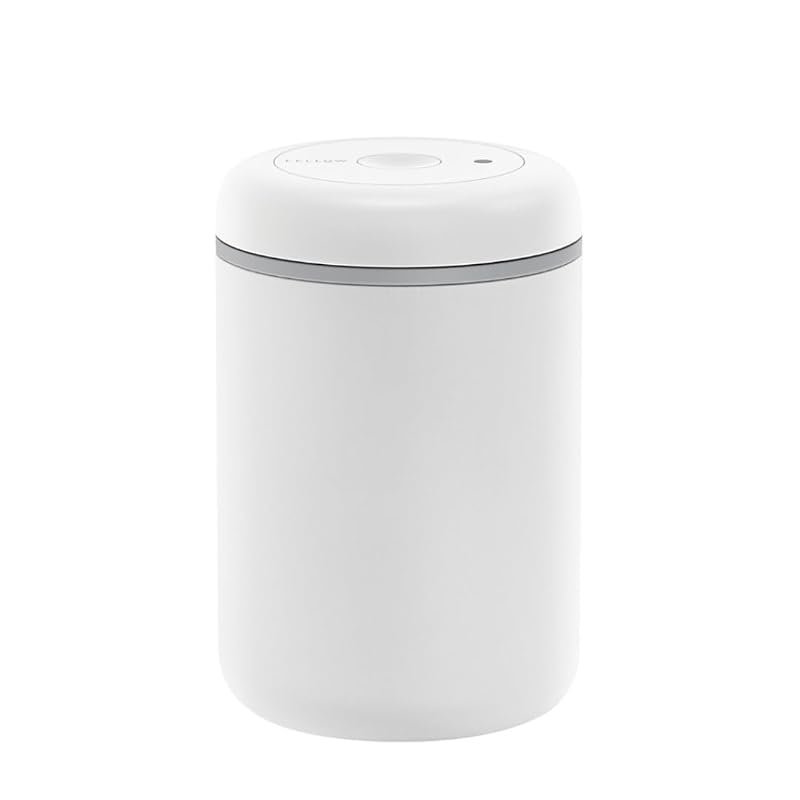
Fellow Atmos Vacuum Canister, 1.2 Liter
Twist the lid, pull the air out. Holds a full 16 oz, so a 12 oz bag goes in whole. Hand wash only.
Something to read instead of plug in
The reliable failure mode of gifting a hobbyist is assuming the gift has to be hardware. James Hoffmann — 2007 World Barista Champion, co-founder of Square Mile Coffee Roasters in London — wrote the reference book the rest of the category is measured against. The first two editions sold something like 400,000 copies. The third edition landed in October 2025 with new chapters on decaffeination and on steep-and-release brewers, which is a funny coincidence if you are also buying the Switch, plus added origins including Australia, Japan and Puerto Rico.
It is a proper atlas: country-by-country production, varietals, processing, terroir, laid out with maps. The person you are buying for has watched the YouTube videos. They very likely do not own the book, because books are the thing enthusiasts forget to buy themselves once they have the gear. If your budget is one item and you want the safest hit on this list, it is this one.
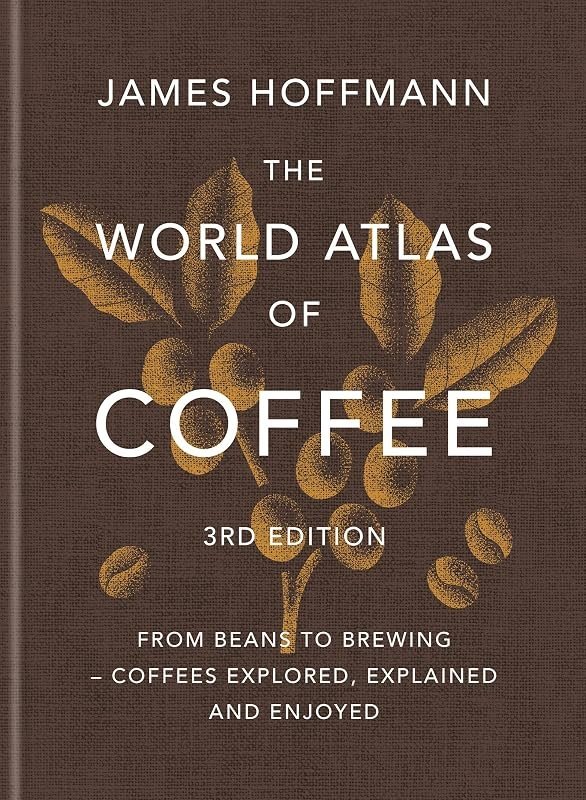
The World Atlas of Coffee, 3rd Edition — James Hoffmann
Country-by-country coffee production, mapped and explained. Updated October 2025 with new chapters on decaf and steep-and-release brewing.
What to skip
A few categories to avoid for this specific person. Mugs — they have a favorite and you will not beat it. Another hand grinder, unless you know exactly what they own and why they are unhappy with it; grinders are personal and expensive to get wrong. Flavored beans, ever. Novelty gadgets shaped like a solution to a problem nobody has. And subscription boxes, which sound perfect and often are not — we broke down what to look for in a coffee subscription if you are set on that route.
The pattern across all four picks above is the same: each one changes something the recipient has been quietly ignoring rather than replacing something they already chose deliberately. That is the whole trick. If you want more options at a fixed budget, our under-$50 gift guide covers the tier below this one.