Every city with a coffee scene has one roaster that everybody outside the city has heard of, and one roaster everybody inside the city has opinions about. In Portland those are the same company. Stumptown is the name on the bag at airport kiosks in Denver and grocery shelves in Ohio, and it is also the name that makes a certain kind of Portland coffee person sigh and start a sentence with “well, back when.”
Both reactions are a little lazy. Worth actually going back through what happened here.
A shuttered beauty parlor on Southeast Division, 1999
Duane Sorenson was the head roaster at Lighthouse Roasters in Seattle when he quit in late 1999, drained his savings to buy a five-kilo roaster for roughly $8,300, and opened a small café and roastery on Southeast Division Street. The shop opened November 1, 1999. This was not then a street anyone described as a destination — Division’s current status as a restaurant corridor came more than a decade later.
The space had previously been a beauty parlor called Hair Bender. Sorenson kept the sign, and then did something smarter than keeping the sign: he named his first blend after it. Hair Bender is still Stumptown’s flagship, still built from Latin American, Indonesian and East African coffees, and the original sign still hangs at the hometown roastery. The whole operation at the start was one employee, a vintage Probat, and a Ford Pinto for deliveries.
What Stumptown actually changed
The standard line is that Stumptown made coffee cool, which undersells it. What Stumptown did — alongside Chicago’s Intelligentsia and North Carolina’s Counter Culture, both founded in 1995, the three of them collectively the spine of American third wave — was normalize a set of practices that are now so ordinary they are invisible.
Sorenson flew to farms. Repeatedly. He paid above commodity price and above Fair Trade minimums for lots he wanted, and named the farm on the bag. Stumptown’s Direct Trade program was built on three stated commitments: price tied to cup quality, long relationships with producers they actually know, and partnerships rather than one-season purchases. He also roasted lighter than the prevailing Northwest style, which at the time meant arguing with a lot of people who had been trained to think dark equals serious.
Every one of those things is table stakes for a modern specialty roaster. In 2001 they were a position you had to defend.
Then Peet’s bought them
In October 2015 Peet’s Coffee & Tea announced it was acquiring Stumptown from majority owner TSG Consumer Partners; the sale closed in November of that year. Terms were never disclosed. The press language at the time was that Stumptown would keep operating independently with access to Peet’s scale — which is what every acquiring company says, and which in this case turned out to be roughly half true. Stumptown kept its own roasting, its own sourcing team, its own ready-to-drink cold brew line. It also stopped being the scrappy thing people liked feeling clever about drinking.
The honest assessment: the coffee did not get worse. The Direct Trade relationships held. What changed is that Stumptown is no longer where you go to be surprised — Portland has two dozen smaller roasters doing the weird single-lot stuff now, and most of them exist because Stumptown proved a city this size could support them. Stumptown is now the reliable one. That is a demotion only if you were buying it for the identity.
What to actually buy
If you are ordering Stumptown online, ignore the seasonal micro-lots — those move too fast to recommend and they are better bought direct. Stick to the three bags that are always in stock and always the same. Some links below are affiliate links, meaning I earn a commission if you buy through them at no extra cost to you.
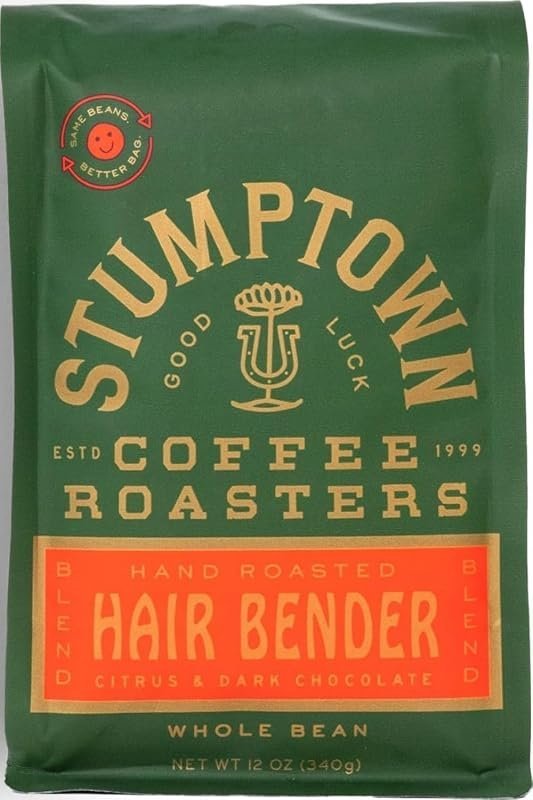
Start with Hair Bender, because starting anywhere else with Stumptown is a bit like visiting Portland and skipping the river. It is a blend, it is deliberately not delicate, and it is built to survive whatever you do to it — drip, espresso, a slightly sloppy V60 at 6 a.m. Citrus and dark chocolate with a raisin-ish sweetness underneath. For pour-over, grind a touch coarser than you think and keep the water at about 200°F; it gets muddy when you push extraction.
Stumptown Hair Bender, 12 oz Whole Bean
The blend named after the beauty parlor that became the first shop. Forgiving across brew methods, chocolate-and-citrus, and the single most representative thing the roastery makes.
Holler Mountain is the one I keep in the house more often. It is organic, it is a Latin America / East Africa / Indonesia blend, and it leans creamier and rounder than Hair Bender — caramel and hazelnut with a citrus lift rather than the other way around. If you drink your coffee with milk, or if you brew for someone who says they do not like “fruity” coffee, this is the safer bag.
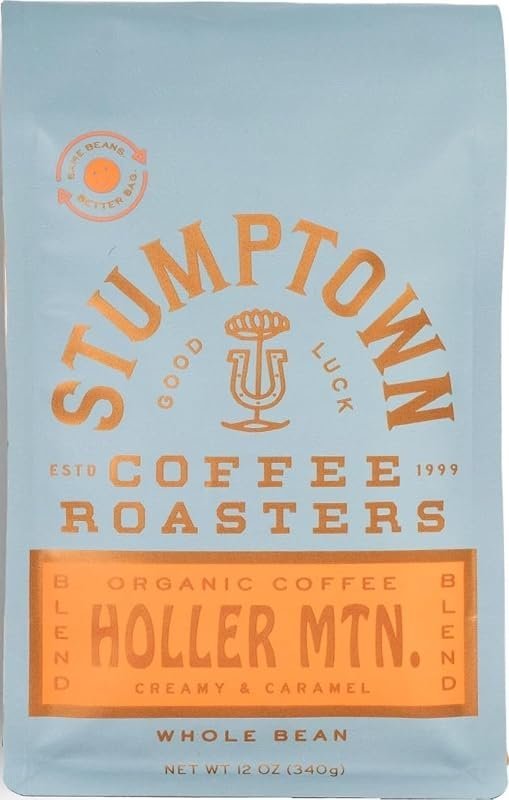
Stumptown Holler Mountain Organic, 12 oz Whole Bean
Rounder and sweeter than Hair Bender — caramel, hazelnut, a bit of citrus zest. The one to buy if you want a blend that does not argue with milk.
And if you want to see what the sourcing side of the company is actually for, buy the Ethiopia Guji. Guji is a zone in southern Ethiopia that has been carved out of the broader Sidama and Yirgacheffe reputation over the last fifteen years, and Stumptown has been buying there long enough to have a point of view about it. Tea-like, floral, distinctly lighter in body than either blend. Brew it in a cone, not a French press, and do not add milk.
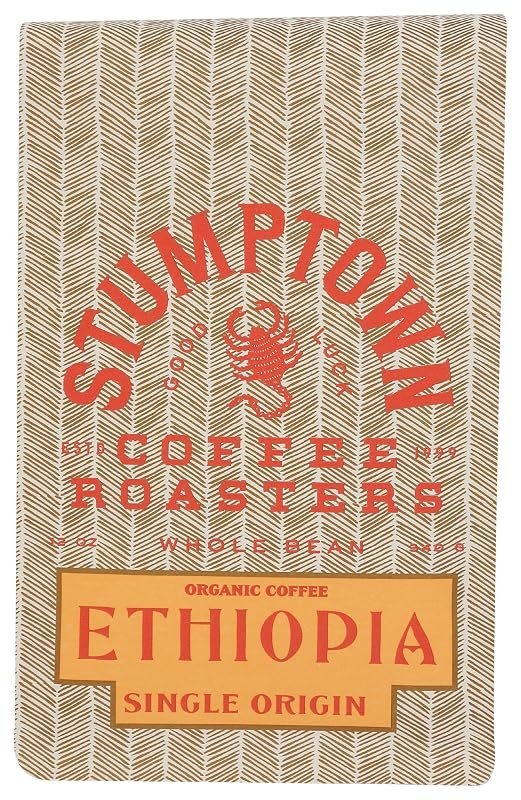
Stumptown Ethiopia Guji Organic, 12 oz
A single origin from southern Ethiopia — tea-like, floral, light-bodied. The bag that shows why the direct sourcing program exists in the first place.
If you are in Portland, skip all of this and go to the roastery on Southeast Salmon, or the Division shop where the sign still is. A bag that was roasted four days ago in the building you are standing in is a different product than a bag that crossed the country. But that is true of every roaster, and it is not an argument against ordering the flagship from a couch in Ohio — which is, after all, more or less the point of what Sorenson built.