Every coffee subscription on earth is one of two things wearing different marketing. Either a roaster picks something new for you each cycle and you never know what’s coming — the rotating box — or you pick one coffee and it shows up on a schedule until you change your mind. Counter Culture runs both models side by side: a rotating selection on a 7-, 10-, or 14-day cadence, and a single-variety subscription you can set for one to four shipments a month. Atlas Coffee Club sends a different country every month. Topeca rotates a new single origin quarterly. Trade layers a taste quiz and a per-shipment rating system on top so the rotation slowly narrows toward what you actually like.
The marketing for the rotating model is better, and that’s most of why people choose it. But for pour-over specifically, I think it’s the wrong default, and I’ll make the case plainly.
What the rotating box is actually good at
Discovery, and nothing else. That’s not a knock — discovery is a real value. If you’ve been drinking the same grocery-store dark roast for a decade, a box that drops a washed Ethiopian on your counter in January and a natural Brazilian in February will teach you more about your own palate in two months than any amount of reading. You find out that you actually hate the blueberry-bomb naturals everyone raves about, or that Kenyan acidity is the thing you’ve been missing. You can’t learn that from a tasting-notes page.
Rotating boxes are also the only practical way to drink coffees you’d never buy at full bag price. Nobody spends $28 on a sight-unseen microlot from Rwanda. Everybody will drink one when it shows up.
What it costs you, and I don’t mean money
Here’s the part the subscription pitch never mentions: rotating coffee is actively hostile to dialing in a pour-over.
A new coffee means a new grind setting, and finding it burns beans. A 12-ounce bag is roughly twenty-four 25-gram brews. If it takes you three or four cups to stop over-extracting a coffee you’ve never met — and with an unfamiliar density and roast level, it does — you’ve spent something like 15% of the bag getting to the point where you’re brewing it well. Then it’s gone and the next one arrives and you start over. A rotating subscriber can easily spend a whole year never brewing anything more than competently, because they never brew the same thing twice.
There’s a second cost: you can’t reorder what you loved. Most rotating programs don’t promise any coffee will ever come back. The bag you thought about for a week is simply over.
The case for one coffee, on repeat
Buy the same single origin four times in a row and something happens that surprises people the first time: your brewing gets noticeably better, fast. Not because you got smarter, but because you finally have a control variable. When the coffee is constant, a bad cup means you did something — ground too coarse, poured too fast, water too cool. You can fix it, brew again tomorrow, and confirm the fix. That feedback loop is the entire mechanism by which anyone gets good at pour-over, and rotation breaks it.
You also start noticing the things that are otherwise invisible. Same bean, day 5 post-roast versus day 14 versus day 25 — the shape of the bloom changes, the acidity settles, the sweetness comes forward and then leaves. Nobody who changes coffee every two weeks ever sees that arc.
How this maps onto Amazon, where there isn’t really a “box”
Amazon doesn’t run curated rotating subscriptions the way a roaster does. What it has instead is Subscribe & Save for the standing-order model, and multi-origin sampler sets for the discovery model. That’s a cleaner split than the roasters offer, honestly, because you can run both at once.
On Subscribe & Save, know how the discount actually works before you count on it: it’s 5% off a single subscription item, and it only steps up to 15% when five or more eligible subscription items ship to the same address in the same calendar month. One bag of coffee is 5%, not 15%. And the discount is applied to the price on the day it ships, not the price you saw when you subscribed — which is exactly as exploitable as it sounds, so check what you were actually charged after the second delivery.
What to actually buy
Some of the links below are affiliate links, which means I may earn a commission if you buy through them — at no extra cost to you.
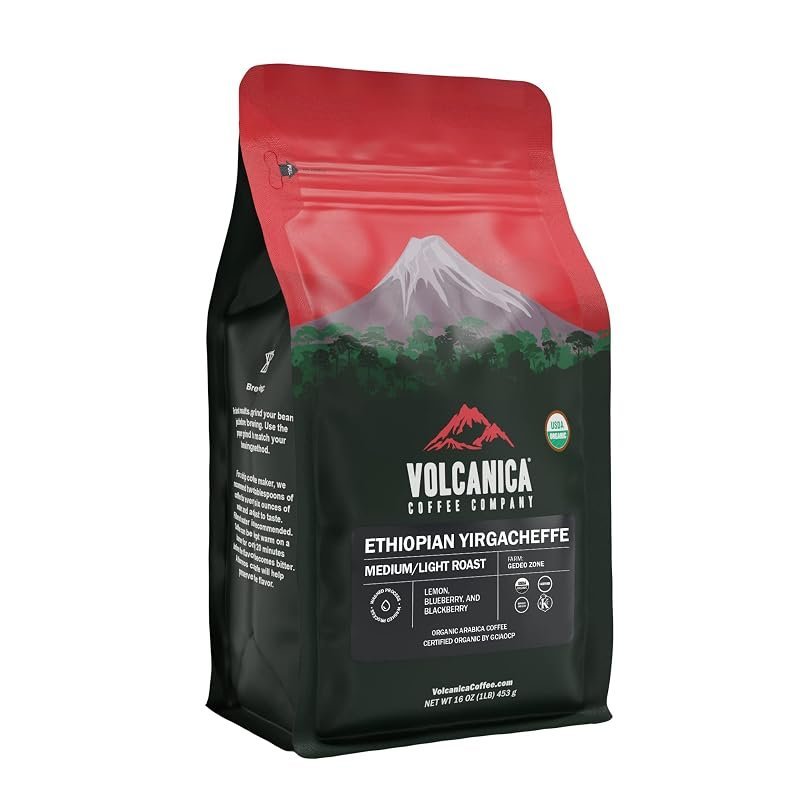
If you’re brewing pour-over and you want to get better at it, buy one good single origin and put it on repeat. Volcanica’s organic Yirgacheffe is the one I’d pick for this: it’s a classic, legible Ethiopian — lemon and berry, real acidity, medium body — which makes it a good teacher, because when you brew it badly it tells you loudly. It’s a 16-ounce bag, it’s consistently in stock, and it takes Subscribe & Save, which is the whole point. Set it for every four weeks and stop thinking about it.
Volcanica Ethiopian Yirgacheffe, Organic, Whole Bean, 16 oz
A legible, high-acidity Ethiopian that rewards repetition. The right bag to dial in on, and the right bag to keep on a schedule.
If what you want is the rotating-box experience — eight countries, tasting cards, the fun of not knowing — the Atlas Coffee Club sampler is the honest version of it, and it’s a one-time purchase rather than a recurring charge you’ll forget about. The catch is bag size: these are 1.8-ounce bags, which is two or three brews each. Treat it as a tasting flight to find out what you like, not as a month of coffee. That’s the correct use of a rotating box anyway.
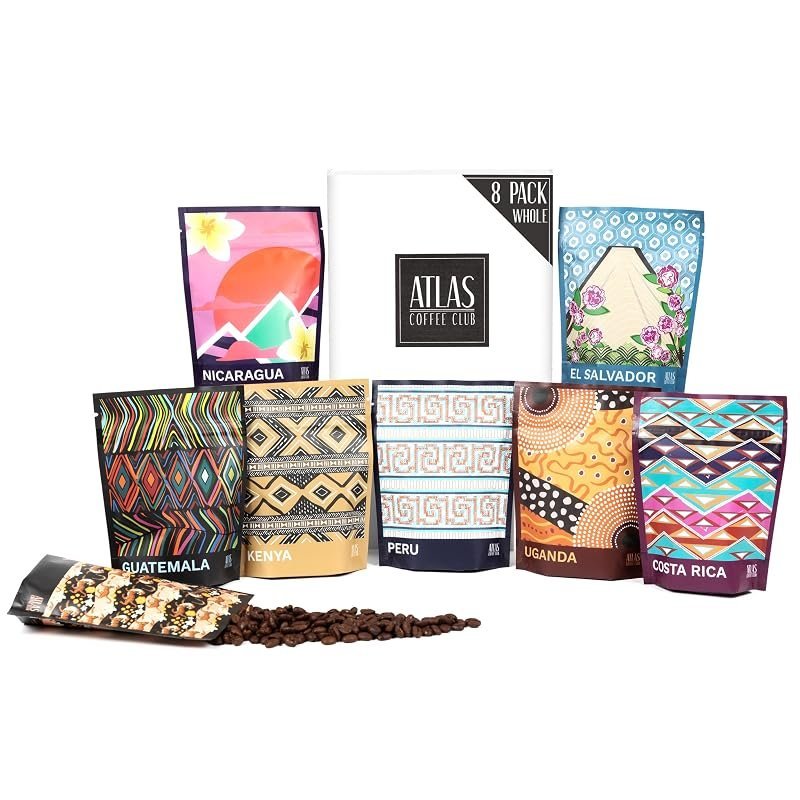
Atlas Coffee Club Coffee Sampler, Whole Bean, 8-Pack
Eight single origins from eight countries, with tasting notes. A palate-mapping exercise with an end date, not a subscription.
And if eight tiny bags sounds like too much churn — it is, for most people — the Bean Box two-pack splits the difference. Two single origins at a size you can actually brew more than twice, which means you get a genuine shot at dialing each one in before deciding whether it’s a coffee you want to live with. This is the version I’d hand to someone who’s trying to find their standing order rather than trying to be entertained.
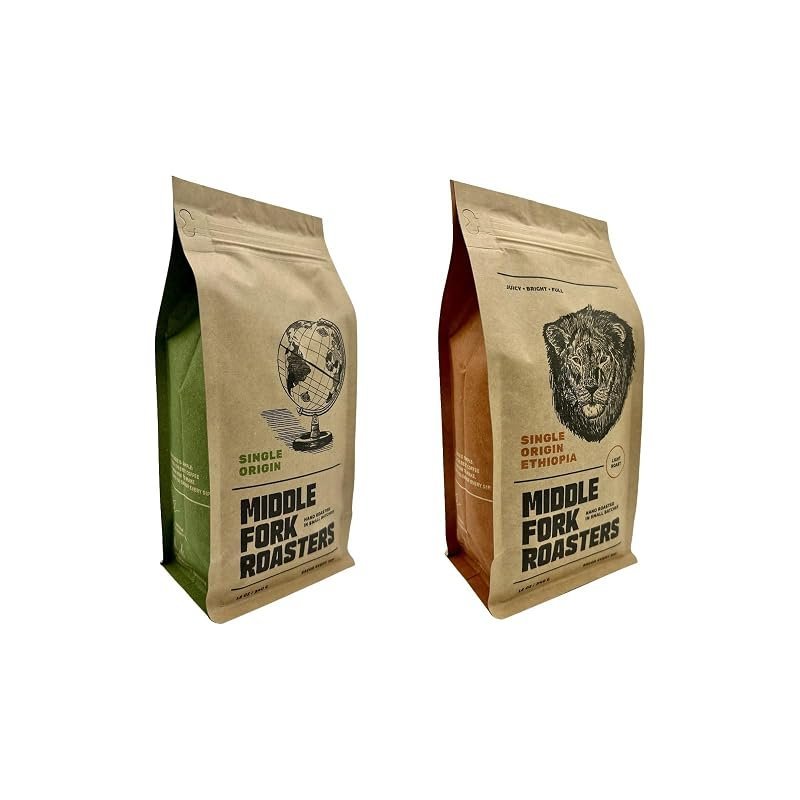
Bean Box Coffee Sampler, Single Origin, 2-Pack, Whole Bean
Two origins, enough of each to actually learn them. The right first step if the goal is finding one coffee to commit to.
The short version
Rotate to find out what you like. Then stop rotating. The people who get conspicuously good at pour-over are almost never the ones with the most interesting subscription — they’re the ones who have brewed the same coffee forty times and know exactly what it does.