For about thirty years the specialty world has treated robusta as a punchline — the bean in the gas station pot, the filler in the supermarket can, the thing you put in espresso when you want crema and don’t care what it tastes like. That framing is getting harder to defend, and not because anyone in specialty changed their mind. Farmers are switching, and they’re switching in places you’d least expect.
Minas Gerais is planting robusta, and that should tell you something
Minas Gerais is the largest arabica-producing region on the planet. Growers there have started trialing robusta varieties — in the heartland of the crop that made Brazilian coffee famous. Nationally, Brazil’s robusta acreage has been expanding sharply, up roughly 22% year over year in recent reporting, helped along by irrigation and favorable weather in the robusta belt.
The reason is not that anybody woke up preferring the flavor. It’s that arabica has an unforgiving comfort zone. It wants roughly 15–24°C and elevations somewhere between 600 and 2,000 meters, and it gets miserable outside that band. Robusta will sit at sea level, tolerates a much wider temperature range, and carries genuine genetic resistance to coffee leaf rust — resistance so useful that breeders have spent decades crossing robusta genes back into arabica varieties just to borrow it. Projections that up to half of today’s arabica-suitable land could stop working by 2050 are what turn that agronomy into a business decision.
The uncomfortable part: robusta isn’t as robust as the name implies
Here’s the wrinkle nobody selling the switch likes to lead with. The assumed optimal range for robusta — that comfortable 22–30°C figure you see repeated everywhere — has been challenged by field data. Research looking at actual yields found that in the middle of that supposedly ideal band, above a mean annual temperature of about 25°C, production ran roughly 50% below what the same crop managed at a mean around 20°C or cooler. The species handles heat spikes better than arabica. It does not love heat.
So the honest read is that robusta is a hedge, not a solution. It buys a grower a wider margin for error in a climate that keeps eating margins. That’s also why you’re seeing attention move to third options entirely — excelsa is being scaled in Uganda and Vietnam by farmers reporting better resilience and better economics than robusta. If you want the market-side version of this story, the supply squeeze piece covers what it’s doing to prices.
What it actually does to the cup
Robusta is a chemically different drink, and the differences are not subtle. Caffeine runs about 2.2–2.7% versus roughly 1.2–1.5% in arabica. Chlorogenic acid content is substantially higher. Both of those read on the palate as bitterness — not the pleasant cocoa-nib bitterness of a dark-roasted arabica, but something flatter and more rubbery when the lot is mediocre. You get heavier body, more crema under pressure, and far less of the bright fruit acidity that pour-over people spend their money chasing.
The part worth knowing is that there is now a grading system that takes robusta seriously on its own terms. The Coffee Quality Institute runs a separate Q Robusta protocol with its own cupping form — it swaps the acidity score for a salt/acid ratio, because scoring robusta against arabica’s acidity expectations is a rigged test. Clear 80 points on that scale and the lot is classified Fine Robusta. Well-made fine robusta is not arabica-lite; it’s a different thing that can be dense, dark-fruited, and worth sitting with. Badly made robusta is still awful. The gap between the two is enormous, which is exactly why the old punchline persisted.
Three bags that let you taste the argument
If farms are shifting, your shelf eventually shifts too, and you may as well find out now whether you actually hate robusta or just hate bad robusta. These are affiliate links — buying through them supports the site at no extra cost to you.
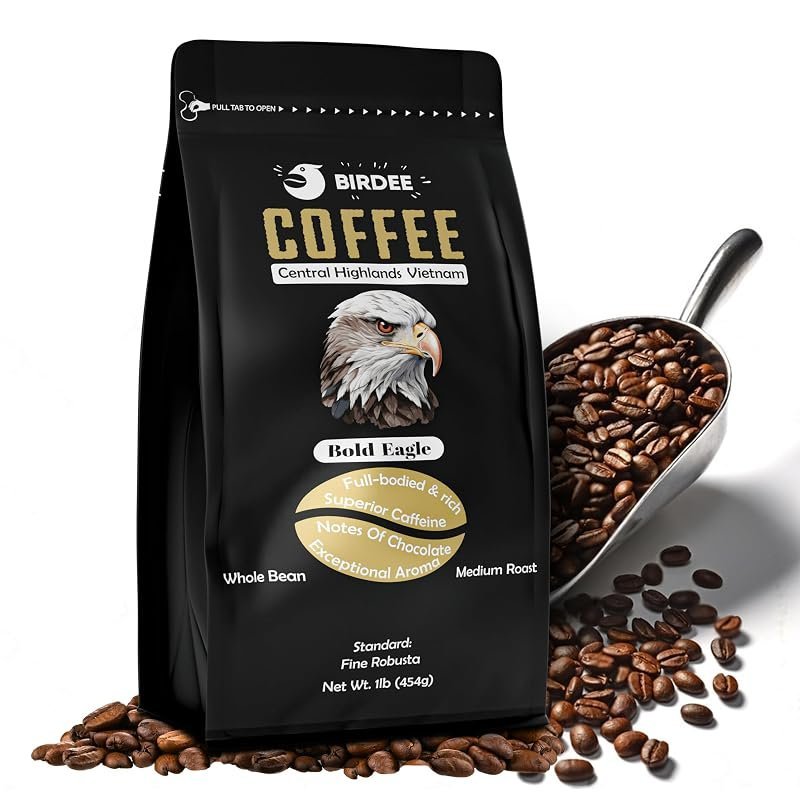
Start at the top. Birdee’s Vietnamese robusta is sold against the Fine Robusta standard, medium roasted, whole bean, and it’s the fairest test of the question. Brew it as a phin or an espresso before you try it as pour-over — robusta’s density and low acidity want pressure or long immersion, and a V60 will expose its flat midrange faster than anything else. Go a click coarser than your arabica setting and use water closer to 200°F.
Birdee Robusta Coffee Beans, 16 oz
Vietnamese single origin roasted to meet the Fine Robusta standard. Bold and heavy without the rubber note that gives the species its reputation. Best through a phin or espresso.
The more interesting bag is Nguyen Coffee Supply’s Hanoi Robusta, because it’s a direct-trade Vietnamese robusta roasted in Brooklyn by a company whose entire premise is that American specialty got this bean wrong. It’s a dark roast and it leans into that — figgy, thick, aggressively caffeinated. If you want to understand why anyone would defend robusta as a category rather than tolerate it, this is the one that makes the case.
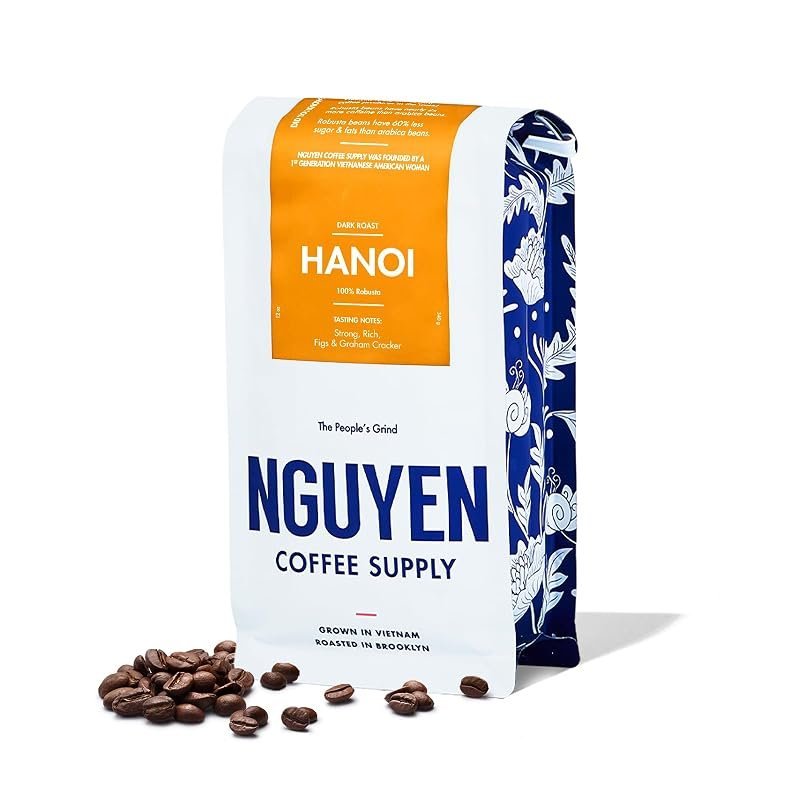
Nguyen Coffee Supply Hanoi Robusta, 12 oz
Direct-trade Vietnamese robusta, dark roast, roasted in Brooklyn. Dried fig and dark chocolate, enormous body, a caffeine load you will notice by mid-morning.
Then buy a control. Trung Nguyen’s Premium Blend is a cheap arabica-robusta ground blend, and it earns its place here as a reference point — this is what robusta tastes like when nobody is trying, which is the version that built the bean’s bad name. Cup it next to the other two and the difference between commodity robusta and graded robusta stops being an abstraction.
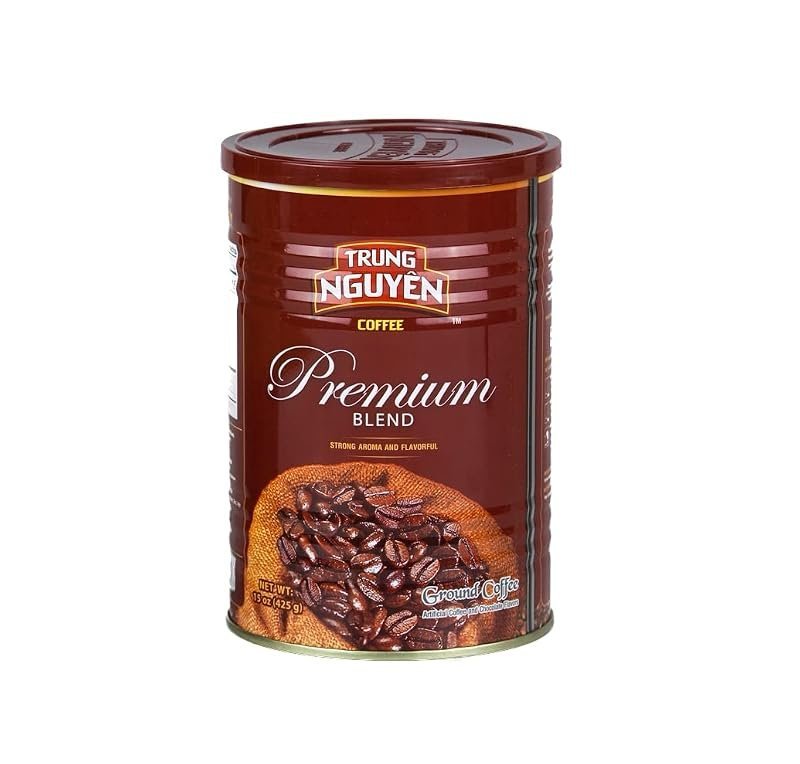
Trung Nguyen Premium Blend, 15 oz can
An inexpensive Vietnamese arabica-robusta ground blend. Not a recommendation on its own merits — buy it as the baseline that makes the other two legible.
Where this leaves you
Nothing about this means arabica is going away, and if you drink light-roast Ethiopians for the florals, robusta is never going to replace that. But the blend in the bag behind the counter is quietly changing composition, and the species being blended in has a quality ceiling most drinkers have never encountered. Spending twenty dollars to find out where your own line is seems like a better plan than repeating a verdict you inherited from a 1990s diner pot.