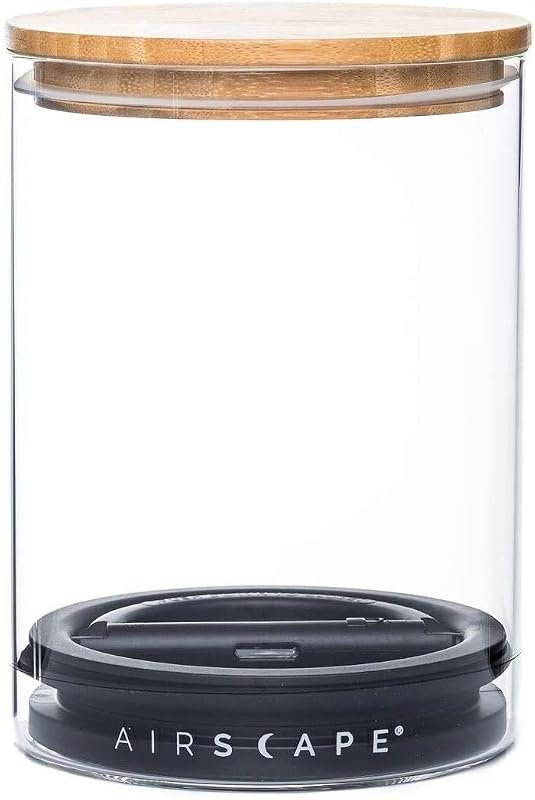
Glass is the material people actually want on their counter. Steel canisters win on paper and then sit there looking like lab equipment, which is why every kitchen-gear roundup recommends steel and every kitchen I have ever stood in has a glass jar of beans next to the grinder. Fine — glass works. But it has exactly one weakness, and almost every “best canister” list skips it, so let’s deal with that before the picks.
What actually goes wrong with stored beans
Four things degrade roasted coffee, and they do not matter equally. Oxygen is the main villain: it reacts with the volatile aromatic compounds that make a coffee smell like anything, and once those are gone they do not come back. That’s why the good canisters are not merely airtight — they physically remove air from the container instead of sealing a headspace of it in with your beans.
Second, carbon dioxide. Roasting generates CO₂ inside the bean, and it vents out for days after the roast date — most of it in the first few days, with the tail continuing for weeks. That’s what the one-way valve on your coffee bag is for: it lets CO₂ escape so the bag doesn’t balloon, without letting oxygen back in. A fully sealed container with no valve and fresh beans in it will pressurize a little. Not dangerous, but you want a container that handles it.
Third — and this is glass’s specific problem — light. Photodegradation breaks down the same aromatic compounds oxygen does, and a clear jar is a window. Comparisons of opaque versus clear storage consistently favor opaque, sometimes dramatically. This does not disqualify glass. It means the jar belongs in a cabinet, not on a sunny windowsill where it looks nicest. If you cannot bring yourself to hide it, at least keep it out of direct sun.
Fourth, heat and moisture, which is mostly an argument about the freezer. I covered that one in the coffee myths post, so I won’t relitigate it here.
So why buy glass at all?
Because it is chemically inert and it does not hold odor. Plastic picks up the smell of whatever dark roast lived in it three bags ago; borosilicate glass does not, ever. You can also see your level at a glance, which sounds trivial until you have ground your last 14 grams without realizing it. Same reasoning as the cold brew bottles — glass is the material that tastes like nothing.
Three glass canisters worth the money
These links are affiliate links, so I earn a commission if you buy through them — it costs you nothing extra and does not change what I recommend.
The one I’d buy is the AirScape in borosilicate glass. Its whole design is an inner plunger lid that you press down onto the beans, forcing the air out through a two-way valve before you cap it with the bamboo top. Instead of sealing a jar half full of oxygen, you end up with beans and very little else, and the volume shrinks as you use the coffee. The 7-inch medium holds about a pound. It is the only pick here that solves the oxygen problem mechanically rather than just resisting it.
AirScape Borosilicate Glass Canister (Medium, 7-inch)
Patented inner plunger lid pushes air out through a two-way CO₂ valve; bamboo top lid, thick borosilicate body, holds roughly a pound of whole bean.
If you want the nicest object rather than the cleverest one, the glass Fellow Atmos is the upgrade. You twist the lid and it pulls a partial vacuum, which is a more satisfying mechanism than the AirScape plunger and does the same job by different means. It comes in 0.4, 0.7 and 1.2 liter sizes — roughly 6, 11 and 16 ounces of whole bean — and there is now a battery-powered version that reseals itself. Pay attention to which size you are adding to the cart, because the small one is smaller than people expect.
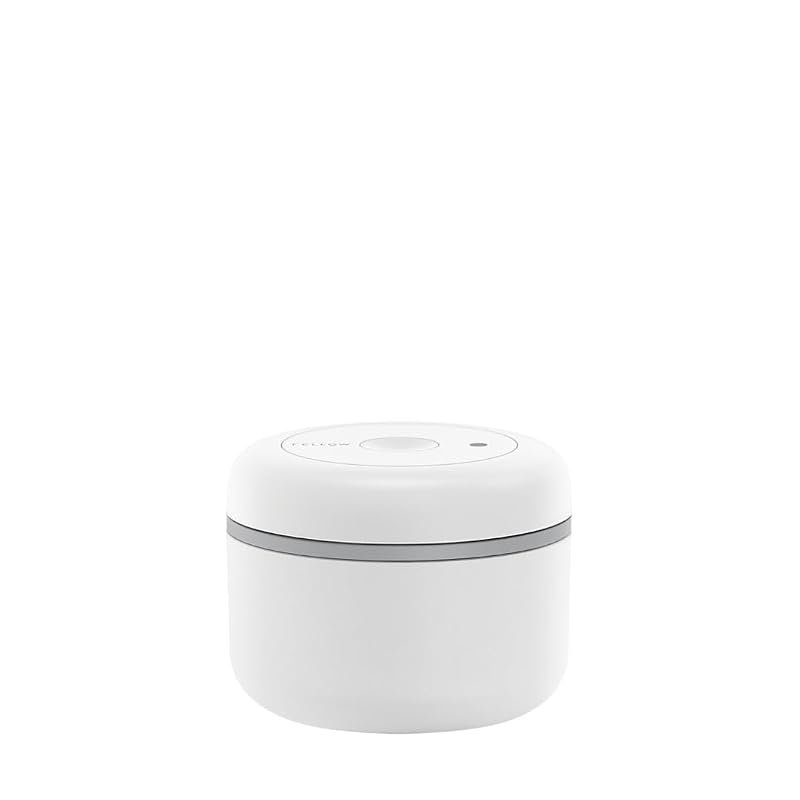
Fellow Atmos Vacuum Canister, Glass
Twist the lid to vacuum out air; silicone gasket seals against moisture and odor. Sold in 0.4L, 0.7L and 1.2L glass versions — check the size before you buy.
And if you think spending $40 on a jar is absurd, you are not wrong. A Bormioli Rocco Fido does 80 percent of the job for a fraction of it: Italian-made, thick glass, wire bail clamp pulling a rubber gasket down tight. No valve, no air removal — it seals the oxygen in rather than pushing it out, so it’s the weakest pick on the actual science. It is also the pick that makes the most sense if you buy in two-week quantities and drink the bag before oxidation has time to matter. They come two to a box, which covers beans plus something else.
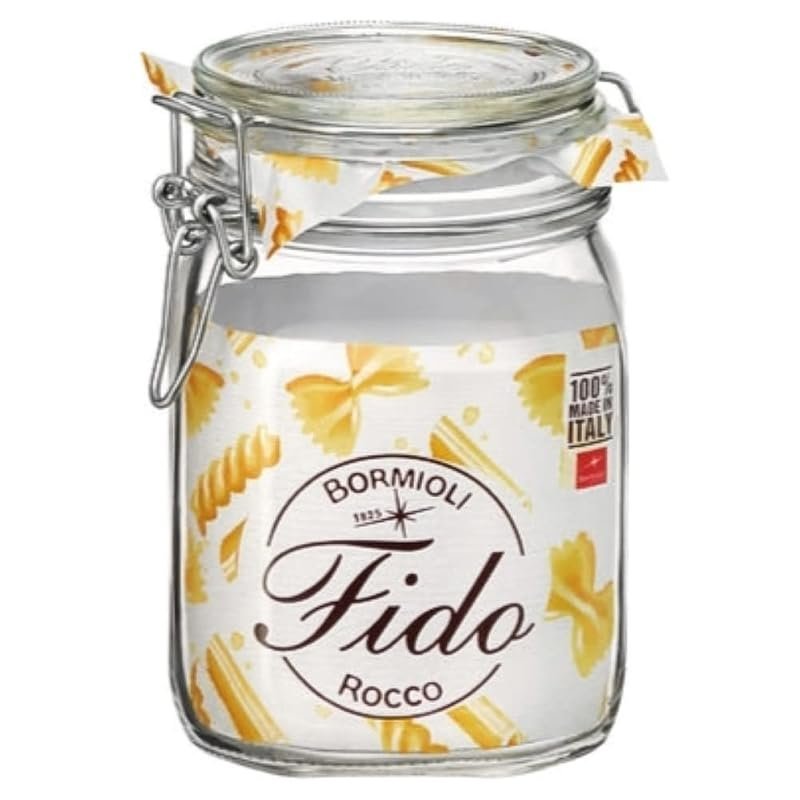
Bormioli Rocco Fido Glass Jars, 33.75 oz (2-pack)
Airtight rubber gasket and stainless bail clamp, made in Italy. No air-removal mechanism, so buy smaller bags and keep it in a cabinet — but hard to beat for the price.
Using one properly
Buy roughly two weeks of coffee at a time and the container matters far less than people think — freshness is a purchasing habit before it is a hardware problem. Keep whole beans, not ground; surface area is what oxygen attacks, and grinding multiplies it enormously. Put the jar in a cabinet rather than beside the kettle, where it catches both light and heat. And don’t decant a bag you just bought from the roaster if it already has a valve on it — that bag is a better container than most canisters until you open it.