Iceland has about 400,000 people, four months of usable winter daylight, and a coffee habit that puts it third in the world per person. By any reasonable logic Reykjavik should be a footnote in specialty coffee. Instead it has a roasting scene that punches several weight classes above its population, built on Nordic light roasting and some of the softest tap water on earth. Here is what actually makes it distinct, and how to get close to that cup from a kitchen nowhere near Iceland.
A country that drinks this much coffee gets good at it
Iceland sits third globally at roughly 9 kg of coffee per person per year, behind Finland at about 12 kg and Norway at about 9.9 kg. All five Nordic countries land in the global top ten, which makes northern Europe the most coffee-saturated region on the planet. That is not a quirk of national palate — it is long dark winters, a domestic culture where the pot is permanently on, and cafés where a refill is assumed rather than itemized. Volume by itself does not produce quality. What it produces is a population with opinions, and a population with opinions is the thing a specialty scene needs in order to survive.
Mokka Kaffi, 1958, and the espresso machine nobody asked for
Reykjavik’s coffee story has an unusually clear starting gun. Mokka Kaffi opened on Skólavörðustígur in 1958, run by Guðmundur Baldvinsson and Guðný Guðjónsdóttir. Guðmundur had studied art in Italy and came home convinced espresso was worth importing. He brought in Iceland’s first espresso machine and began serving espresso, cappuccino and café latte to a city with no frame of reference for any of it.
The reception was skeptical. It stuck anyway. Mokka is still open on the same street, still wearing most of its original Art Deco interior, and still better known locally for its waffles than its espresso — which is its own kind of credential. Sixty-odd years of continuous operation is a longer track record than most of the roasters currently being written about.
The third-wave shop that opened two months after the banking collapse
The modern scene starts in 2008, under circumstances nobody would pick. Kaffismiðja Íslands opened its doors roughly two months after Iceland’s banking system collapsed — arguably the worst possible moment in a generation to launch a café dependent on expensive imported green coffee. It survived, and became Iceland’s first true third-wave shop as well as the first place in Reykjavik roasting on site. It was rebranded Reykjavík Roasters in 2013 and now runs a 6 kg Giesen out of a small café on Kárastígur, with a second location on Brautarholt.
The founders are the real explanation for the quality. Sonja Björk Grant had already pioneered Icelandic specialty coffee at Kaffitár and later went on to chair the Coffee Roaster Guild internationally. Ingibjörg “Imma” Jóna Sigurðardóttir won the Icelandic Barista Championship in 2006 and again in 2007. That is competition-level pedigree sitting behind a corner shop in a city of roughly 140,000 people, and it is most of the answer to why Reykjavik over-delivers.
“Nordic roast” is a real thing. “Scandinavian Blend” usually is not.
This is where a supermarket shelf will actively mislead you. Nordic roasting, as practiced in Reykjavik, Oslo and Copenhagen, means light: developed quickly, pulled early, aimed squarely at filter brewing rather than espresso. Acidity is not treated as a defect to be roasted away — it is the entire point. You get florals, stone fruit, a tea-like body, and a cup that tastes like a particular farm instead of tasting like roast.
Now go read a bag labeled “Scandinavian Blend” in an American grocery aisle. More often than not it is a dark roast. The word has drifted into marketing shorthand for “strong,” which is close to the opposite of what Nordic roasters are doing. If you want the Reykjavik cup, ignore the geography on the front of the bag and read the roast level on the back.
And if bright, acidic coffee has historically tasted thin or sour to you, that is far more often a brewing problem than a bean problem. We went through the mechanism in detail in why Kenyan coffee has that signature bright acidity, and it applies here in exactly the same way.
The water is doing some of the work
This part gets left out of city write-ups and it should not be. Icelandic cold tap water is glacial and spring-fed, barely treated, and very soft — low mineral content across the board. The hot tap is a completely separate supply: geothermal, and faintly sulfurous, which is why every café in the country brews off the cold line as a matter of course.
Soft, low-alkalinity water happens to be close to ideal for light roasts. There is not enough buffering mineral content to flatten the acidity, so the fruit and floral notes arrive intact rather than muted. A café in Reykjavik gets that for free, out of the tap, with no equipment. If you live somewhere with hard municipal water, your light roasts are being partially neutralized before they reach your cup — which is the whole argument of our post on water chemistry and pour-over, and the reason the third pick below is not a bag of coffee.
What to buy if you want this cup in your kitchen
Reykjavík Roasters does not retail in the United States through Amazon, so pointing you at their bags here would mean pointing you at a dead link. Order direct from them if you are willing to eat international shipping, or buy a kilo at Keflavík on your way home. What follows is how to get the same style of cup from things that can be on your counter this week.
The links below are affiliate links. If you buy through one, this site earns a commission at no extra cost to you.
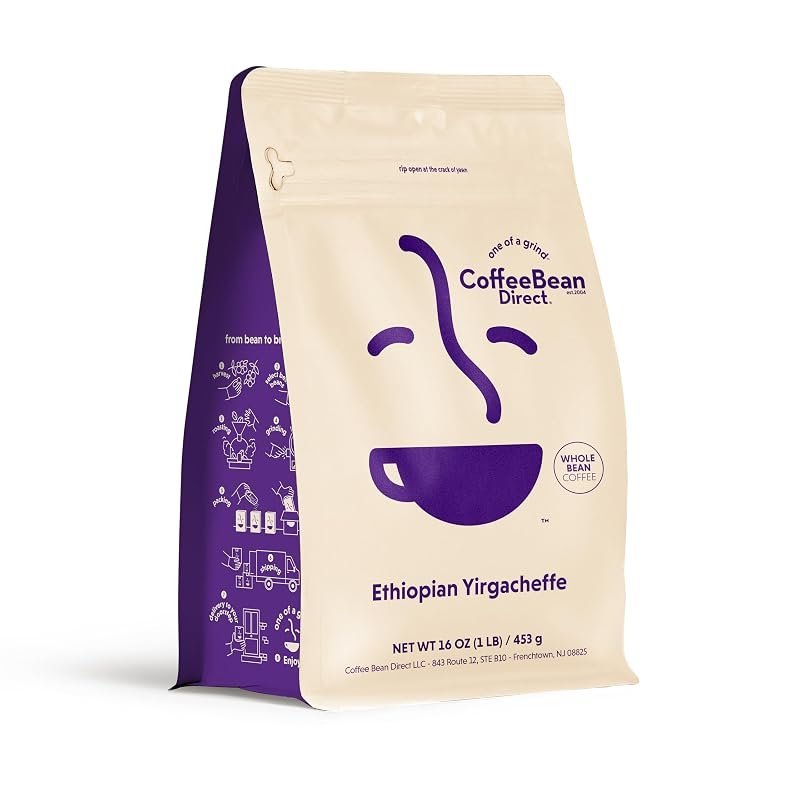
The archetype. Nordic roasters built their reputations on washed Ethiopian coffees, and Yirgacheffe is the reference point for the whole style: jasmine, citrus, a bergamot edge, more tea than syrup. Coffee Bean Direct’s Yirgacheffe is roasted light and sold in a 1 lb bag, which matters more than it sounds — this is coffee you want to drink through quickly rather than ration out of a 12 oz bag. It is not a micro-lot and it is not priced like one. It is a clean, representative version of the origin, and the right place to start if Nordic-style coffee is new to you.
Coffee Bean Direct Ethiopian Yirgacheffe, Light Roast, 1 lb
A light-roasted washed Yirgacheffe in a whole-bean pound bag — the reference origin for Nordic-style filter coffee, at a price that lets you drink it daily.
The Nordic-labeled bag that actually delivers. Most coffee sold under a Scandinavian name is dark. Sannes Coffee Co.’s Frokost Blend is the exception — a Norwegian-styled light roast, whole bean, 16 oz, with citrus up front and a berry sweetness sitting underneath it. “Frokost” means breakfast, and that is the honest use case: this is the pot-on-all-morning blend, not the weekend pour-over you fuss over with a scale and a timer. Buy it if you want something Nordic in spirit that forgives a sloppy brew.
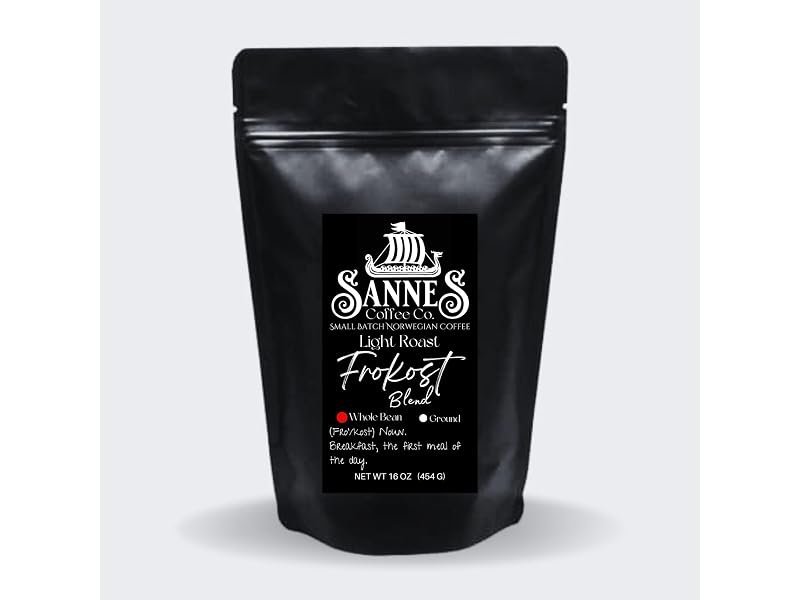
Sannes Coffee Co. Norwegian Frokost Blend, Light Roast, 16 oz
A rare Scandinavian-branded bag that is actually a light roast. Citrus and berry, smooth enough for a drip machine, roasted in small batches after you order.
The part almost everyone skips. If your tap water is hard, no bean fixes it. Third Wave Water’s light roast profile is a sachet of magnesium and calcium you drop into a gallon of distilled or reverse-osmosis water, mixed at deliberately low alkalinity so a light roast’s acidity reads as brightness instead of getting buffered into flatness. Twelve single-gallon sticks per box. For anyone brewing light roasts on municipal water this is the cheapest meaningful upgrade available, and it is as close as you will get to borrowing Iceland’s tap.
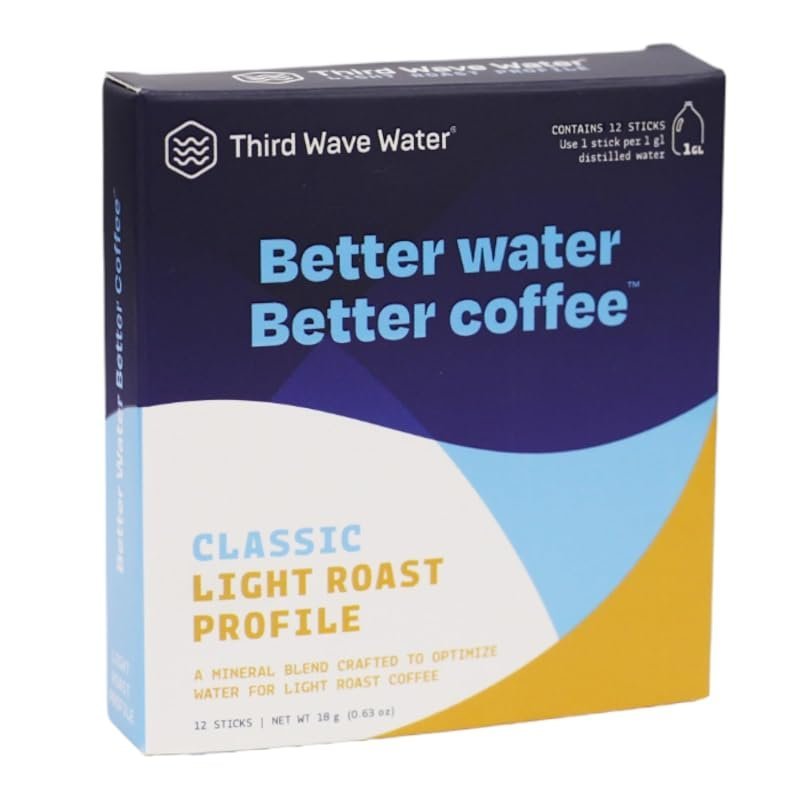
Third Wave Water Classic Light Roast, 12 Single-Gallon Sticks
Magnesium and calcium at low alkalinity, built to let a light roast’s acidity come through as fruit rather than sourness. Add to distilled or RO water.
The short version
Reykjavik is not running a secret technique. It is light roasts, soft water, filter brewing, and a flat refusal to roast the origin out of the bean — plus a population that drinks enough coffee to notice when someone does it badly. Two of those three variables are purchasable. For a city that built an equally serious coffee culture out of completely different materials, read our piece on great coffee you can find in Vienna.