“Volcanic soil” is probably the most overworked phrase in coffee marketing. It gets stamped on a bag the way “artisan” gets stamped on bread, and it almost never comes with an explanation of what the volcano is supposed to be doing. Guatemala is the one origin where you can actually test the claim, because the country has eight officially designated growing regions and three of them sit on no volcanic soil whatsoever.
That makes Guatemala a controlled experiment you can run in your own kitchen. Same country, same dominant varietals, same processing tradition — different rock underneath. Here is what the rock is actually responsible for, and what gets credited to it unfairly.
The three volcanoes that made Antigua famous
Antigua is the name everyone knows, and the geography is the reason. The valley sits ringed by three volcanoes — Agua, Acatenango, and Fuego, the last of which is still very much active — at roughly 4,600 to 5,600 feet. Centuries of ash fall have built a soil profile that exists nowhere else in the country.
ANACAFÉ, Guatemala’s national coffee association, recognizes eight regions: Antigua, Acatenango Valley, Traditional Atitlán, Volcanic San Marcos, Fraijanes Plateau, Rainforest Cobán, Nuevo Oriente, and Huehuetenango. Antigua’s reputation got formalized into a protected denomination of origin in 2000, and the producers’ association (APCA) certifies which lots can legally carry the name. That last detail matters when you shop: plenty of bags say “Antigua” because it sells, not because the coffee grew there.
Pumice does something more interesting than “adding minerals”
The mineral story is the one the marketing tells, and it is the least interesting part of what is happening. Antigua’s soil is largely volcanic pumice, and pumice’s defining property is not its chemistry but its structure. It is full of holes. That means it drains fast enough that roots never sit waterlogged, while still holding onto moisture between rains.
Antigua also has a hard, dependable dry season. Pair a pronounced dry stretch with a soil that drains freely, and you would expect stressed, struggling trees — except subsurface water moving off the volcanic slopes keeps the root zone hydrated while the surface bakes. The tree ends up mildly stressed rather than badly stressed, and a mildly stressed coffee tree sets fewer cherries and ripens them slowly.
Fewer, slower cherries means more concentrated sugar per bean and a physically denser seed. Density is the part that reaches your brewer. Denser beans resist your grinder differently and give up their solubles more slowly, which is why a high-grown Guatemala often wants a slightly finer setting than its roast color suggests — see our piece on grind size for why a couple of clicks moves so much.
Three of the eight regions are not volcanic at all
Rainforest Cobán sits on clay and limestone, in a humid subtropical climate with far more annual rainfall and cooler average temperatures than Antigua. Nuevo Oriente, one of the oldest growing areas in the country, has no active volcanoes — its soil comes from metamorphic rock. And Huehuetenango, the highest and driest of the non-volcanic three, grows coffee in the northwestern highlands at elevations reaching 2,000 meters.
Huehuetenango is the interesting one, because it should not work. Coffee at that elevation ought to frost. It does not, because the Cuchumatanes mountain range blocks the cold air coming down off the plateau, creating a pocket of warm, dry air where cherries develop extremely slowly without ever freezing.
So Huehuetenango gives you the altitude without the volcano. If you have been told that volcanic soil is why Guatemalan coffee tastes good, this region is the counterexample sitting inside the same country — and it is frequently the better cup.
What the difference tastes like
Antigua leans heavy and sweet: full body, milk-to-dark chocolate through the middle, brown sugar or caramel sweetness, and acidity that is present but restrained. It gives the cup structure without ever turning citric. There is also a dry mineral edge on the finish that people reach for the volcano to explain, and in this case the reach is probably fair.
Huehuetenango goes the other direction — brighter, more fruit, sometimes floral, with noticeably more acidity. That is the slow high-altitude development talking, the same mechanism we unpacked in why Kenyan coffee tastes so bright. Varietals are not the variable here: Bourbon, Caturra, and Catuai dominate both regions.
Which is the whole point. If you have only ever had one Guatemala, you have formed an opinion about an entire country from a single set of growing conditions. Buy two bags from opposite ends of it and the generalization falls apart in about one brew.
Three bags that let you run the comparison
Some links below are affiliate links, which means we may earn a commission if you buy through them — at no extra cost to you.
Start with the benchmark. If you want to taste what the volcano argument is actually about, you want a real Antigua, and this Cubico lot is the one that is reliably in stock. One caveat worth being upfront about: every whole-bean Antigua listing we checked was unavailable, so this is pre-ground. For a pour-over site that is a compromise, and we are not going to pretend otherwise — buy the smallest bag, drink it inside two weeks, and treat it as a reference sample rather than your daily driver.
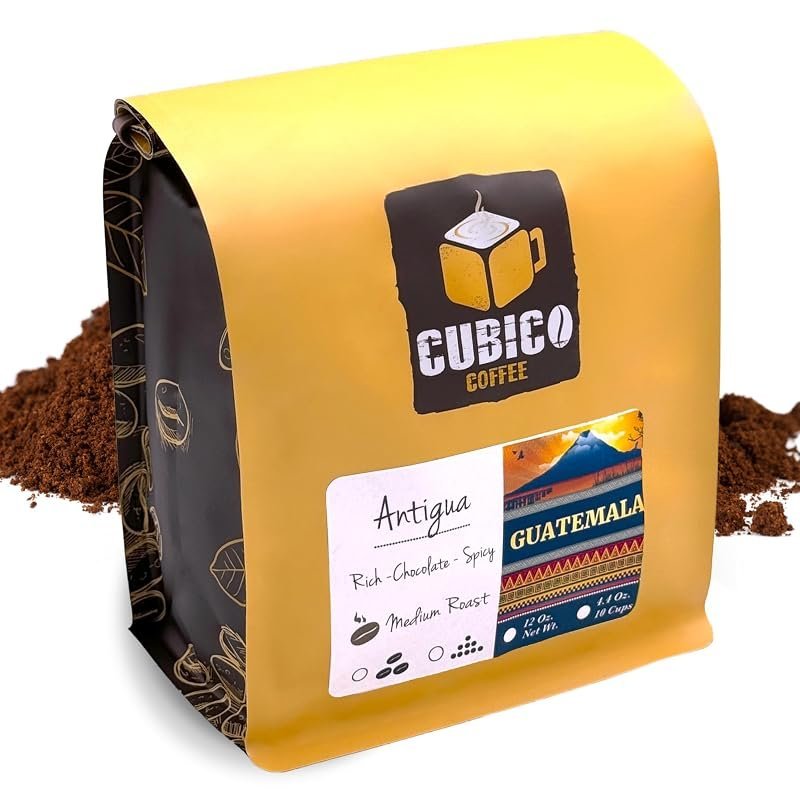
Cubico Coffee Guatemala Antigua
Chocolate-forward with a hint of citrus and the soft, rounded acidity the region is known for. Pre-ground, so buy small and brew it fast.
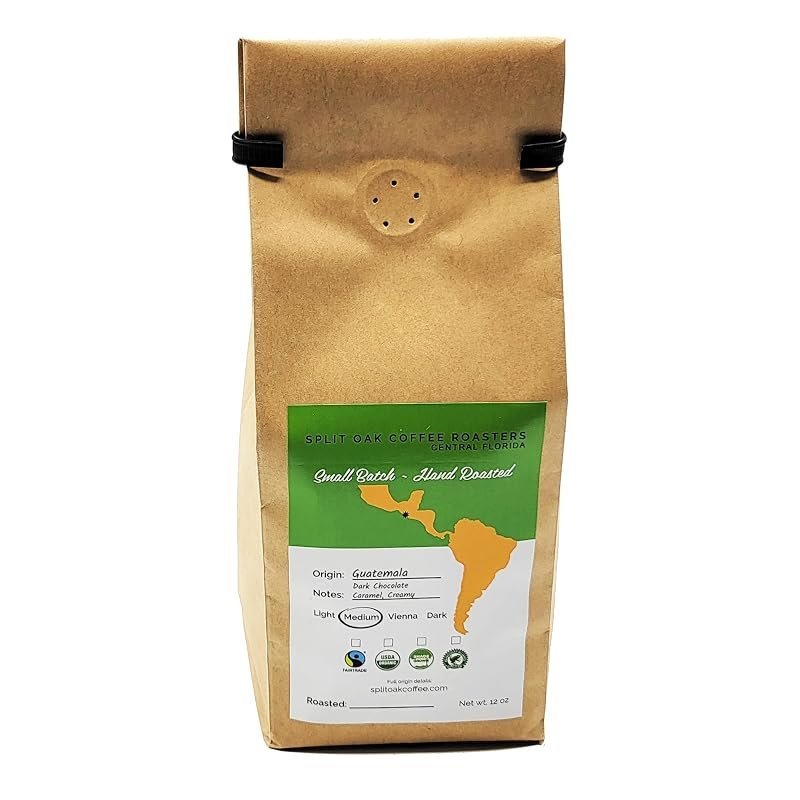
Then the counterweight. This Split Oak Huehuetenango is the bag we would actually keep around: organic, shade-grown, whole bean, and small enough that it stays fresh. Brew it next to the Antigua and the acidity difference is not subtle. The shade-grown label is doing real work on a farm at this elevation too, for reasons we got into in our shade-grown explainer.
Split Oak Organic Guatemala Huehuetenango, 12 oz
Fair-trade, organic, shade-grown whole bean from the non-volcanic highlands. Brighter and fruitier than any Antigua, which is exactly the point of buying it.
And if the comparison convinces you, buy Huehuetenango by the sack. Fresh Roasted’s five-pound bag lists Bourbon and Caturra, fully washed and patio sun-dried, from farms between 1,200 and 2,000 meters — which is the specificity you want to see on a bulk listing. Five pounds is more than most people should keep at room temperature, so split it and seal it properly.
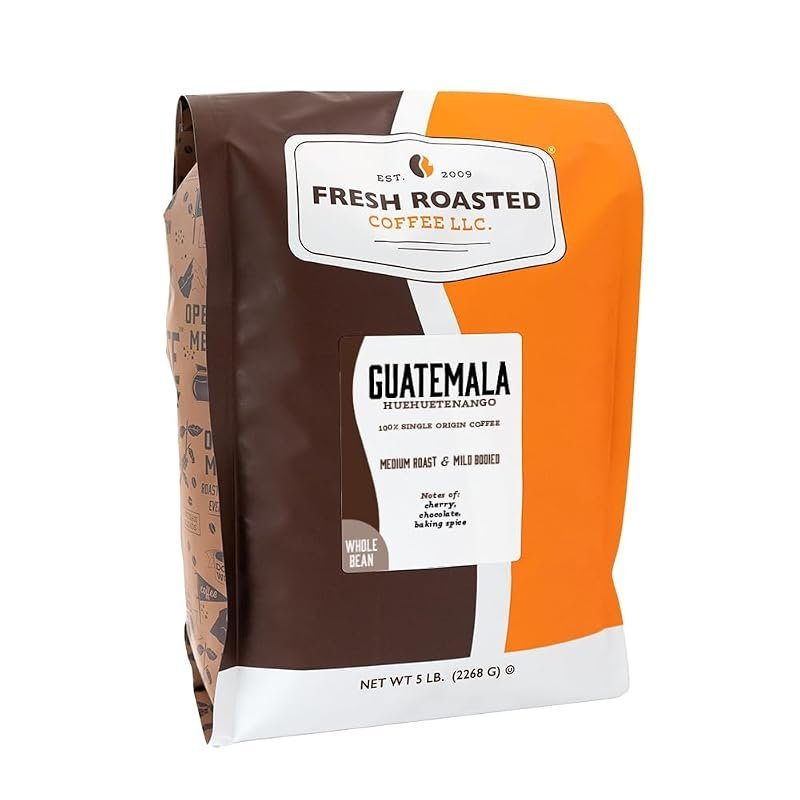
Fresh Roasted Coffee Guatemala Huehuetenango, 5 lb
Bourbon and Caturra, washed and patio-dried, 1,200–2,000 m. Medium roast, whole bean, and priced like a staple rather than a treat.
The short version: volcanic soil in Guatemala is real and it does something specific — it manages water, which manages bean density, which manages how your coffee extracts. What it does not do is make Guatemalan coffee good by itself. Altitude, shade, and a mountain range blocking the wind get at least as much credit, and the country keeps a region on hand to prove it.