Every January, a certain kind of shopper walks into the coffee aisle with a resolution and walks out with a bag that says BOLD on it in capital letters. The logic is reasonable enough: the mornings are dark, the alarm is earlier than it was in December, and the coffee should probably do more work. The problem is that “bold” is one word doing three unrelated jobs, and buying the wrong one is how you end up with something that tastes like a campfire and still doesn’t wake you up.
“Bold” is a marketing word, not a measurement
No standards body defines it. On a bag it can mean roast level (how dark the beans were taken), body (how heavy and thick the coffee feels in your mouth), or caffeine (how hard it hits). Those are three separate properties, and a coffee can be emphatic in one and thin in another. A French roast can be dark and still feel watery. A medium-roast Sumatra can feel heavier than either. So before you spend money, decide which of the three you’re actually shopping for — because the beans that deliver them are not the same beans.
The caffeine question, mostly settled
There are two competing myths here and both are wrong. The old one says dark roast has more caffeine because it tastes stronger. The newer internet correction says roasting burns the caffeine off, so dark roast has less. The correction has been repeated so confidently for so long that it’s now the more common error.
Caffeine is very stable through roasting. Writing in Sprudge about Juliet Han’s HPLC study on caffeine and roast level, Nick Cho put it about as plainly as it can be put: you would have to roast coffee past the point of turning it into charcoal before the caffeine would chemically change. What roasting actually changes is density. Dark-roasted beans are less dense, so a gram of dark roast contains more individual beans than a gram of light roast.
Han measured it both ways, and the darker roasts came out higher in caffeine either way — roughly a 9% spread from lightest to darkest when measured by the scoop, and roughly 32% when measured by weight. Her own illustration: about 16 ounces of the light roast brew carries the caffeine of about 12 ounces of the dark.
So dark roast is not a caffeine penalty. But read that spread again. A 9–32% difference is not what anybody means when they say their coffee needs to be stronger. Roast level is simply the wrong lever to be pulling.
The levers that actually move the needle
Two things actually change how much caffeine ends up in the cup. The first is species: robusta carries considerably more caffeine than arabica, along with a distinct flavor shift that I’ve written about in more detail elsewhere. The second is dose — grams of coffee per ounce of water — which is entirely under your control and swamps every other variable on this list.
Worth saying plainly before the recommendations: the product links below are affiliate links, so I earn a commission if you buy through them.
Which brings us to the obvious New Year’s purchase. Caffeine Informer lists Death Wish at 728 mg of caffeine per 12 fl oz, based on samples tested at EMSL Food Chemistry Lab in 2015 that came back between 200 and 210 mg per 100 ml. Two caveats belong next to that number. The same page notes that later testing by SDS Agri Food Laboratory found significantly less caffeine than the EMSL round. And Death Wish’s own recommended recipe is two and a half tablespoons of ground coffee per 6 fl oz of water, which is close to double a conventional dose. A meaningful share of that headline figure is the recipe, not the bean.
Strip the marketing away and what remains is still a high-caffeine coffee: a dark roast built on a blend of robusta and arabica, which will hit harder than whatever is currently in your cupboard. Buy it for that reason. Don’t buy it because of a number on a comparison chart.
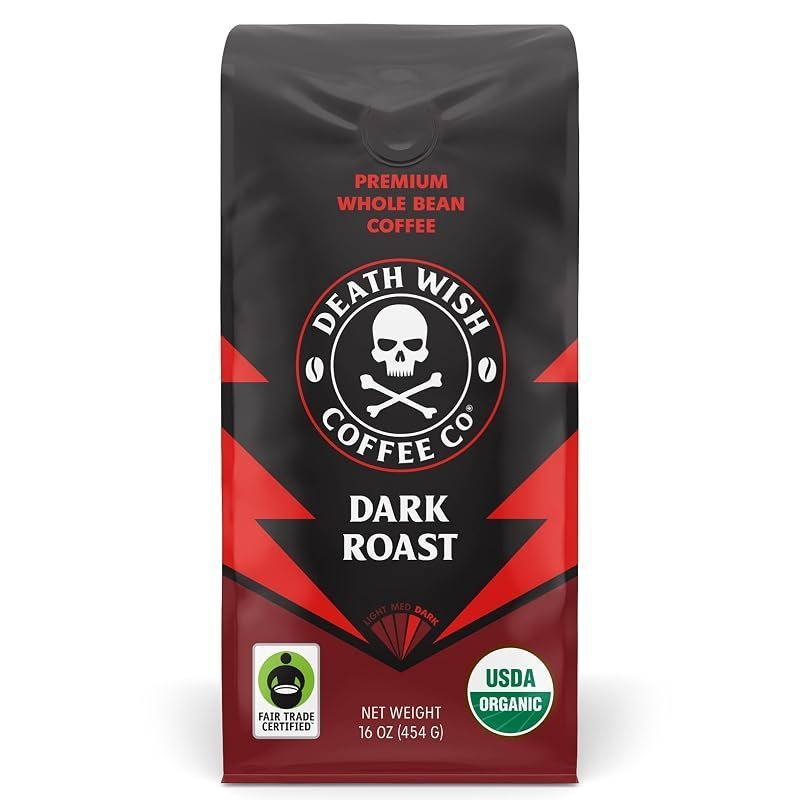
Death Wish Coffee Organic Dark Roast, Whole Bean, 16 oz
A robusta-and-arabica dark roast, organic and Fair Trade, with baker’s chocolate and cherry notes and low acidity. The caffeine claims are shakier than the branding suggests, but the bean choice is real and so is the effect. Grind coarse and dose normally unless you specifically want the full experience.
If what you want is depth, not a jolt
Most people who say they want bolder coffee don’t want more caffeine at all. They want presence — weight on the palate, sweetness that survives a splash of milk, something that doesn’t taste hollow by the bottom of the mug. That quality is body, and it is the thing Major Dickason’s Blend does better than almost anything else at its price.
The backstory is unusually well documented for a supermarket blend. Alfred Peet opened his shop at Vine and Walnut in Berkeley on April 1, 1966. In 1969 a retired army sergeant named Key Dickason — described in Peet’s own company history as a good friend, and on the current product page as a loyal customer — suggested an idea for a blend. The two of them sampled combination after combination before settling on one, and Peet named it after him, promoting him from sergeant to Major in the process. It has been the company’s best seller ever since.
What makes it work is the construction: Latin American and Indo-Pacific beans, washed and wet-hulled. That wet-hulled portion is the Sumatra-style processing responsible for the heavy, earthy, low-brightness character that gives the blend its weight. Peet’s publishes its own numbers for it — roast 75 out of 100, body 75 out of 100, brightness 56 out of 100 — which is an honest description of a full-bodied dark roast that hasn’t had its acidity roasted into oblivion. The company lists French press and pour-over as recommended methods, which is a more candid recommendation than most dark roasts get, and it holds up.
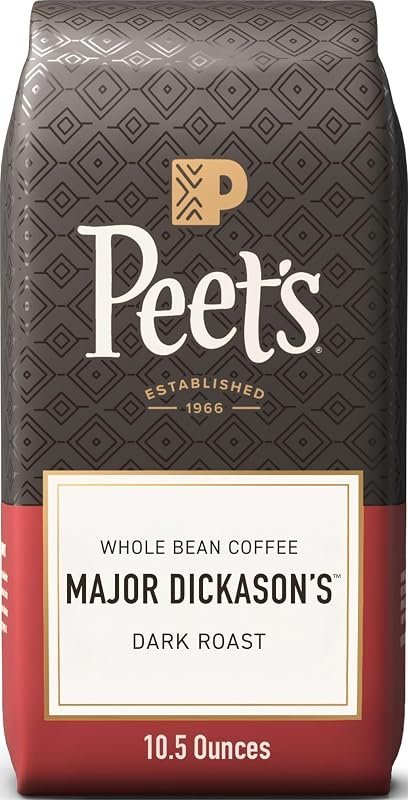
Peet’s Coffee Major Dickason’s Blend, Dark Roast Whole Bean
The one I’d hand to someone who said they wanted bolder coffee without asking a follow-up question. Full body, enough brightness left to keep it interesting, and forgiving across brew methods. It rewards a coarser grind and water just off the boil.
Dark roast without the scorch
The failure mode of inexpensive dark roast is ashiness — beans taken dark enough to paper over defects in the green coffee, which leaves you drinking the roast instead of the coffee. Kicking Horse is the useful counter-example in that price bracket. Elana Rosenfeld and Leo Johnson started the company in 1996 in Invermere, a small town in the British Columbia Rockies, roasting organic and fair-trade beans out of a garage at a point when neither was a mainstream category in Canada. The company is still based in that same town.
Kick Ass is their dark roast, and the name manages to oversell the caffeine while underselling the roasting. It is properly dark and it is not carbonized, which is a narrower target than the shelf full of competitors would suggest.
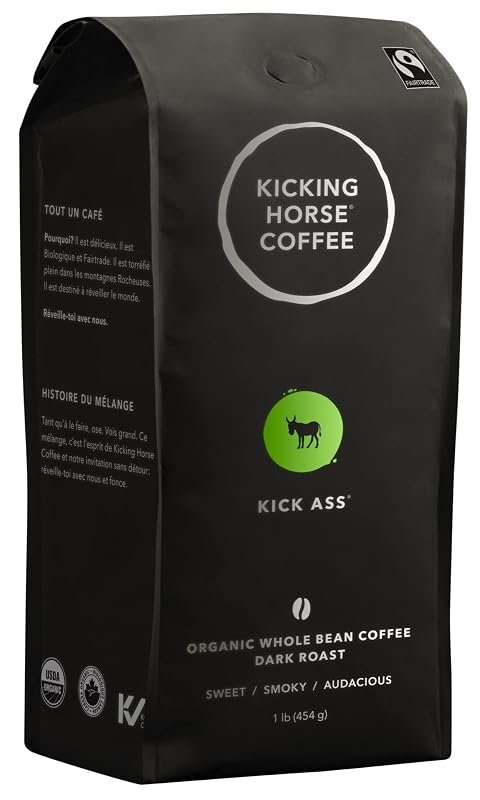
Kicking Horse Coffee Kick Ass Dark Roast, Whole Bean, 1 lb
Organic and fair-trade dark roast from a roaster that was doing both before it was a selling point. Smoky and full without the ashy finish that sinks most dark roasts at this price. The 1 lb bag is the sensible size unless you drink a lot of it.
How to brew a bold blend without making it bitter
Dark roast is more soluble and more brittle than light roast, which means it gives up its solubles faster and over-extracts in a brew window where a lighter coffee would still be developing. If a bold blend tastes harsh, the brew is usually at fault before the bean is. Three adjustments, in order of how much they help:
- Grind coarser than your light-roast setting. Brittle beans shatter into more fines at the same setting, and fines over-extract first — the mechanism is the same one covered here. Two clicks coarser is a reasonable starting point.
- Back the water off the boil. Somewhere around 195–200°F rather than a full 212°F. Dark roast does not need the extra energy and punishes you for it.
- Dose by weight, not by scoop. Here the density difference described above has real consequences: a level scoop of dark roast is less coffee than a level scoop of light roast, so scoop-based recipes quietly under-dose you exactly when you were trying to go stronger.
What I’d buy in January
Major Dickason’s for the everyday bag, because body is what most people are after when they reach for the word bold. Death Wish for the specific mornings that have earned it, with clear eyes about how much of its reputation is recipe rather than bean. Kicking Horse if the organic certification matters to you and you don’t want to pay a specialty premium for it. And if what you actually want this season is the opposite — brighter, lighter coffees to drink while it’s cold out — those are over here.