Starbucks closed its 2026 fiscal year at the end of October and spent an hour on the phone telling investors how it went. Almost none of that hour was aimed at people who brew coffee at home. But a quarterly report from the largest coffee buyer on earth is still the closest thing this industry has to a weather report, and if you read past the cheerleading there are two or three numbers in there that say something real about what you’ll pay for beans next year.
So: not a stock take. We’re not in that business and nothing below is investment advice. This is an exercise in reading a corporate earnings release the way you’d read a crop report — looking for the parts that touch your kitchen.
The headline numbers, quickly
On the fiscal fourth-quarter call, management reported global comparable store sales up 7.2 percent, the fifth straight quarter of comp growth. North America company-operated stores came in at 7.9 percent, with the U.S. specifically at 7.7 percent. International company-operated comps were up 0.9 percent. Consolidated net revenue for the quarter was $9.1 billion, down 3.9 percent year over year, while the full fiscal year landed at $37.9 billion, up 2.1 percent. Adjusted earnings came in at $0.80 per share for the quarter and $2.72 for the year, with quarterly operating margin near 14 percent — up about 450 basis points.
Sales up, revenue down. That contradiction is not a typo and it isn’t a coffee story at all: the company moved its China retail business to a licensed joint venture partway through the year, so those stores stopped counting as company revenue. Strip that out and the picture is a company whose stores are busier than they were. Worth knowing, mostly so you don’t mistake an accounting reshuffle for a collapse in demand.
The split that tells you what’s actually happening
Here is the number that matters, and it’s the one that never makes a headline. A comparable-sales figure is the product of two things: how many transactions happened, and how much the average transaction was worth. In North America, ticket rose about 5 percent and transactions rose about 2.7 percent. Internationally, ticket was up 3.7 percent while transactions fell 2.8 percent.
Read that again. Roughly two-thirds of the North American gain came from each customer spending more per visit, not from more customers walking in. Overseas, fewer people came and the whole gain came from the ones who did spending more. Management attributed the ticket growth to product mix, food attach, pricing, and higher delivery volume — which is a tidy way of saying the cold foam, the sandwich, the delivery fee, and a price increase. The coffee is the anchor tenant; the margin lives in everything you add to it.
None of that is a scandal. It is, however, a useful mirror. If your own daily spend has crept upward and you assumed prices were just going up, the company’s own numbers suggest a decent chunk of it is you ordering a slightly bigger, slightly more elaborate drink than you did two years ago.
The store count is doing something interesting
The chain finished the year with 41,607 locations globally and 617 net new stores for the year — a modest number by its own historical standards. North America actually shrank about 1 percent to 18,176 stores, after completing roughly 250 company-operated closures in September. Next year’s plan calls for about 1,200 net new coffeehouses, with the overwhelming majority of them outside North America.
A big chain pruning underperforming North American stores while building aggressively abroad is the same pattern we watched play out among independent roasters this fall. If you want the small-business version of that story, we wrote up the openings and closings worth tracking this quarter — the forces are similar even if the scale is not.
The line in there that affects your bean budget
Buried in the forward-looking section was the only sentence in the whole report I’d circle: the company said it expects modest coffee deflation in fiscal 2027, treating it as a year-over-year tailwind rather than a headwind. It also said any menu price increases would stay “well below CPI.”
A buyer at that volume hedges green coffee contracts months out. When they tell investors to model slightly cheaper coffee next year, that is a view on the futures market, not a guess — and it is the first time in a while that view has pointed down. After the stretch of record arabica pricing we walked through in our breakdown of what’s been going on with coffee prices, and the robusta and arabica supply squeeze that drove it, a signal that the pressure is easing is meaningful.
Temper it, though. “Modest” is doing real work in that sentence, a corporate hedging program is not a retail price, and a specialty 12-ounce bag from a small roaster is priced on a different logic than a container of commodity-grade green. Don’t expect your favorite bag to get cheaper. Expect it to stop getting more expensive quite so fast.
What to do with all this
The practical conclusion from a report about per-visit spend going up is unglamorous: the single largest lever on your coffee budget is the ratio of cups you make to cups you buy. That’s not a new idea and I won’t belabor it. What’s more interesting is which bag you buy, because the three obvious answers lead to very different cups.
A note before the links: the picks below are affiliate links, so a purchase through one may earn this site a commission at no extra cost to you.
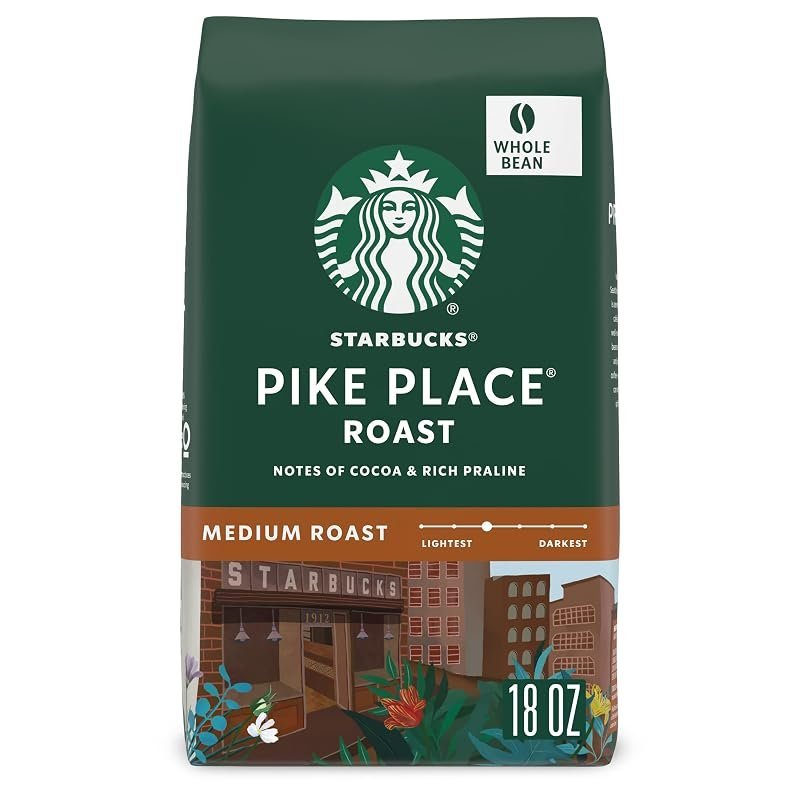
If what you actually like is that specific dark-leaning, cocoa-and-toast flavor you get from the chain’s drip — and plenty of people do, there’s no shame in it — then the honest move is to buy the same coffee in a bag rather than chasing it with a specialty roast that tastes nothing like it. Pike Place is their house medium and the closest thing to what comes out of the brewers in-store. Buy it whole bean, not pre-ground; the gap between the two is wider on a roast this dark than people expect.
Starbucks Pike Place Roast, Whole Bean (18 oz)
The chain’s house medium roast, which is what most of their brewed coffee actually is. Not a specialty bag and not pretending to be — it’s consistent, widely available, and tastes like what you already order. Grind it coarse-ish for pour-over and pull back on your dose slightly; dark roasts extract faster than their lighter counterparts.
If, on the other hand, the earnings report just reminded you that you’ve been paying specialty prices for commodity coffee, go the other direction. Intelligentsia’s Black Cat Analog is a real espresso blend from a roaster that helped invent American third wave, and it costs roughly what three or four drive-through lattes do for twelve ounces of beans. It’s built for espresso but behaves well in an AeroPress or a thick pour-over, with a syrupy body and dark-fruit sweetness that a supermarket dark roast can’t produce.
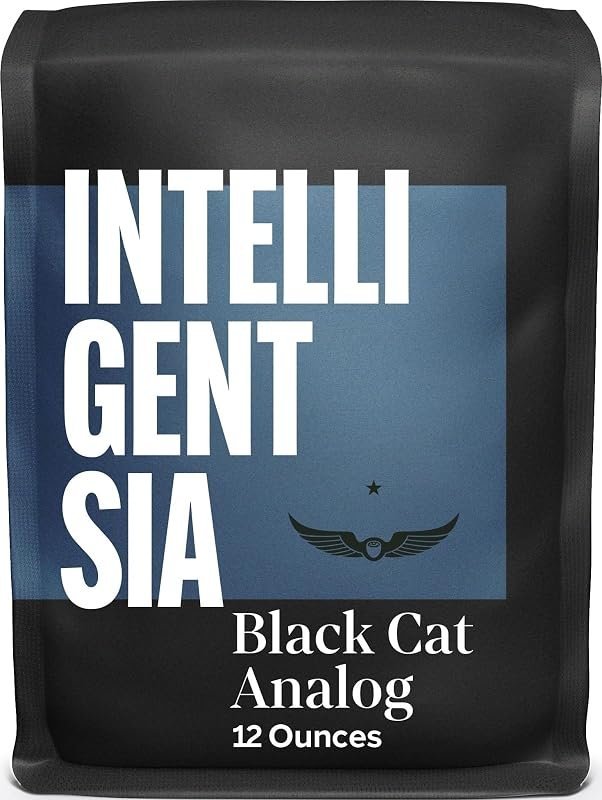
Intelligentsia Black Cat Analog, Whole Bean (12 oz)
A medium-roast espresso blend from Chicago’s Intelligentsia, and the clearest demonstration of what the extra few dollars per bag buys you: more sweetness, more texture, far less roast character masking the coffee underneath. Works as espresso, works as a concentrated pour-over.
And if your real habit isn’t drip at all but a milk drink twice a day, neither of the above is your bag. You want something built to cut through steamed milk without turning bitter, in a quantity that doesn’t require reordering every ten days. Lavazza’s Super Crema is an unfashionable, extremely competent answer to that — a crema-heavy Italian-style blend with enough robusta in it to stay present under four ounces of milk.
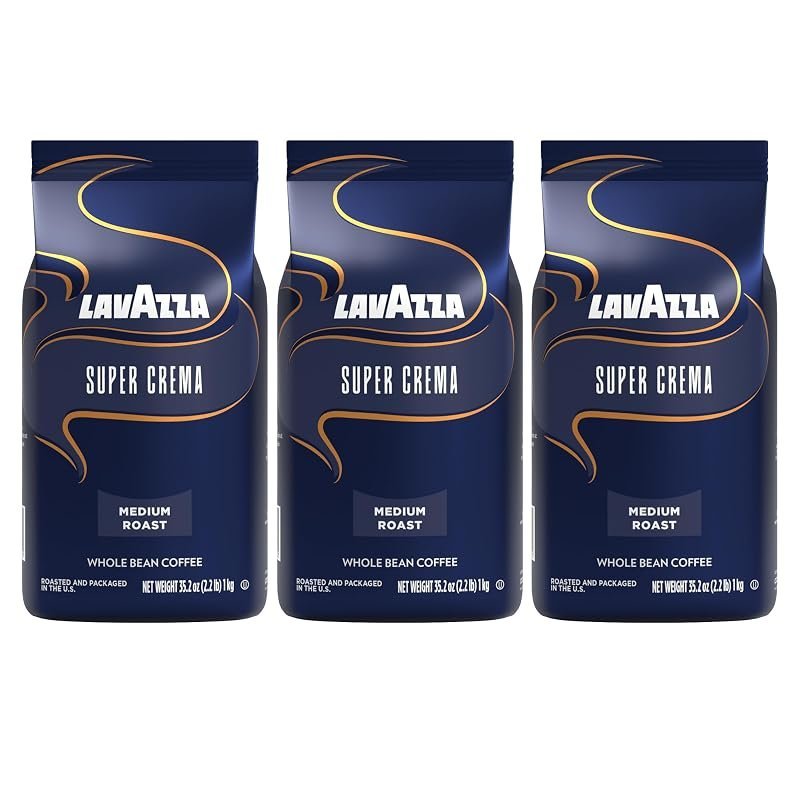
Lavazza Super Crema, Whole Bean (2.2 lb)
A mild, nutty Italian blend that exists to make cappuccinos, and does it for a fraction of per-drink cost. The robusta component is the point: it builds crema and holds its own against milk where a delicate washed arabica would vanish. Buy the 2.2-pound bag and portion it into a sealed canister.
The short version
A quarterly report from a 41,607-store chain is mostly noise for anyone who owns a kettle. But it contains three things worth keeping: growth is coming from bigger orders rather than more customers, the company expects coffee to get slightly cheaper to buy next year, and it is closing stores at home while opening them everywhere else. The first of those is about your habits, the second is about your grocery bill, and the third is about the industry you’re buying from.
If the first one landed, the follow-on question is how to buy beans without overpaying for the privilege — which we got into when we worked out whether subscriptions beat buying bags one at a time.