Portland has no shortage of roasters who put the word “relationship” on a bag. Most of the time it means a buyer flew somewhere once, shook a hand, and came home with a photo. Nossa Familia is the rare case where the relationship predates the business by about a century — the farm came first, and the roastery was built to sell what it grew.
It Started With a Container of Coffee on Consignment
Augusto Carneiro grew up in Rio de Janeiro and came to Portland for college, where he played tennis and studied engineering. He spent a few years working as a mechanical engineer before quitting to do something considerably less sensible: sell his family’s Brazilian coffee to a city that already had Stumptown.
In 2004 his family shipped him a container of coffee on consignment and Nossa Familia was in business — with no café and no roasting facility. The roastery didn’t arrive until 2012, in the Pearl District. An espresso bar followed in 2013, funded by a Kickstarter campaign. In 2017 they opened a café in the Central Eastside and moved the roastery to its current home on NW St Helens Road, picking up a second, larger Loring roaster in the process. The zero-waste Seven Corners café in Ladd’s Addition opened in 2018. Today it’s two cafés plus the roastery, plus a wholesale operation feeding local grocery stores and restaurants.
Along the way they became Oregon’s first Certified B Corp coffee roaster, and the roastery is a certified Organic handling facility through Oregon Tilth.
The Farm Is Literally Family
Augusto’s great-grandfather and his three brothers planted the family’s first coffee crop in 1890, next to an ancient volcano in the Brazilian highlands — an area now called Sul de Minas. The farms were divided as generations passed, and most of them are still in the family. Nossa Familia names them: Fazenda Cachoeira da Grama, Fazenda Recreio and Fazenda Santa Alina in Sul de Minas, and Fazenda São Francisco plus Fazenda Rodomunho and Vereda over in the Cerrado de Minas. Each one is run by a named relative, and each employs and houses somewhere between 20 and 50 families, with running water, electricity, monthly food baskets and vacation time.
That geography matters more than it sounds. Minas Gerais alone accounts for about 1.22 million hectares of Brazil’s coffee land — roughly half the country’s production, with Espírito Santo at 433,000 hectares and São Paulo at 216,000 well behind it. And virtually all Brazilian coffee is dry-processed: the whole cherry gets dried in the sun for eight to ten days, longer if the weather turns, then hulled and bagged in 60-kilo sacks. That natural processing is why Brazilian coffee reads as chocolate, nuts and body rather than the bright, tea-like acidity you get from a washed African lot. If you want the mechanism behind that, we got into it in the piece on shade-grown coffee and flavor.
What They Actually Mean by Direct Trade
The term gets used loosely enough to be meaningless, which is why it’s worth reading what a roaster commits to in writing. We unpacked the general distinction in what direct trade actually means versus Fair Trade, so here’s the short version of Nossa Familia’s published standards:
- Meet the farmers and visit the farms, in some cases annually, on what they call Origin Trips.
- Work with farmers to set prices that leave them an economically viable future, and use importers who do the same.
- Target a cupping score of 84 or above on the Specialty Coffee Association scale — the specialty threshold is 80, so that’s a real margin rather than a floor.
- Support farm improvement and community development projects.
The more useful part is what they admit. When they haven’t visited a farm themselves, they say so, and they name who they buy through instead: Sustainable Harvest, the Portland B Corp importer; De la Gente in Guatemala; Deeper Roots; Café Imports; Bourbon Coffee. They also note that some of their partners carry no certification at all, because certification is prohibitively expensive for small producers — which is a more honest position than implying every bag is audited. Their Organic lots come from the UPC cooperative in Huehuetenango, Guatemala, and from Peru. Outside Brazil, the named partners include La Armonía Hermosa and Finca San Jerónimo Miramar in Guatemala, and Finca San Jose de las Nubes in Nicaragua.
Where This Sits in Portland
Portland’s direct-trade roasters tend to specialize by temperament. Heart roasts light enough to make people argue about it. Stumptown built the blend that defined the city’s palate for a decade. Nossa Familia’s angle is narrower and more durable: one origin they know intimately, a handful of relationships elsewhere, and a willingness to publish the farm names. If you’re working through the city’s roasters systematically, our neighborhood guide to Portland roasteries is the better map.
What to Buy
Nossa Familia’s retail bags are on Amazon, which saves you a shipping charge if you don’t live here. One warning before you click: several of these listings carry sloppy third-party copy that says “sourced from small Peruvian farms” on bags that are plainly Brazilian. Trust the roast name, not the listing bullet points. We earn a commission if you buy through the links below, at no cost to you.
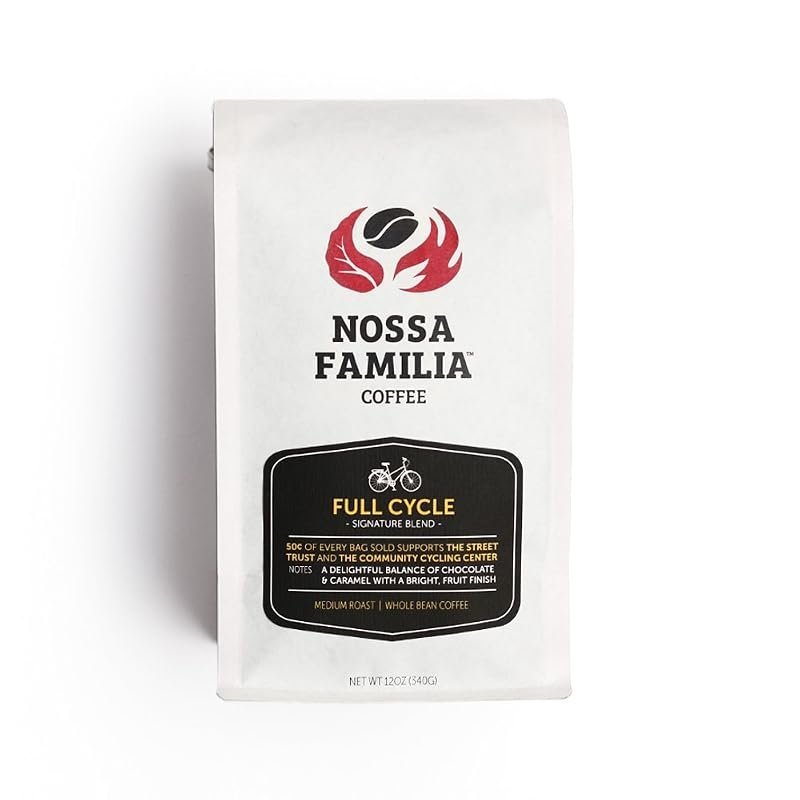
Start with Full Cycle, their signature blend and the one that best represents what the roastery is doing. The roaster’s own notes are chocolate, caramel and bright fruit at a medium roast — which in practice means it behaves on a pour-over without punishing you for an imprecise grind, and it still tastes like something in a drip machine. It’s also tied to their giveback program, so it’s the bag to buy if the sourcing story is part of why you’re here.
Nossa Familia Full Cycle Signature Blend (12 oz)
Medium roast, chocolate and caramel with some fruit behind it. The most representative bag in the lineup and the most forgiving to brew. Buy this one first.
If you drink your coffee dark and don’t want to apologize for it, Teodoro’s Italian Roast is the Brazilian family coffee pushed to medium-dark — cocoa and roasted nuts, their best seller, and the bag that makes the most sense of that natural-process body described above. It is not a delicate coffee and isn’t pretending to be. Grind it a touch coarser than you think; dark roasts are brittle and throw more fines, which is the usual culprit when a dark bag turns bitter. Our grind size piece covers why.
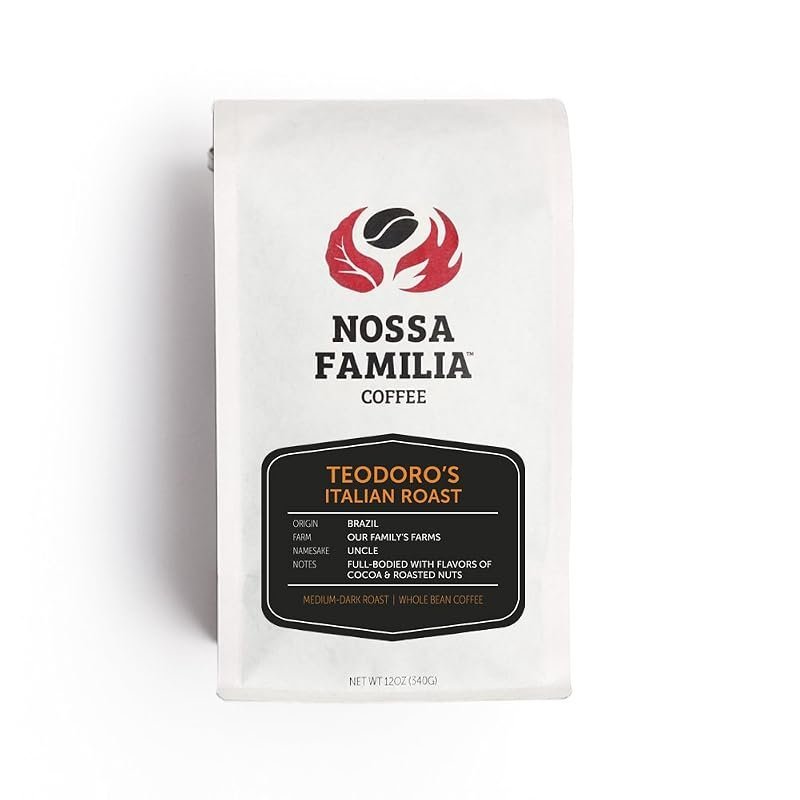
Nossa Familia Teodoro’s Italian Roast (12 oz)
Medium-dark Brazilian, cocoa and roasted nuts. Their best seller. Coarsen the grind slightly and it stays sweet instead of ashy.
And if the certification matters to you, the Organic medium roast is the lot that actually carries it — sourced from the small-producer cooperatives in Peru rather than the family fazendas, with cherry, citrus and milk chocolate on the roaster’s notes. It’s the brightest of the three and the one to pick if you want acidity in the cup.
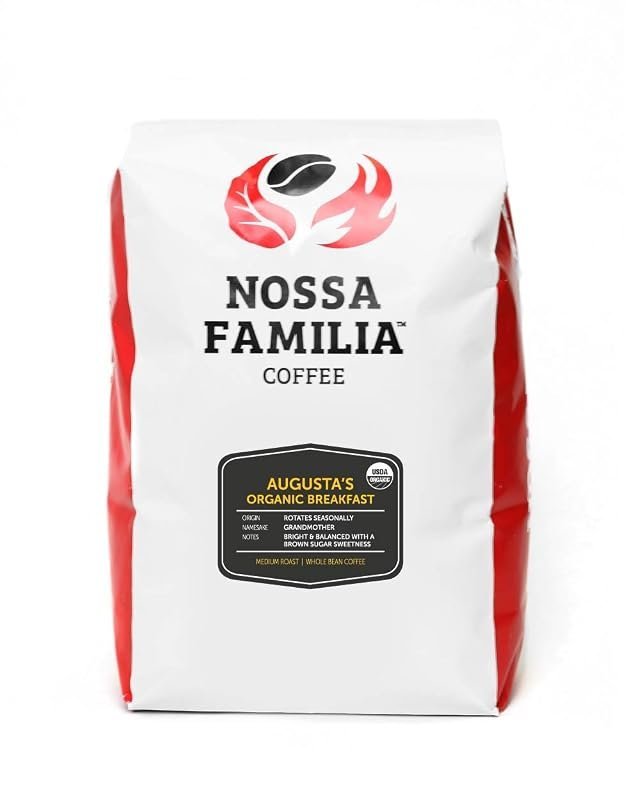
Nossa Familia Organic Medium Roast
Peruvian co-op coffee, Organic-certified, medium roast. Cherry and citrus up front with milk chocolate underneath — the brightest bag of the three.
The Short Version
Plenty of roasters talk about relationships. Nossa Familia has a list of farms with family members’ names attached to them, a published cupping floor, and a straightforward admission about the lots they buy through importers instead. For a city that takes its sourcing claims seriously, that combination of specificity and candor is harder to find than it should be. Buy the Full Cycle, and if you like what Brazil does in the cup, keep going.